
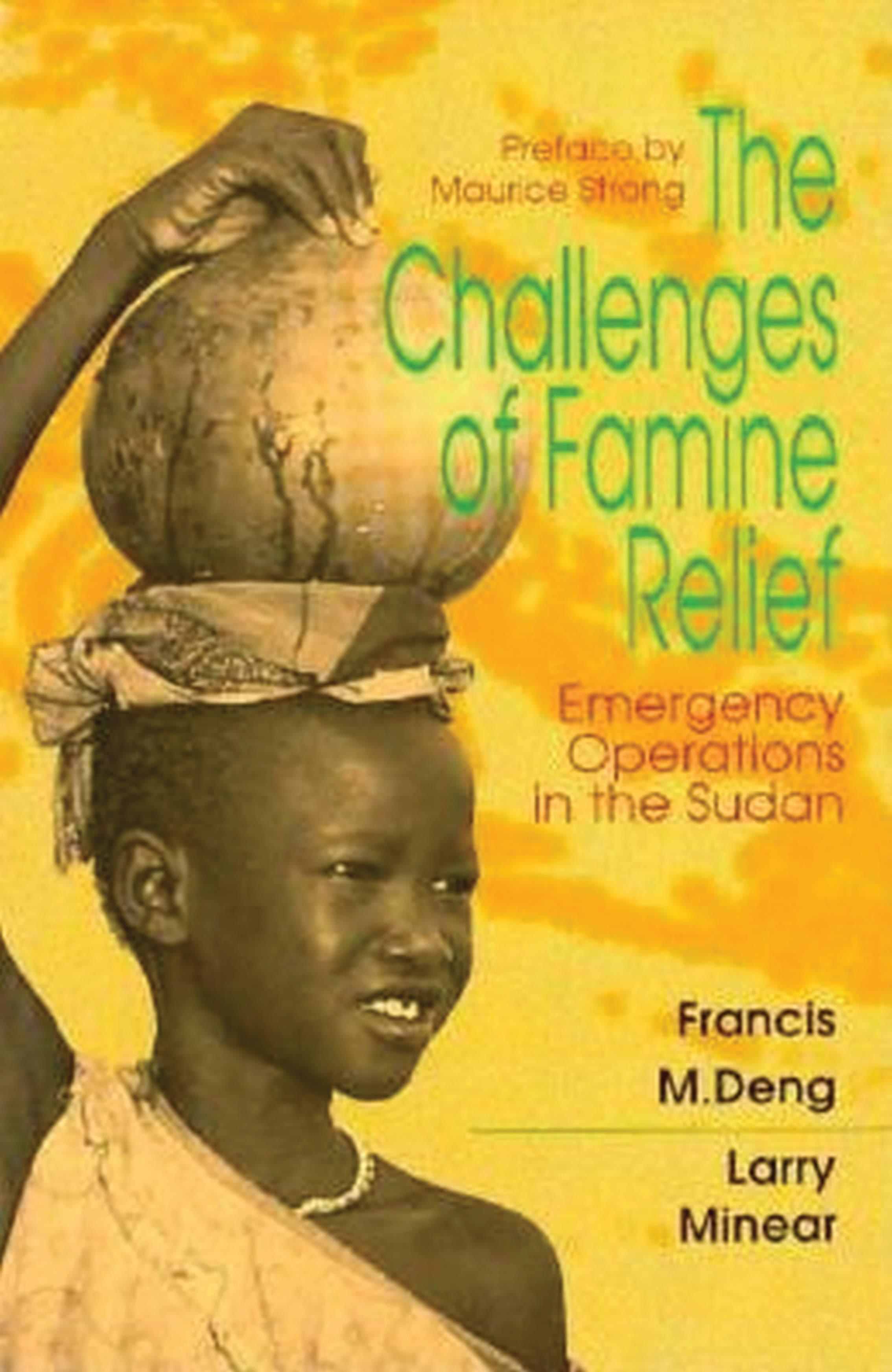
For nearly a decade, international efforts to combat famine and food shortages around the globe have concentrated on the critical situations in sub-Saharan Africa. In the Sudan, the largest country in Africa, prolonged drought, complicated by civil strife and debilitating economic problems, has caused widespread human suffering. The Sudan illustrates the proverbial worst-case scenario in which urgent food needs have been denied, food has been used as a weapon, and outside assistance has been obstructed.
The Challenges of Famine Relief focuses on the two famine emergencies in the Sudan in the 1980sthe great African drought-related famine of 1984-86 and the conflict-related famine that afflicted the southern Sudan in 1988-91. Francis Deng and Larry Minear analyze the historical and political setting and the response by Sudan authorities and the international community.
The book outlines four problem areas exemplified in the response to each crisis: the external nature of famine relief, the relationship between relief activities and endemic problems, the coordination of such activities, and the ambivalence of the results.
The authors identify the many difficulties inherent in providing emergency relief to populations caught in circumstances of life-threatening famine. They show how such famine emergencies reflect the most extreme breakdown of social order and present the most compelling imperatives for international action. Deng and Minear also discuss how the international community, alerted by the media and mobilized by the Ethiopian famine, moved to fill the moral void left by the government and how outside organizations worked together to pressure Sudan's political authorities to be more responsive to these tragedies.
Looking ahead, the authors highlight the implications for future involvement in humanitarian initiatives in a new world order. As recent developments in Eastern Europe and the former Soviet Union demonstrate, such humanitarian challenges of global dimensions are no longer confined to third world countries. As the international community apportions limited resources among a growing number of such challenges, more effective responses to crises such as those described in this book are imperative.
The Challenges of Famine Relief focuses on the two famine emergencies in the Sudan in the 1980sthe great African drought-related famine of 1984-86 and the conflict-related famine that afflicted the southern Sudan in 1988-91. Francis Deng and Larry Minear analyze the historical and political setting and the response by Sudan authorities and the international community.
The book outlines four problem areas exemplified in the response to each crisis: the external nature of famine relief, the relationship between relief activities and endemic problems, the coordination of such activities, and the ambivalence of the results.
The authors identify the many difficulties inherent in providing emergency relief to populations caught in circumstances of life-threatening famine. They show how such famine emergencies reflect the most extreme breakdown of social order and present the most compelling imperatives for international action. Deng and Minear also discuss how the international community, alerted by the media and mobilized by the Ethiopian famine, moved to fill the moral void left by the government and how outside organizations worked together to pressure Sudan's political authorities to be more responsive to these tragedies.
Looking ahead, the authors highlight the implications for future involvement in humanitarian initiatives in a new world order. As recent developments in Eastern Europe and the former Soviet Union demonstrate, such humanitarian challenges of global dimensions are no longer confined to third world countries. As the international community apportions limited resources among a growing number of such challenges, more effective responses to crises such as those described in this book are imperative.
Pages: 174
Category: Statsvetenskap & Politik
e-ISBN: 9780815719748
Shipping weight: 1.2 kg
Ships in: 1-2 days
Pay easily by card, Klarna, Apple Pay or Google Pay. Not happy? You always have a 14-day money-back guarantee. Read more in our terms. If you have any questions, email us at hello@memmo.org.
Memmo makes studying easier – wherever you are in the world. We bring your course books and smart study tools together in one place: summaries, quizzes, podcasts and flashcards. Plus Ted, your study buddy who answers anything you wonder. Over 50,000 students already study here – built to help you learn faster and stress less.