
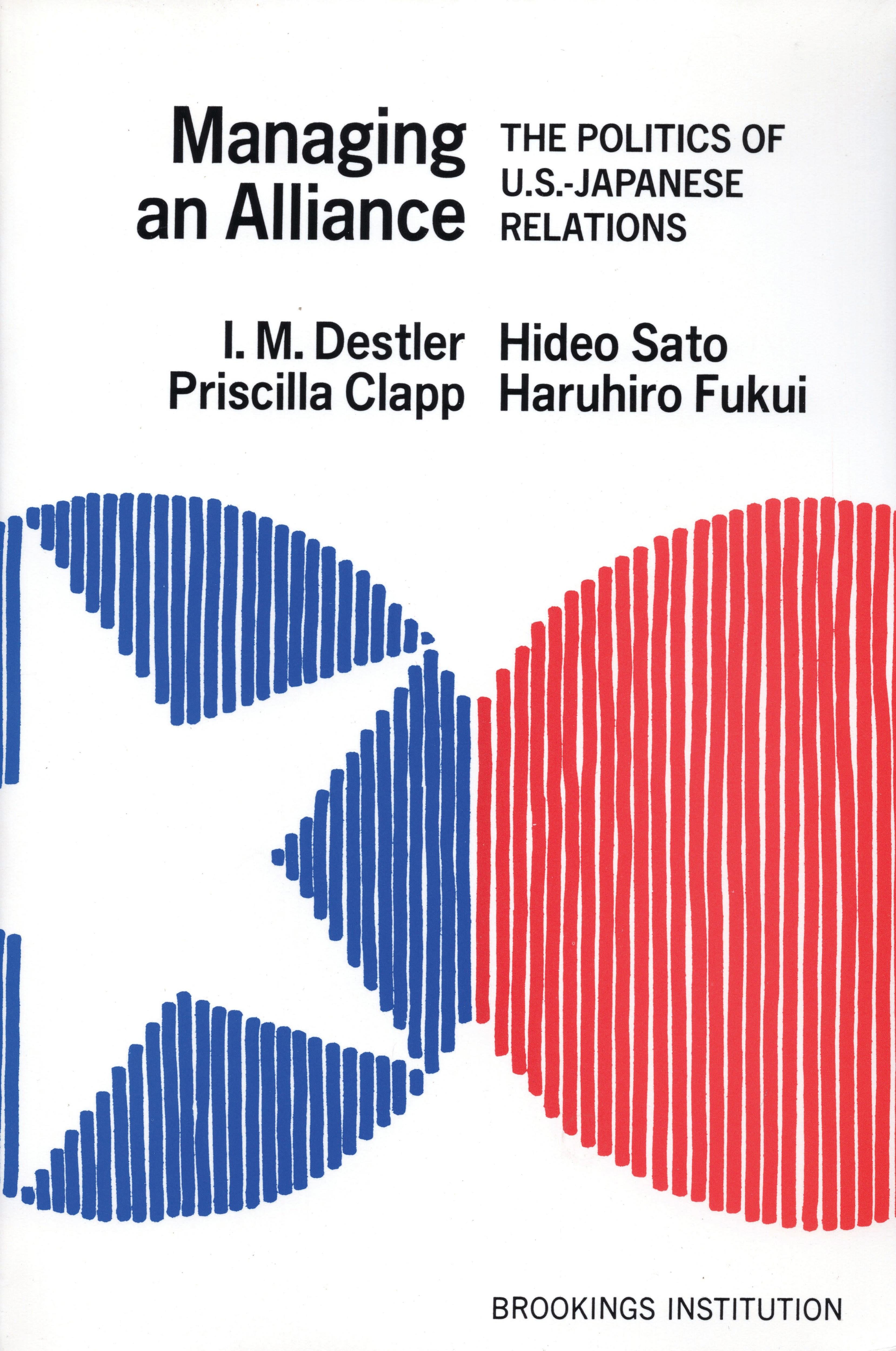
The alliance between Japan and the United States has entered a new era. Successful in promoting mutually beneficial relations during the cold war era, it must now be adapted to a world of detente and new dealings with China. Effective in helping the vulnerable postwar Japanese economy recover domestically and expand its trade internationally, it is now confronted with the different issues accompanying Japan's rise to third rank among the world's economic powers.
The alliance remains important because effective cooperation between Japan and the United States is indispensable to regional stability in East Asia and to a workable world economic order. This study of the politics and processes that influence U.S.-Japanese relations draws heavily on three episodes: revision of the bilateral security treaty in 1960; agreement on reversion of Okinawa to Japan in 1969; and the dispute in 1969-71 over Japanese textile exports to the United States. All three illustrate differences and similarities in the national political and bureaucratic institutions through which policy decisions and actions are taken, how officials in each government perceive actions taken by the other, and recurrent patterns of misperception.
The authors' analysis of U.S. and Japanese negotiating tactics constitutes a guide to effective political management and consensus-building within each country. The study also accounts for the ways in which issues arise, the channels through which they are negotiated, and the effect of actions in one system on decisionmaking in the other. The authors conclude with suggestions about how to reduce tension and promote constructive bilateral relationssuggestions that they believe to be relevant to the conduct of U.S. relations with other major allies.
The alliance remains important because effective cooperation between Japan and the United States is indispensable to regional stability in East Asia and to a workable world economic order. This study of the politics and processes that influence U.S.-Japanese relations draws heavily on three episodes: revision of the bilateral security treaty in 1960; agreement on reversion of Okinawa to Japan in 1969; and the dispute in 1969-71 over Japanese textile exports to the United States. All three illustrate differences and similarities in the national political and bureaucratic institutions through which policy decisions and actions are taken, how officials in each government perceive actions taken by the other, and recurrent patterns of misperception.
The authors' analysis of U.S. and Japanese negotiating tactics constitutes a guide to effective political management and consensus-building within each country. The study also accounts for the ways in which issues arise, the channels through which they are negotiated, and the effect of actions in one system on decisionmaking in the other. The authors conclude with suggestions about how to reduce tension and promote constructive bilateral relationssuggestions that they believe to be relevant to the conduct of U.S. relations with other major allies.
Pages: 209
Category: Statsvetenskap & Politik
e-ISBN: 9780815717324
Shipping weight: 1.2 kg
Ships in: 1-2 days
Pay easily by card, Klarna, Apple Pay or Google Pay. Not happy? You always have a 14-day money-back guarantee. Read more in our terms. If you have any questions, email us at hello@memmo.org.
Memmo makes studying easier – wherever you are in the world. We bring your course books and smart study tools together in one place: summaries, quizzes, podcasts and flashcards. Plus Ted, your study buddy who answers anything you wonder. Over 50,000 students already study here – built to help you learn faster and stress less.