
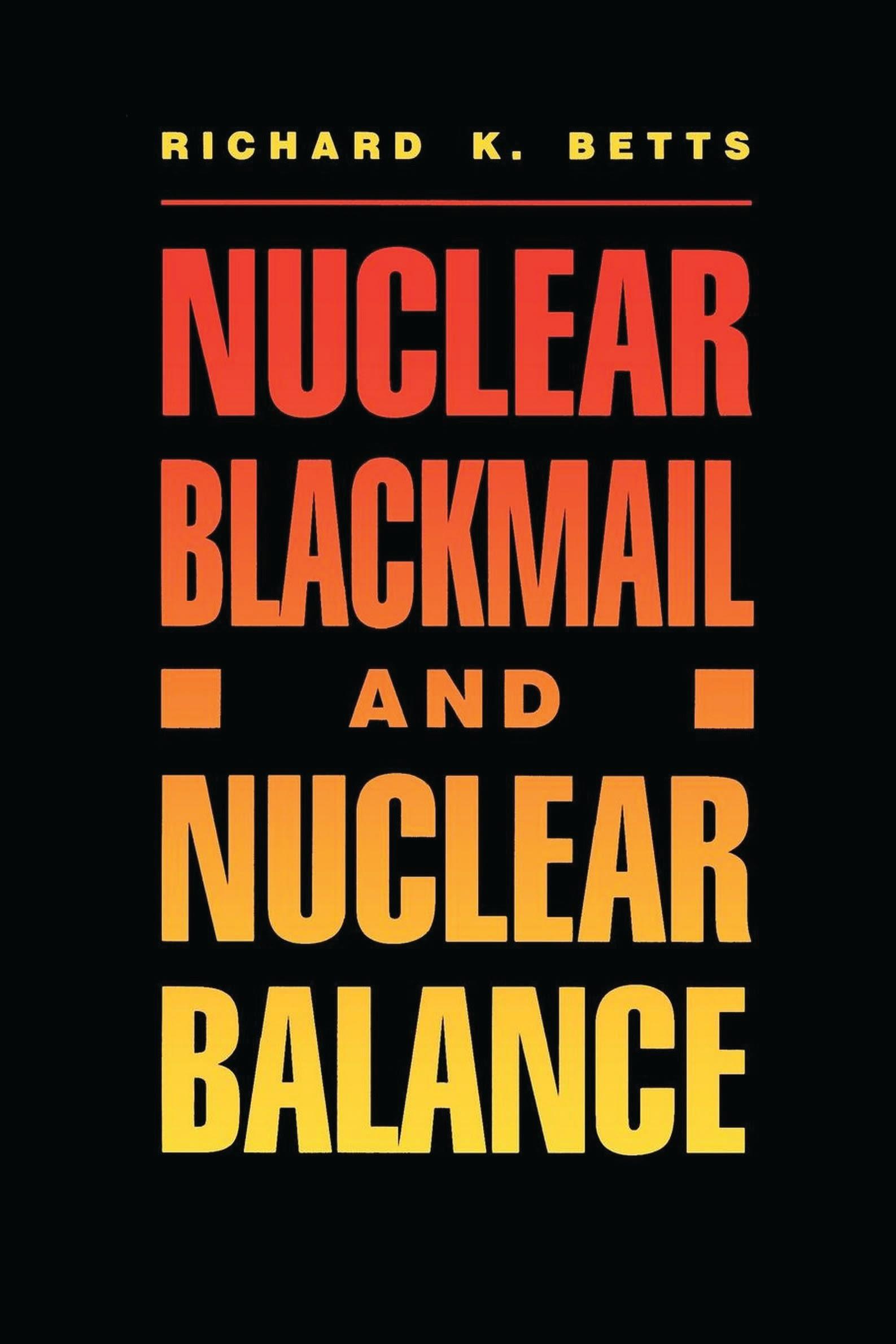
In numerous crises after World War IIBerlin, Korea, the Taiwan Straits, and the Middle Eastthe United States resorted to vague threats to use nuclear weapons in order to deter Soviet or Chinese military action. On a few occasions the Soviet Union also engaged in nuclear saber-ratling. Using declassified documents and other sources, this volume examines those crises and compares the decisionmaking processes of leaders who considered nuclear threats with the commonly accepted logic of nuclear deterrence and coercion.
Rejecting standard explanations of our leader's logic in these cases, Betts suggests that U.S. presidents were neither consciously blufffing when they made nuclear threats, nor prepared to face the consequences if their threats failed. The author also challenges the myth that the 1950s was a golden age of low vulberability for the United Stateas and details how nuclear parity has, and has not, altered conditions that gave rise to nuclear blackmail in the past.
Rejecting standard explanations of our leader's logic in these cases, Betts suggests that U.S. presidents were neither consciously blufffing when they made nuclear threats, nor prepared to face the consequences if their threats failed. The author also challenges the myth that the 1950s was a golden age of low vulberability for the United Stateas and details how nuclear parity has, and has not, altered conditions that gave rise to nuclear blackmail in the past.
Pages: 240
Category: Statsvetenskap & Politik
e-ISBN: 9780815717089
Shipping weight: 1.2 kg
Ships in: 1-2 days
Pay easily by card, Klarna, Apple Pay or Google Pay. Not happy? You always have a 14-day money-back guarantee. Read more in our terms. If you have any questions, email us at hello@memmo.org.
Memmo makes studying easier – wherever you are in the world. We bring your course books and smart study tools together in one place: summaries, quizzes, podcasts and flashcards. Plus Ted, your study buddy who answers anything you wonder. Over 50,000 students already study here – built to help you learn faster and stress less.