
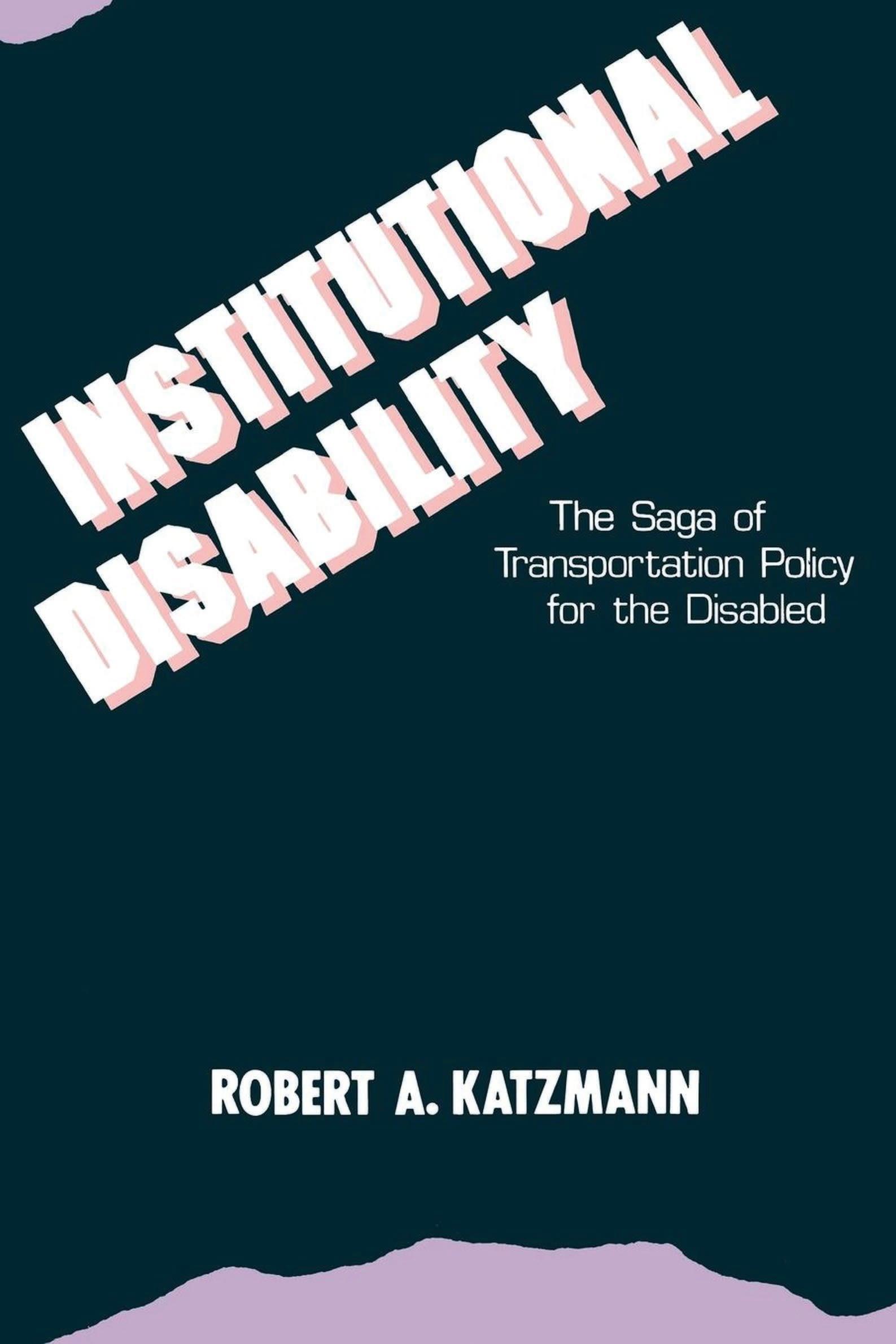
This case study of transportation policy for disabled people illustrates the flaws in policymaking that lead many Americans to believe government is not working as it should. Robert A. Katzmann examines the workings of the legislative, administrative, and judicial processes, both separately and in interaction, as he relates the erratic path of transportation policy for the disabled over two decades. An estimated 13.4 million people in this country have difficulty using public transportation, but the federal response to their problems of mobility is of fairly recent vintage, beginning with legislation in the early 1970s. Since then, there have been many twists and turns in policy, involving a wide array of governmental institutions. These constant shifts have confused state and local governments, the transit industry, and the disabled community. Assessing why policy was so erratic, Katzmann concludes that in part the confusion resulted from the inability to choose between conflicting approaches to the problem--one oriented toward the rights of equal access for the disabled, and the other favoring effective mobility by any practical means. In addition, the conflict between these two policy approaches was compounded by increasing fragmentation within and among national institutions.
Pages: 211
Category: Statsvetenskap & Politik
e-ISBN: 9780815716280
Shipping weight: 1.2 kg
Ships in: 1-2 days
Pay easily by card, Klarna, Apple Pay or Google Pay. Not happy? You always have a 14-day money-back guarantee. Read more in our terms. If you have any questions, email us at hello@memmo.org.
Memmo makes studying easier – wherever you are in the world. We bring your course books and smart study tools together in one place: summaries, quizzes, podcasts and flashcards. Plus Ted, your study buddy who answers anything you wonder. Over 50,000 students already study here – built to help you learn faster and stress less.