
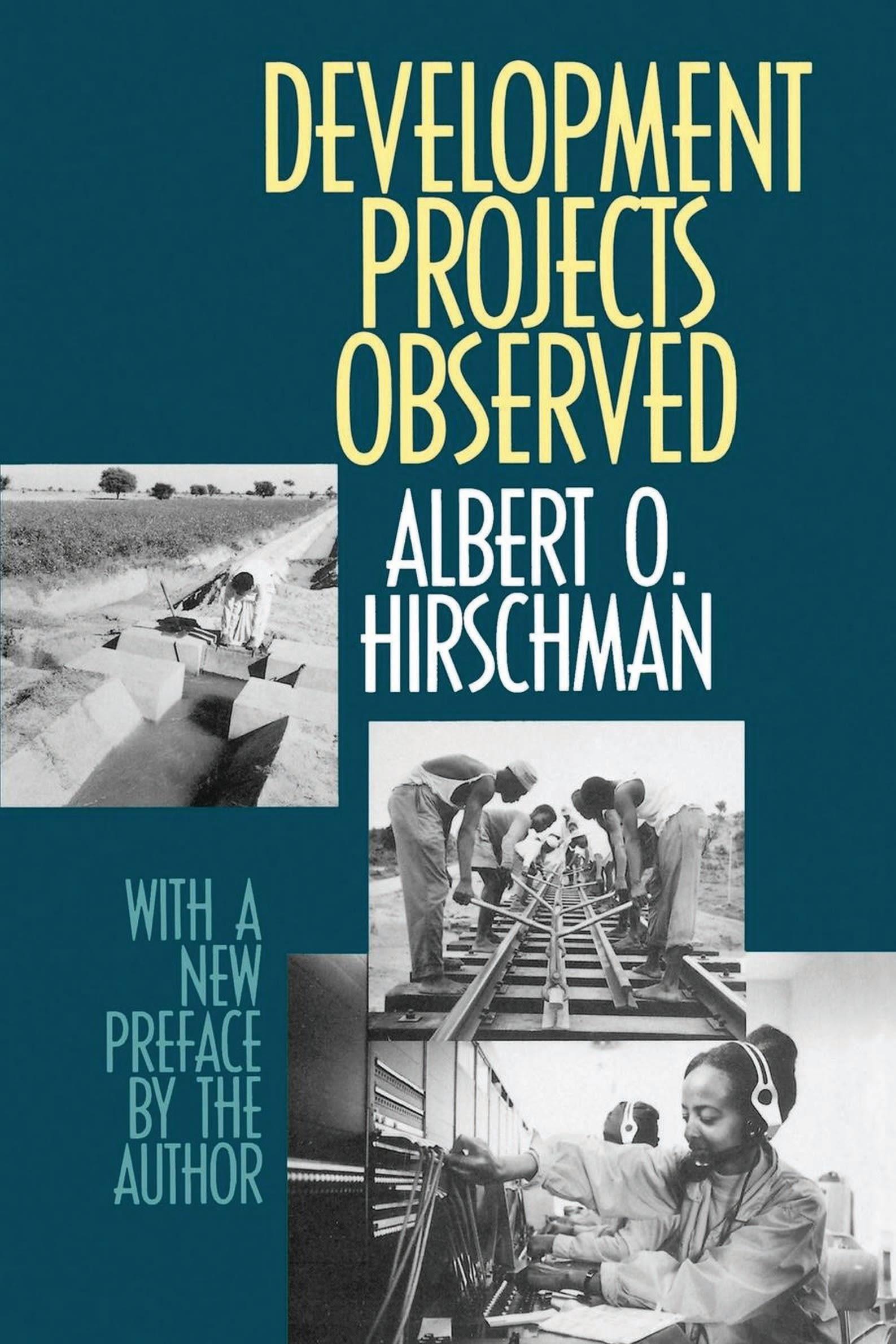
The experience accumulated in the wake of more than two decades of sustained effort to promote growth and change in the low-income countries presents a rich field for scholarly inquiry and new insights into the development process. The success and failures of such projects, the new skills and attitudes they impart, and the internal tensions they sometimes generate obviously have an important bearing on the next stages of a county's development effort. Yet little has become known about these truly formative experiences which are due to the behaviorand misbehaviorof development projects. In this recent volume, Professor Albert O. Hirschman turns his attention to the ways in which decision making is molded, activated, or hampered by the specific nature of the project that is undertaken; for example, the establishment and operation of a pulp and paper mill in east Pakistan, an irrigation project in Peru, railway expansion in Nigeria, and other development undertakings. In some parts of the present inquiry Hirschman elaborates on his earlier writings in this series; and occasionally, he qualifies or modifies his previous conclusions; the bulk of the study explores new territory.
Pages: 218
Category: Ekonomi & Utveckling
e-ISBN: 9780815707301
Shipping weight: 1.2 kg
Ships in: 1-2 days
Pay easily by card, Klarna, Apple Pay or Google Pay. Not happy? You always have a 14-day money-back guarantee. Read more in our terms. If you have any questions, email us at hello@memmo.org.
Memmo makes studying easier – wherever you are in the world. We bring your course books and smart study tools together in one place: summaries, quizzes, podcasts and flashcards. Plus Ted, your study buddy who answers anything you wonder. Over 50,000 students already study here – built to help you learn faster and stress less.