
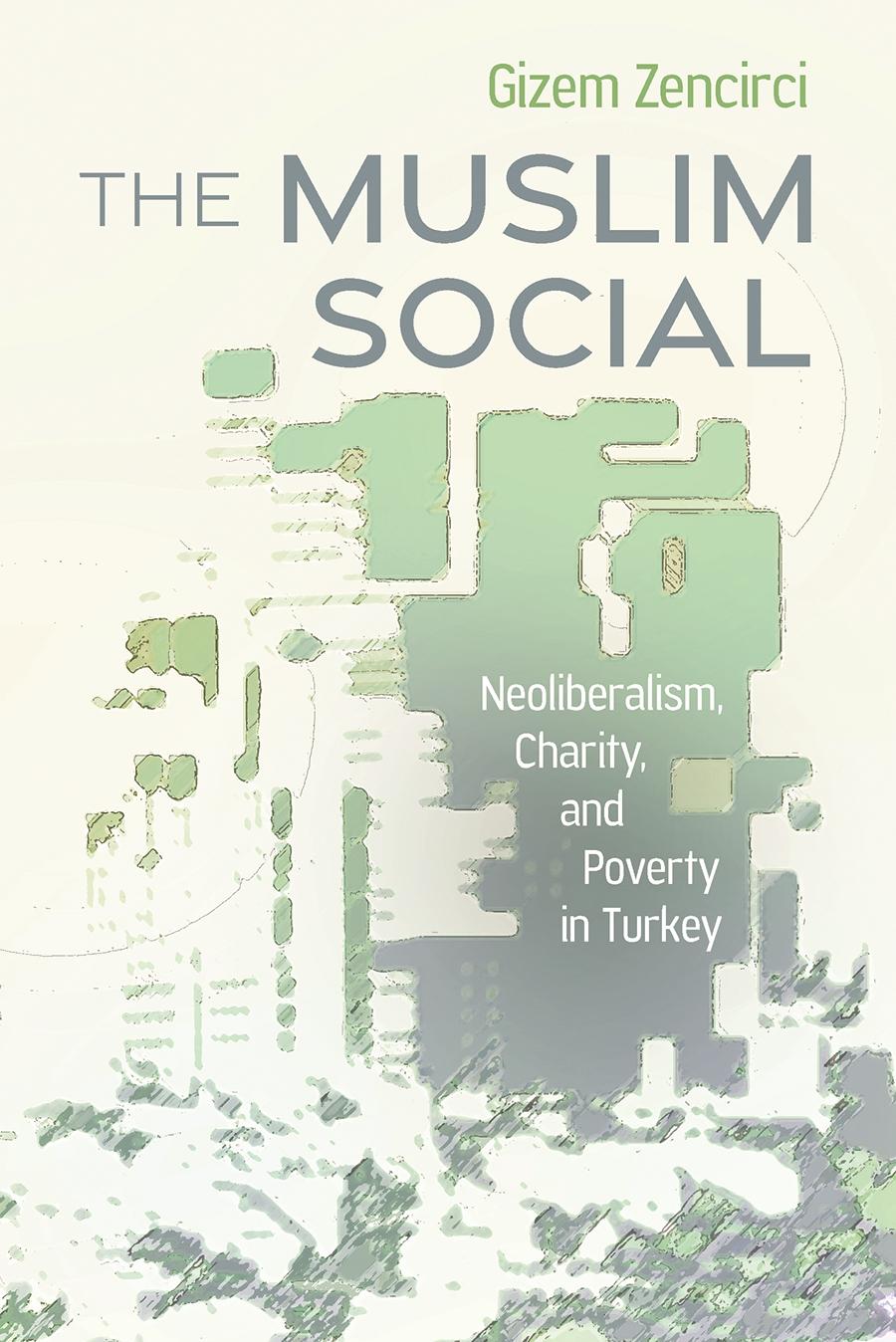
Since coming to power in 2003, Turkey’s governing party, the AKP, has made poverty relief a central part of their political program. In addition to neoliberal reforms, AKP’s program has involved an emphasis on Islamic charity that is unprecedented in the history of the Turkish Republic. To understand the causes and consequences of this phenomenon, Zencirci introduces the concept of the Muslim Social, defined as a welfare regime that reimagined and reconfigured Islamic charitable practices to address the complex needs of a modern market society.
In The Muslim Social, Zencirci explores the blending of religious values and neoliberal elements in dynamic, flexible, and unexpected ways. Although these governmental assemblages of Islamic neoliberalism produced new forms of generosity, distinctive notions of poverty, and novel ways of relating to others in society, Zencirci reveals how this welfare regime privileged managerial efficiency and emotional well-being at the expense of other objectives such as equality, development, or justice. The book provides a lens onto the everyday life of Islamic neoliberalism, while also mapping the kind of political concerns that animate poverty governance in our capitalist present.
Pay easily by card, Klarna, Apple Pay or Google Pay. Not happy? You always have a 14-day money-back guarantee. Read more in our terms. If you have any questions, email us at hello@memmo.org.
Memmo makes studying easier – wherever you are in the world. We bring your course books and smart study tools together in one place: summaries, quizzes, podcasts and flashcards. Plus Ted, your study buddy who answers anything you wonder. Over 50,000 students already study here – built to help you learn faster and stress less.