
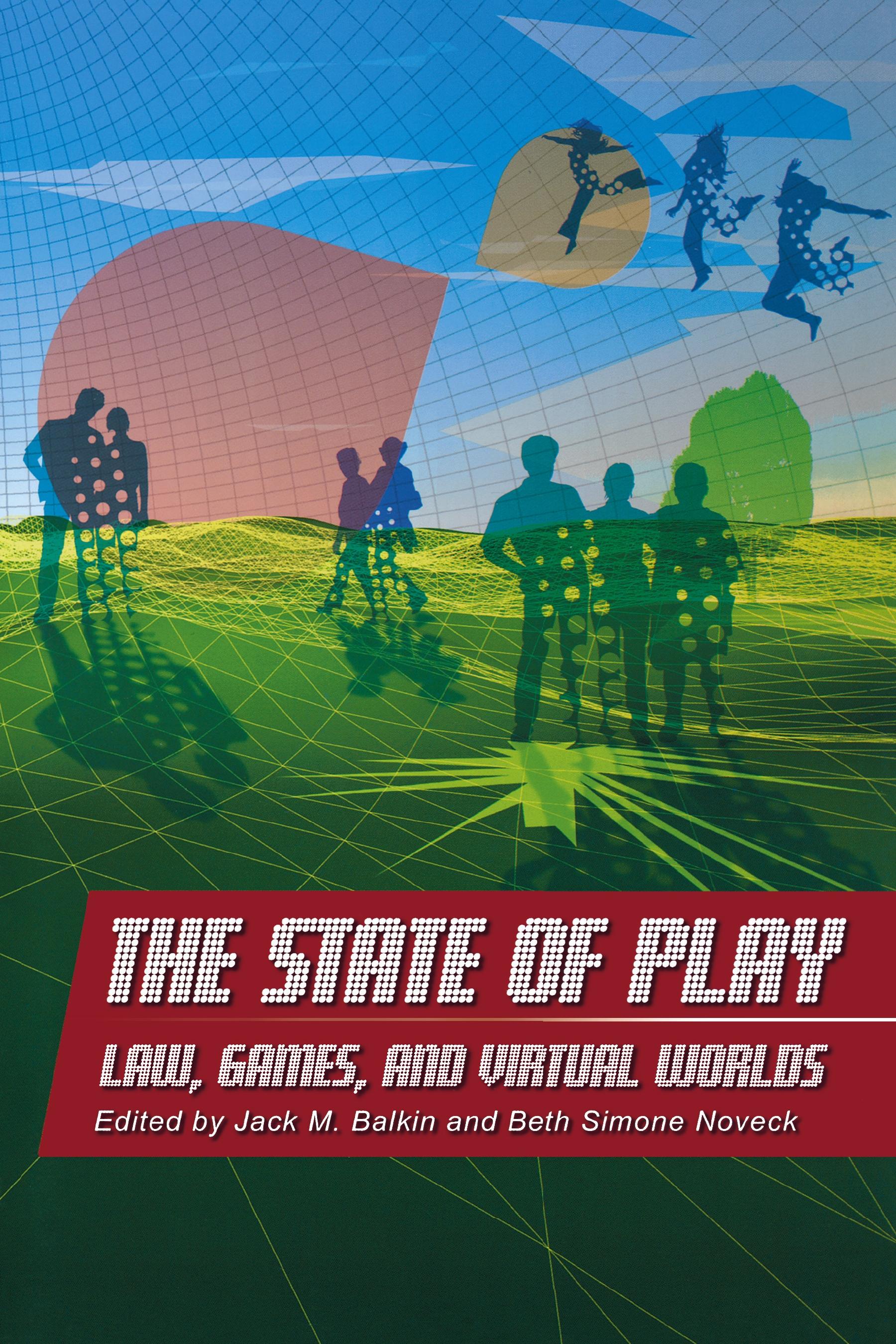
The State of Play presents an essential first step in understanding how new digital worlds will change the future of our universe. Millions of people around the world inhabit virtual words: multiplayer online games where characters live, love, buy, trade, cheat, steal, and have every possible kind of adventure. Far more complicated and sophisticated than early video games, people now spend countless hours in virtual universes like Second Life and Star Wars Galaxies not to shoot space invaders but to create new identities, fall in love, build cities, make rules, and break them.
As digital worlds become increasingly powerful and lifelike, people will employ them for countless real-world purposes, including commerce, education, medicine, law enforcement, and military training. Inevitably, real-world law will regulate them. But should virtual worlds be fully integrated into our real-world legal system or should they be treated as separate jurisdictions with their own forms of dispute resolution? What rules should govern virtual communities? Should the law step in to protect property rights when virtual items are destroyed or stolen?
These questions, and many more, are considered in The State of Play, where legal experts, game designers, and policymakers explore the boundaries of free speech, intellectual property, and creativity in virtual worlds. The essays explore both the emergence of law in multiplayer online games and how we can use virtual worlds to study real-world social interactions and test real-world laws.
Contributors include: Jack M. Balkin, Richard A. Bartle, Yochai Benkler, Caroline Bradley, Edward Castronova, Susan P. Crawford, Julian Dibbell, A. Michael Froomkin, James Grimmelmann, David R. Johnson, Dan Hunter, Raph Koster, F. Gregory Lastowka, Beth Simone Noveck, Cory Ondrejka, Tracy Spaight, and Tal Zarsky.
Pay easily by card, Klarna, Apple Pay or Google Pay. Not happy? You always have a 14-day money-back guarantee. Read more in our terms. If you have any questions, email us at hello@memmo.org.
Memmo makes studying easier – wherever you are in the world. We bring your course books and smart study tools together in one place: summaries, quizzes, podcasts and flashcards. Plus Ted, your study buddy who answers anything you wonder. Over 50,000 students already study here – built to help you learn faster and stress less.