
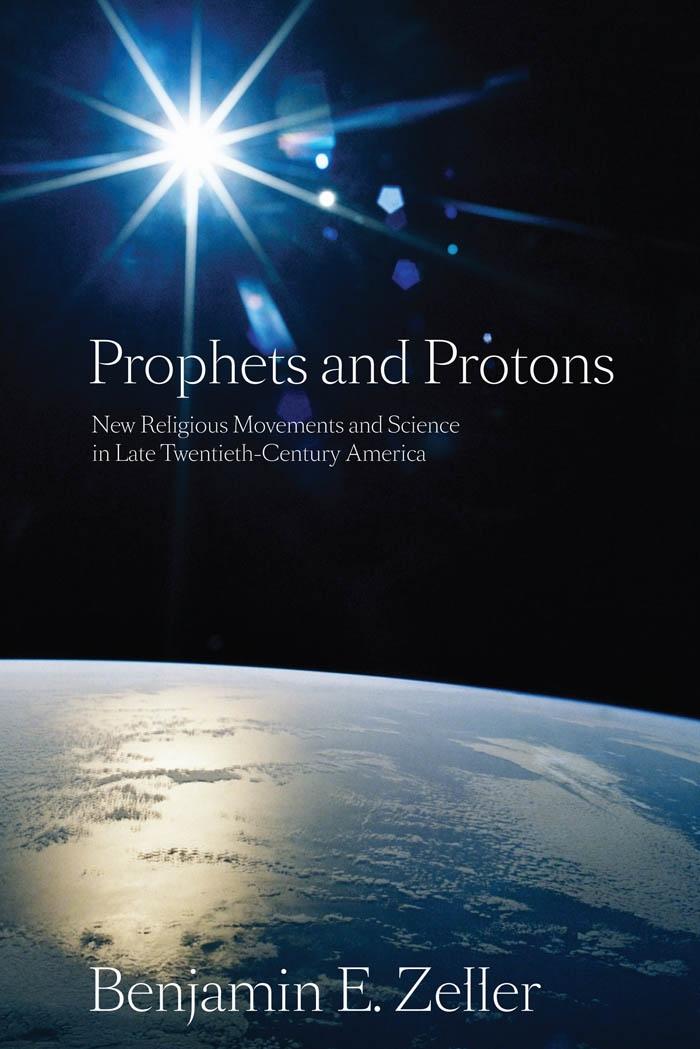
By the twentieth century, science had become so important that religious traditions had to respond to it. Emerging religions, still led by a living founder to guide them, responded with a clarity and focus that illuminates other larger, more established religions’ understandings of science. The Hare Krishnas, the Unification Church, and Heaven’s Gate each found distinct ways to incorporate major findings of modern American science, understanding it as central to their wider theological and social agendas. In tracing the development of these new religious movements’ viewpoints on science during each movement’s founding period, we can discern how their views on science were crafted over time. These NRMs shed light on how religious groups—new, old, alternative, or mainstream—could respond to the tremendous growth of power and prestige of science in late twentieth-century America.
In this engrossing book, Zeller carefully shows that religious groups had several methods of creatively responding to science, and that the often-assumed conflict-based model of “science vs. religion” must be replaced by a more nuanced understanding of how religions operate in our modern scientific world.
Pay easily by card, Klarna, Apple Pay or Google Pay. Not happy? You always have a 14-day money-back guarantee. Read more in our terms. If you have any questions, email us at hello@memmo.org.
Memmo makes studying easier – wherever you are in the world. We bring your course books and smart study tools together in one place: summaries, quizzes, podcasts and flashcards. Plus Ted, your study buddy who answers anything you wonder. Over 50,000 students already study here – built to help you learn faster and stress less.