
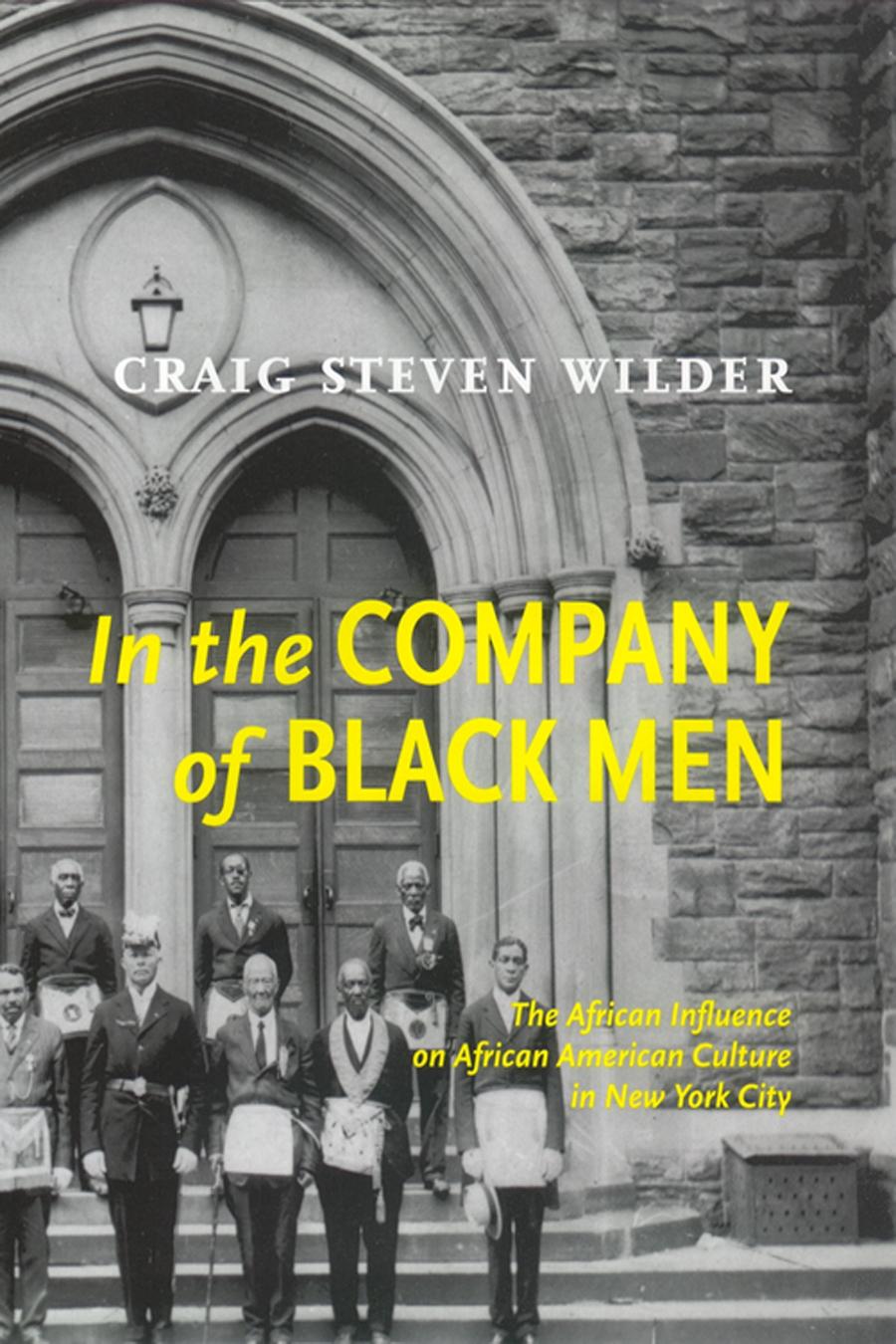
Traces the development of African-American community traditions over three centuries
From the subaltern assemblies of the enslaved in colonial New York City to the benevolent New York African Society of the early national era to the formation of the African Blood Brotherhood in twentieth century Harlem, voluntary associations have been a fixture of African-American communities.
In the Company of Black Men examines New York City over three centuries to show that enslaved Africans provided the institutional foundation upon which African-American religious, political, and social culture could flourish. Arguing that the universality of the voluntary tradition in African-American communities has its basis in collectivism—a behavioral and rhetorical tendency to privilege the group over the individual—it explores the institutions that arose as enslaved Africans exploited the potential for group action and mass resistance.
Craig Steven Wilder’s research is particularly exciting in its assertion that Africans entered the Americas equipped with intellectual traditions and sociological models that facilitated a communitarian response to oppression. Presenting a dramatic shift from previous work which has viewed African-American male associations as derivative and imitative of white male counterparts, In the Company of Black Men provides a ground-breaking template for investigating antebellum black institutions.
Pay easily by card, Klarna, Apple Pay or Google Pay. Not happy? You always have a 14-day money-back guarantee. Read more in our terms. If you have any questions, email us at hello@memmo.org.
Memmo makes studying easier – wherever you are in the world. We bring your course books and smart study tools together in one place: summaries, quizzes, podcasts and flashcards. Plus Ted, your study buddy who answers anything you wonder. Over 50,000 students already study here – built to help you learn faster and stress less.