
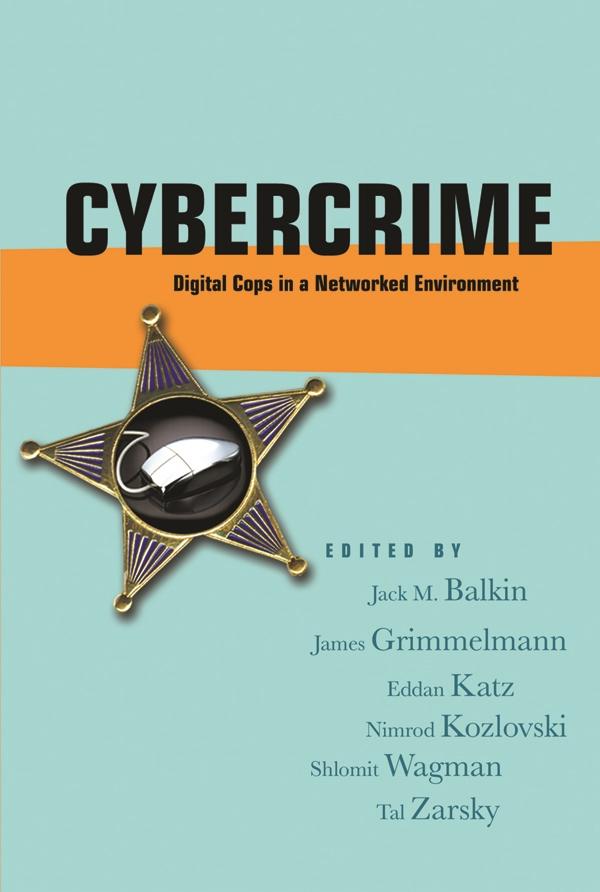
The Internet has dramatically altered the landscape of crime and national security, creating new threats, such as identity theft, computer viruses, and cyberattacks. Moreover, because cybercrimes are often not limited to a single site or nation, crime scenes themselves have changed. Consequently, law enforcement must confront these new dangers and embrace novel methods of prevention, as well as produce new tools for digital surveillance—which can jeopardize privacy and civil liberties.
Cybercrime brings together leading experts in law, criminal justice, and security studies to describe crime prevention and security protection in the electronic age. Ranging from new government requirements that facilitate spying to new methods of digital proof, the book is essential to understand how criminal law—and even crime itself—have been transformed in our networked world.
Contributors: Jack M. Balkin, Susan W. Brenner, Daniel E. Geer, Jr., James Grimmelmann, Emily Hancock, Beryl A. Howell, Curtis E.A. Karnow, Eddan Katz, Orin S. Kerr, Nimrod Kozlovski, Helen Nissenbaum, Kim A. Taipale, Lee Tien, Shlomit Wagman, and Tal Zarsky.
Pay easily by card, Klarna, Apple Pay or Google Pay. Not happy? You always have a 14-day money-back guarantee. Read more in our terms. If you have any questions, email us at hello@memmo.org.
Memmo makes studying easier – wherever you are in the world. We bring your course books and smart study tools together in one place: summaries, quizzes, podcasts and flashcards. Plus Ted, your study buddy who answers anything you wonder. Over 50,000 students already study here – built to help you learn faster and stress less.