
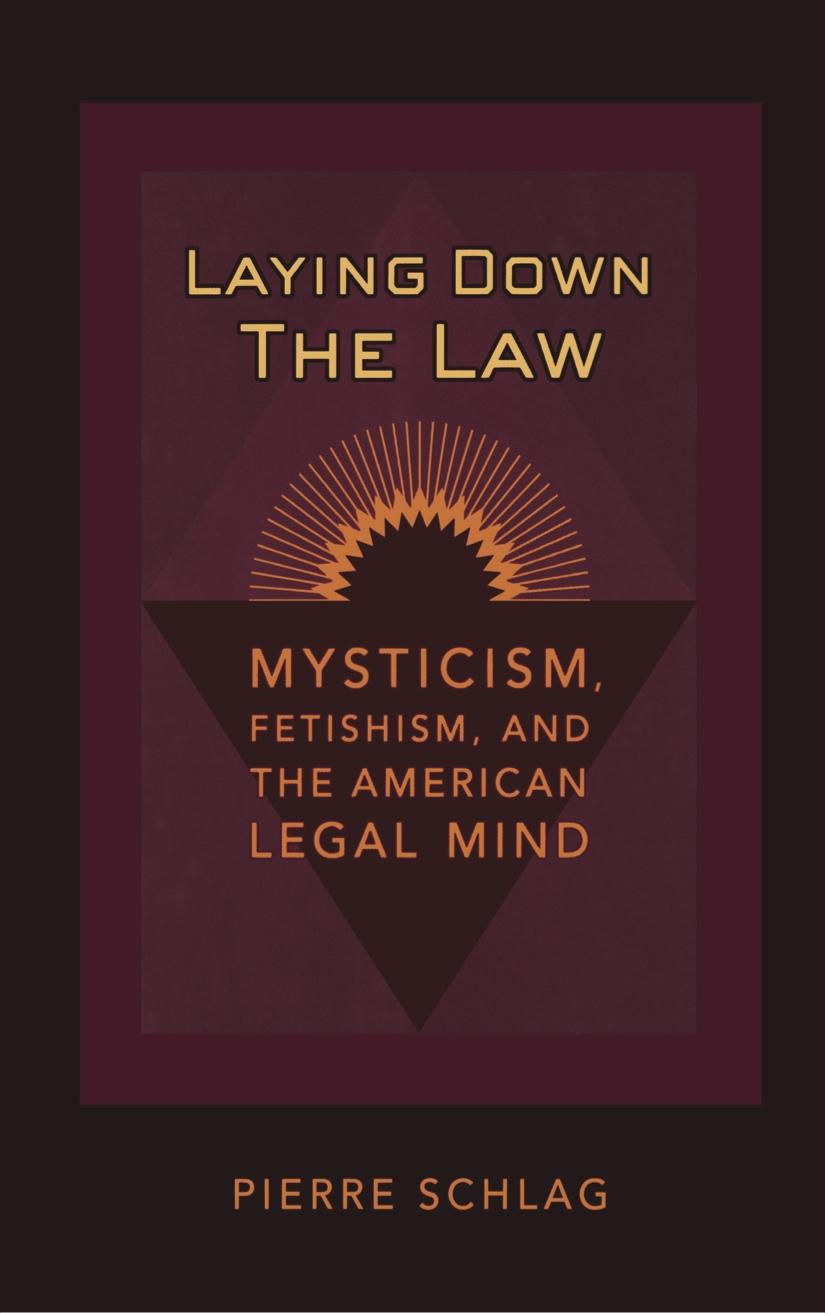
In the collected essays here, Schlag established himself as one of the most creative thinkers in the contemporary legal academy. To read them one after another is exhilarating; Schlag's sophistication shines through. In chapter after chapter he tackles the most vexing problems of law and legal thinking, but at the heart of his concern is the questions of normativity and the normative claims made by legal scholars. He revisits legal realism, eenergizes it, and brings readers face-to-face with the central issues confronting law at the end of the 20th century.
--Choice, May 1997
Pierre Schlag is the great iconoclast of the American legal academy. Few law professors today are so consistently original, funny, and provocative. But behind his playful manner is a serious goal: bringing the study of law into the late modern/ postmodern age. Reading these essays is like watching a one-man truth squad taking on all of the trends and movements of contemporary jurisprudence. All one can say to the latter is, better take cover.
--J. M. Balkin, Lafayette S. Foster Professor, Yale Law School
At a time when complaints are heard everywhere about the excesses of lawyers, judges, and law itself, Pierre Schlag focuses attention on the American legal mind and its urge to lay down the law. For Schlag, legalism is a way of thinking that extends far beyond the customary official precincts of the law.
His work prompts us to move beyond the facile self- congratulatory self-representations of the law so that we might think critically about its identity, effects, and limitations. In this way, Schlag leads us to rethink the identities and character of moral and political values in contemporary discourse. The book brings into question the dominant normative orientation that shapes so much academic thought in law and in the humanities and social sciences. By pulling the curtain on the rhetorical techniques by which the law represents itself as coherent, rational, and stable, Laying Down the Law discloses the grandiose (and largely futile) attempts of American academics to control social and political meaning by means of scholarly missives.
Pay easily by card, Klarna, Apple Pay or Google Pay. Not happy? You always have a 14-day money-back guarantee. Read more in our terms. If you have any questions, email us at hello@memmo.org.
Memmo makes studying easier – wherever you are in the world. We bring your course books and smart study tools together in one place: summaries, quizzes, podcasts and flashcards. Plus Ted, your study buddy who answers anything you wonder. Over 50,000 students already study here – built to help you learn faster and stress less.