
American college campuses, where ideas are freely exchanged, contested, and above all uncensored, are historical hotbeds of political and social turmoil. In the past decade alone, the media has carefully tracked the controversy surrounding the speech of Iranian President Mahmoud Ahmadinejad at Columbia, the massacres at Virginia Tech, the dismissal of Harvard’s President Lawrence Summers, and the lacrosse team rape case at Duke, among others. No matter what the event, the conflicts that arise on our campuses can be viewed in terms of constitutional principles, which either control or influence outcomes of these events. In turn, constitutional principles are frequently shaped and forged by campus culture, creating a symbiotic relationship in which constitutional values influence the nature of universities, which themselves influence the nature of our constitutional values.
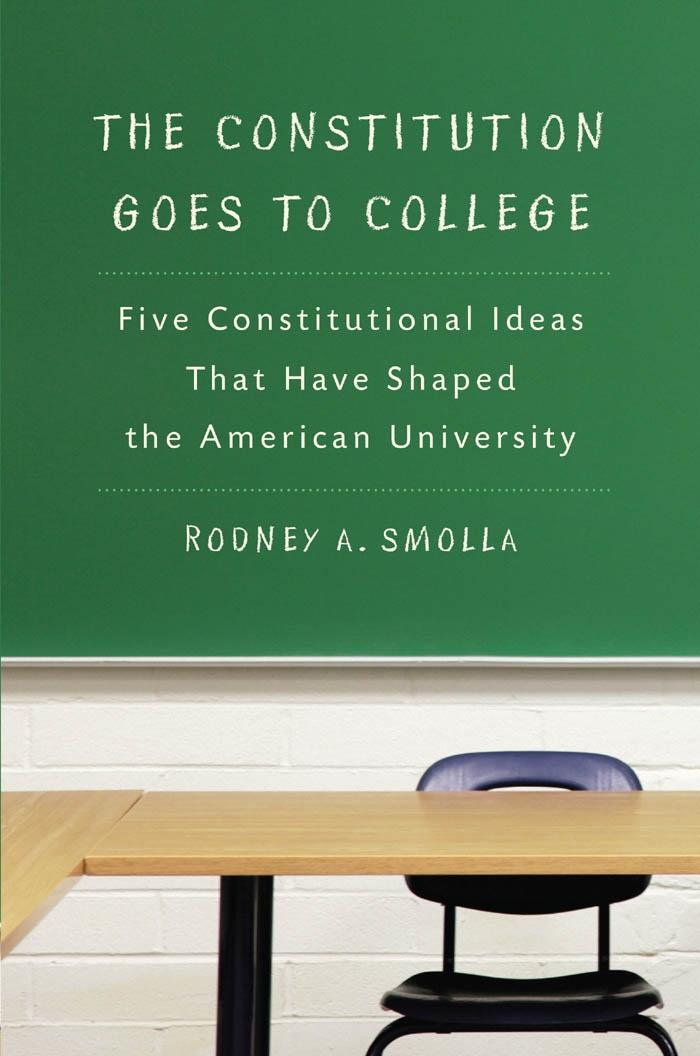
In The Constitution Goes to College, Rodney A. Smolla—a former dean and current university president who is an expert on the First Amendment—deftly uses the American university as a lens through which to view the Constitution in action. Drawing on landmark cases and conflicts played out on college campuses, Smolla demonstrates how five key constitutional ideas—the living Constitution, the division between public and private spheres, the distinction between rights and privileges, ordered liberty, and equality—are not only fiercely contested on college campuses, but also dominate the shape and identity of American university life.
Ultimately, Smolla compellingly demonstrates that the American college community, like the Constitution, is orderly and hierarchical yet intellectually free and open, a microcosm where these constitutional dichotomies play out with heightened intensity.
Pay easily by card, Klarna, Apple Pay or Google Pay. Not happy? You always have a 14-day money-back guarantee. Read more in our terms. If you have any questions, email us at hello@memmo.org.
Memmo makes studying easier – wherever you are in the world. We bring your course books and smart study tools together in one place: summaries, quizzes, podcasts and flashcards. Plus Ted, your study buddy who answers anything you wonder. Over 50,000 students already study here – built to help you learn faster and stress less.