
Winner of the 2014 Division of Women and Crime Distinguished Scholar Award presented by the American Society of Criminology
Finalist for the 2013 C. Wright Mills Book Award presented by the Society for the Study of Social Problems
Compelling interviews uncover why tough drug policies disproportionately impact women in the American prison system
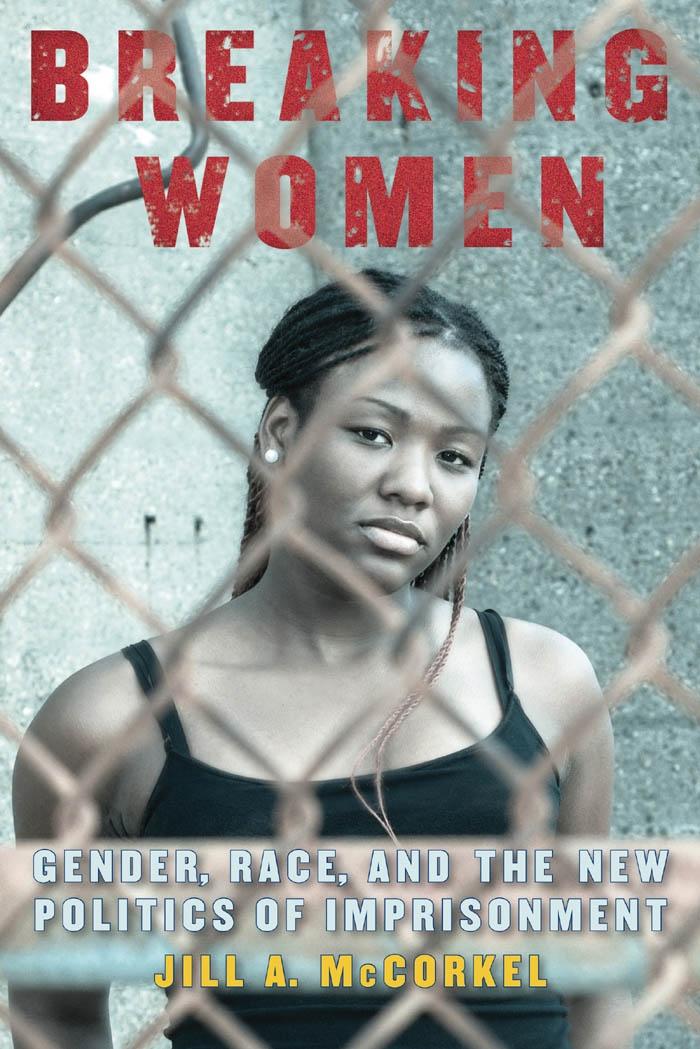
Since the 1980s, when the War on Drugs kicked into high gear and prison populations soared, the increase in women’s rate of incarceration has steadily outpaced that of men. As a result, women’s prisons in the US have suffered perhaps the most drastically from the overcrowding and recurrent budget crises that have plagued the penal system since harsher drugs laws came into effect. In Breaking Women, Jill A. McCorkel draws upon four years of on-the-ground research in a major US women’s prison to uncover why tougher drug policies have so greatly affected those incarcerated there, and how the very nature of punishment in women’s detention centers has been deeply altered as a result.
Through compelling interviews with prisoners and state personnel, McCorkel reveals that popular so-called “habilitation” drug treatment programs force women to accept a view of themselves as inherently damaged, aberrant addicts in order to secure an earlier release. These programs were created as a way to enact stricter punishments on female drug offenders while remaining sensitive to their perceived feminine needs for treatment, yet they instead work to enforce stereotypes of deviancy that ultimately humiliate and degrade the women. The prisoners are left feeling lost and alienated in the end, and many never truly address their addiction as the programs’ organizers may have hoped.
A fascinating and yet sobering study, Breaking Women foregrounds the gendered and racialized assumptions behind tough-on-crime policies while offering a vivid account of how the contemporary penal system impacts individual lives.
Pay easily by card, Klarna, Apple Pay or Google Pay. Not happy? You always have a 14-day money-back guarantee. Read more in our terms. If you have any questions, email us at hello@memmo.org.
Memmo makes studying easier – wherever you are in the world. We bring your course books and smart study tools together in one place: summaries, quizzes, podcasts and flashcards. Plus Ted, your study buddy who answers anything you wonder. Over 50,000 students already study here – built to help you learn faster and stress less.