
Winner, 2014 Distinguished Scholarship Award presented by the Animals & Society section of the American Sociological Association
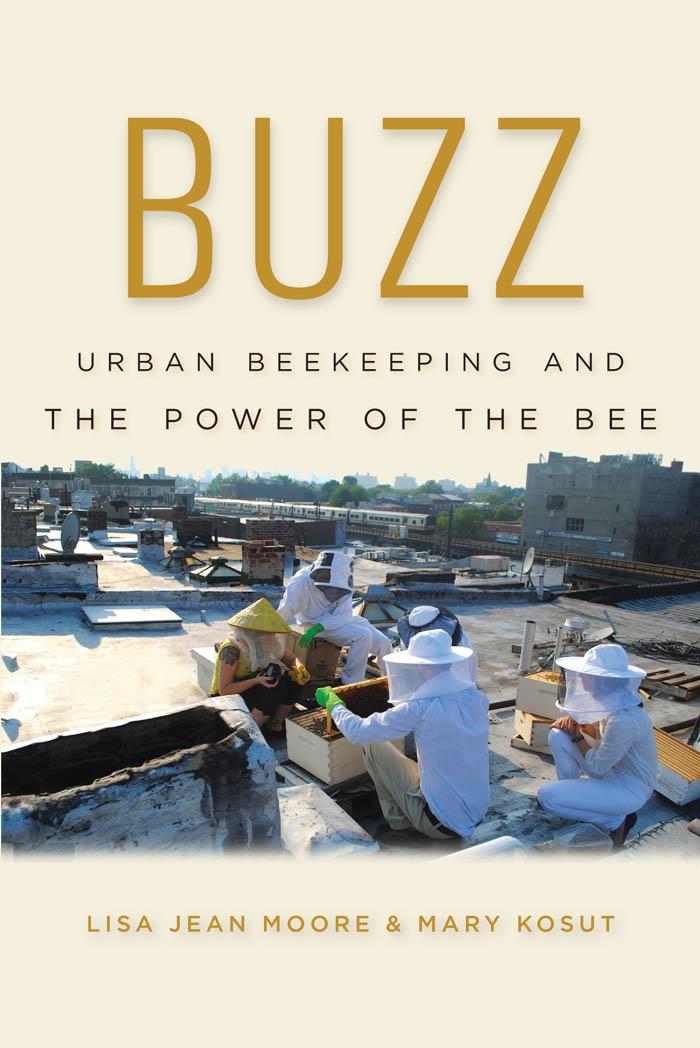
Bees are essential for human survival—one-third of all food on American dining tables depends on the labor of bees. Beyond pollination, the very idea of the bee is ubiquitous in our culture: we can feel buzzed; we can create buzz; we have worker bees, drones, and Queen bees; we establish collectives and even have communities that share a hive-mind. In Buzz, authors Lisa Jean Moore and Mary Kosut convincingly argue that the power of bees goes beyond the food cycle, bees are our mascots, our models, and, unlike any other insect, are both feared and revered.
In this fascinating account, Moore and Kosut travel into the land of urban beekeeping in New York City, where raising bees has become all the rage. We follow them as they climb up on rooftops, attend beekeeping workshops and honey festivals, and even put on full-body beekeeping suits and open up the hives. In the process, we meet a passionate, dedicated, and eclectic group of urban beekeepers who tend to their brood with an emotional and ecological connection that many find restorative and empowering. Kosut and Moore also interview professional beekeepers and many others who tend to their bees for their all-important production of a food staple: honey. The artisanal food shops that are so popular in Brooklyn are a perfect place to sell not just honey, but all manner of goods: soaps, candles, beeswax, beauty products, and even bee pollen.
Buzz also examines media representations of bees, such as children’s books, films, and consumer culture, bringing to light the reciprocal way in which the bee and our idea of the bee inform one another. Partly an ethnographic investigation and partly a meditation on the very nature of human/insect relations, Moore and Kosut argue that how we define, visualize, and interact with bees clearly reflects our changing social and ecological landscape, pointing to how we conceive of and create culture, and how, in essence, we create ourselves.
Pay easily by card, Klarna, Apple Pay or Google Pay. Not happy? You always have a 14-day money-back guarantee. Read more in our terms. If you have any questions, email us at hello@memmo.org.
Memmo makes studying easier – wherever you are in the world. We bring your course books and smart study tools together in one place: summaries, quizzes, podcasts and flashcards. Plus Ted, your study buddy who answers anything you wonder. Over 50,000 students already study here – built to help you learn faster and stress less.