
Uncovers the surprising cause behind the recent rise of fake news
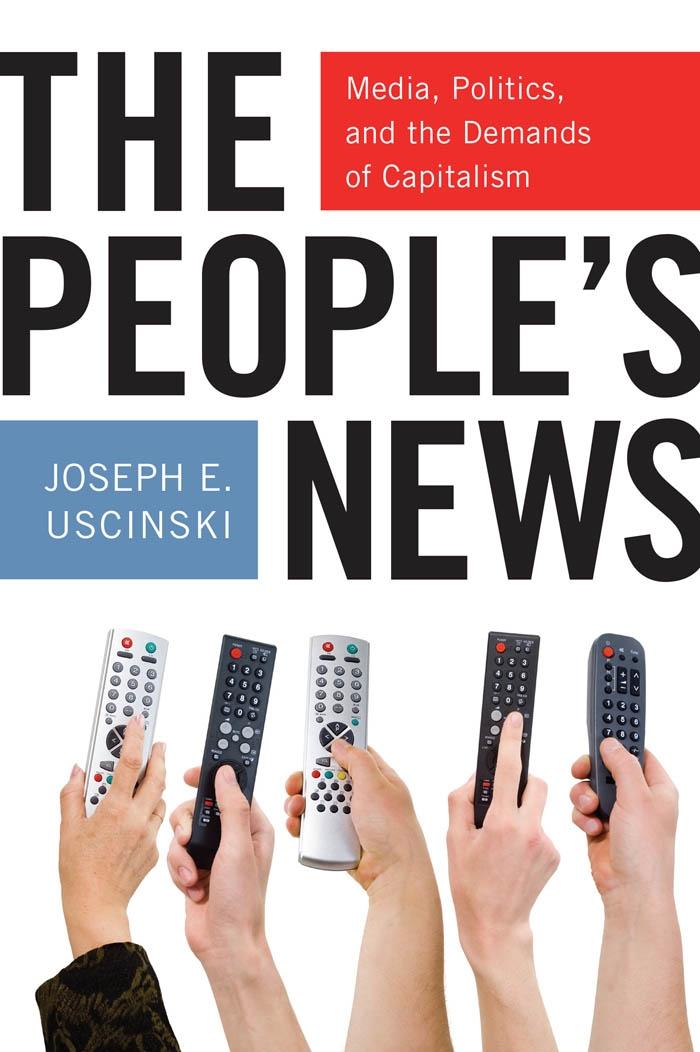
In an ideal world, journalists act selflessly and in the public interest regardless of the financial consequences. However, in reality, news outlets no longer provide the most important and consequential stories to audiences; instead, news producers adjust news content in response to ratings, audience demographics, and opinion polls. While such criticisms of the news media are widely shared, few can agree on the causes of poor news quality. The People’s News argues that the incentives in the American free market drive news outlets to report news that meets audience demands, rather than democratic ideals. In short, audiences’ opinions drive the content that so often passes off as “the news.”
The People’s News looks at news not as a type of media but instead as a commodity bought and sold on the market, comparing unique measures of news content to survey data from a wide variety of sources. Joseph Uscinski’s rigorous analysis shows news firms report certain issues over others—not because audiences need to know them, but rather, because of market demands. Uscinski also demonstrates that the influence of market demands also affects the business of news, prohibiting journalists from exercising independent judgment and determining the structure of entire news markets as well as firm branding.
Ultimately, the results of this book indicate profit-motives often trump journalistic and democratic values. The findings also suggest that the media actively responds to audiences, thus giving the public control over their own information environment. Uniting the study of media effects and media content, The People’s News presents a powerful challenge to our ideas of how free market media outlets meet our standards for impartiality and public service.
Pay easily by card, Klarna, Apple Pay or Google Pay. Not happy? You always have a 14-day money-back guarantee. Read more in our terms. If you have any questions, email us at hello@memmo.org.
Memmo makes studying easier – wherever you are in the world. We bring your course books and smart study tools together in one place: summaries, quizzes, podcasts and flashcards. Plus Ted, your study buddy who answers anything you wonder. Over 75,000 students already study here – built to help you learn faster and stress less.