
Winner of the 2015 Rachel Carson Prize presented by the Society for Social Studies of Science
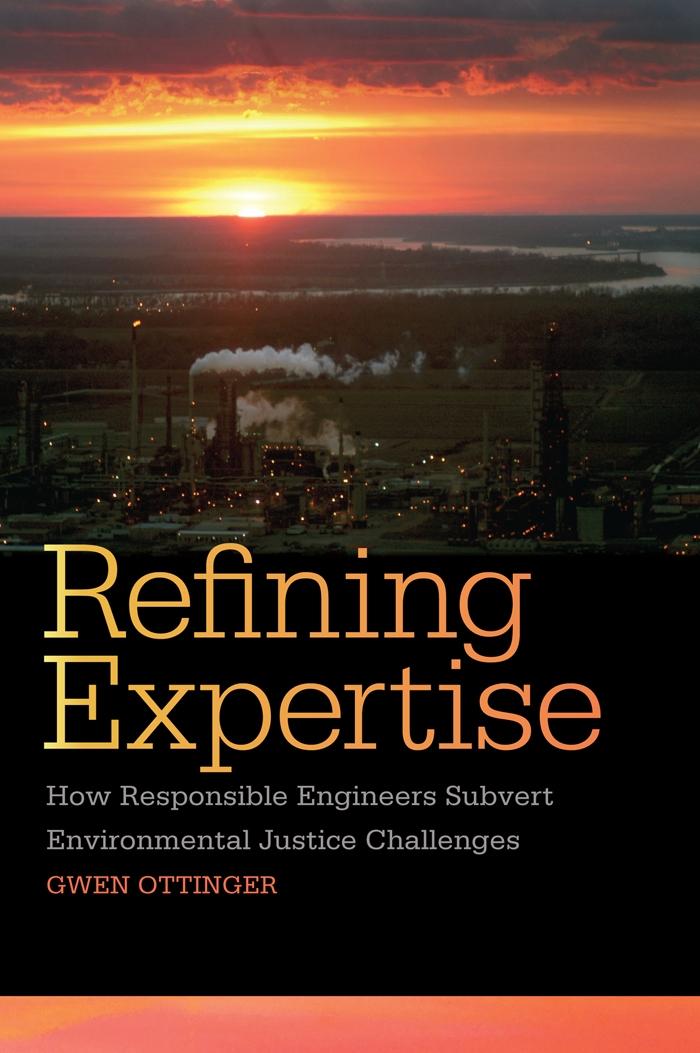
Residents of a small Louisiana town were sure that the oil refinery next door was making them sick. As part of a campaign demanding relocation away from the refinery, they collected scientific data to prove it. Their campaign ended with a settlement agreement that addressed many of their grievances—but not concerns about their health. Yet, instead of continuing to collect data, residents began to let refinery scientists' assertions that their operations did not harm them stand without challenge. What makes a community move so suddenly from actively challenging to apparently accepting experts' authority?
Refining Expertise argues that the answer lies in the way that refinery scientists and engineers defined themselves as experts. Rather than claiming to be infallible, they began to portray themselves as responsible—committed to operating safely and to contributing to the well-being of the community. The volume shows that by grounding their claims to responsibility in influential ideas from the larger culture about what makes good citizens, nice communities, and moral companies, refinery scientists made it much harder for residents to challenge their expertise and thus re-established their authority over scientific questions related to the refinery's health and environmental effects.
Gwen Ottinger here shows how industrial facilities' current approaches to dealing with concerned communities—approaches which leave much room for negotiation while shielding industry's environmental and health claims from
critique—effectively undermine not only individual grassroots campaigns but also environmental justice activism and far-reaching efforts to democratize science. This work drives home the need for both activists and politically engaged scholars to reconfigure their own activities in response, in order to advance community health and robust scientific knowledge about it.
Pay easily by card, Klarna, Apple Pay or Google Pay. Not happy? You always have a 14-day money-back guarantee. Read more in our terms. If you have any questions, email us at hello@memmo.org.
Memmo makes studying easier – wherever you are in the world. We bring your course books and smart study tools together in one place: summaries, quizzes, podcasts and flashcards. Plus Ted, your study buddy who answers anything you wonder. Over 50,000 students already study here – built to help you learn faster and stress less.