
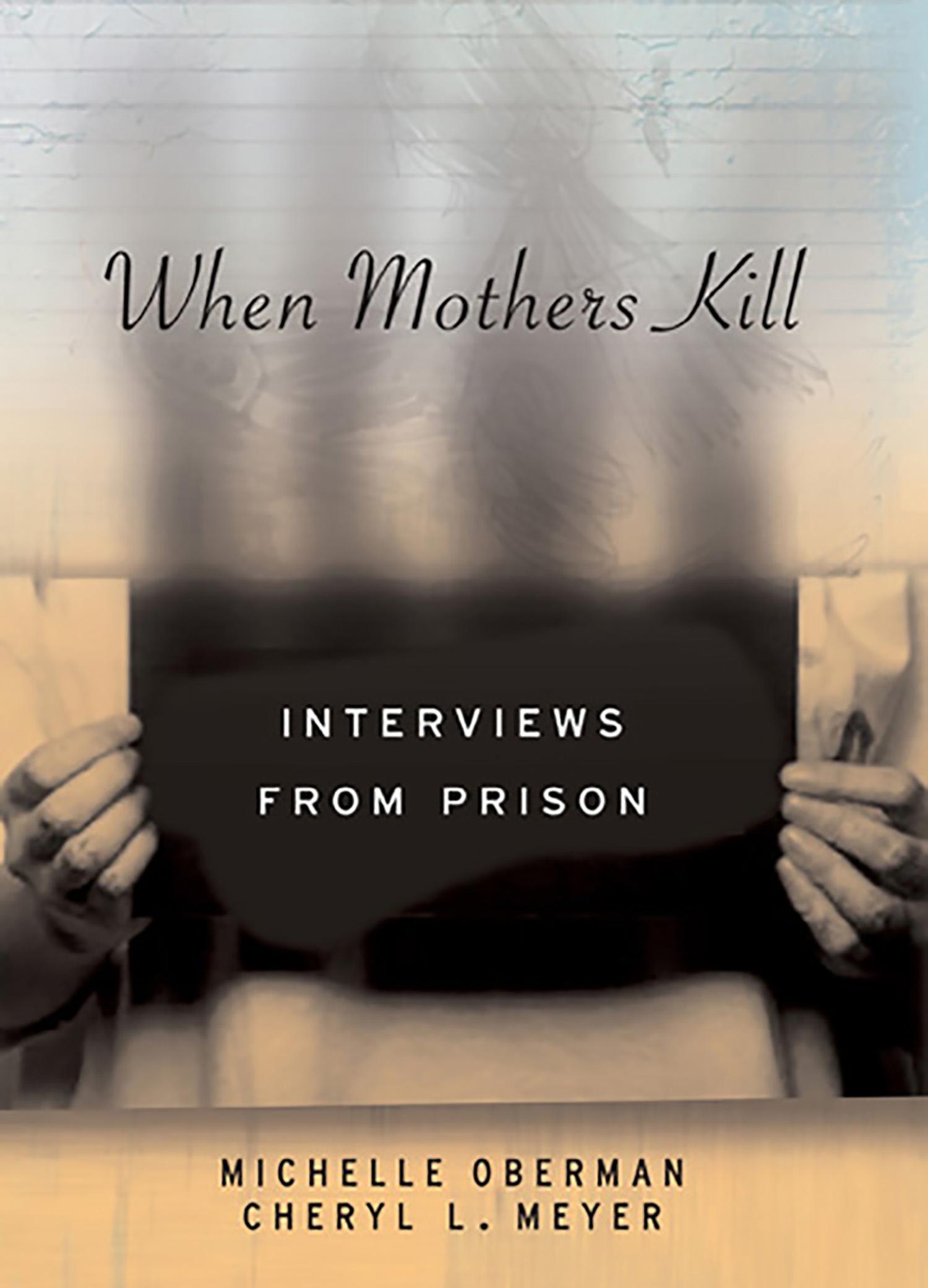
Winner of the 2008 Outstanding Book Award by the Academy of Criminal Justice Sciences
Michelle Oberman and Cheryl L. Meyer don’t write for news magazines or prime-time investigative television shows, but the stories they tell hold the same fascination. When Mothers Kill is compelling. In a clear, direct fashion the authors recount what they have learned from interviewing women imprisoned for killing their children. Readers will be shocked and outraged—as much by the violence the women have endured in their own lives as by the violence they engaged in—but they will also be informed and even enlightened.
Oberman and Meyer are leading authorities on their subject. Their 2001 book, Mothers Who Kill Their Children, drew from hundreds of newspaper articles as well as from medical and social science journals to propose a comprehensive typology of maternal filicide. In that same year, driven by a desire to test their typology—and to better understand child-killing women not just as types but as individuals—Oberman and Meyer began interviewing women who had been incarcerated for the crime. After conducting lengthy, face-to-face interviews with forty prison inmates, they returned and selected eight women to speak with at even greater length. This new book begins with these stories, recounted in the matter-of-fact words of the inmates themselves.
There are collective themes that emerge from these individual accounts, including histories of relentless interpersonal violence, troubled relationships with parents (particularly with mothers), twisted notions of romantic love, and deep conflicts about motherhood. These themes structure the books overall narrative, which also includes an insightful examination of the social and institutional systems that have failed these women. Neither the mothers nor the authors offer these stories as excuses for these crimes.
Pay easily by card, Klarna, Apple Pay or Google Pay. Not happy? You always have a 14-day money-back guarantee. Read more in our terms. If you have any questions, email us at hello@memmo.org.
Memmo makes studying easier – wherever you are in the world. We bring your course books and smart study tools together in one place: summaries, quizzes, podcasts and flashcards. Plus Ted, your study buddy who answers anything you wonder. Over 50,000 students already study here – built to help you learn faster and stress less.