
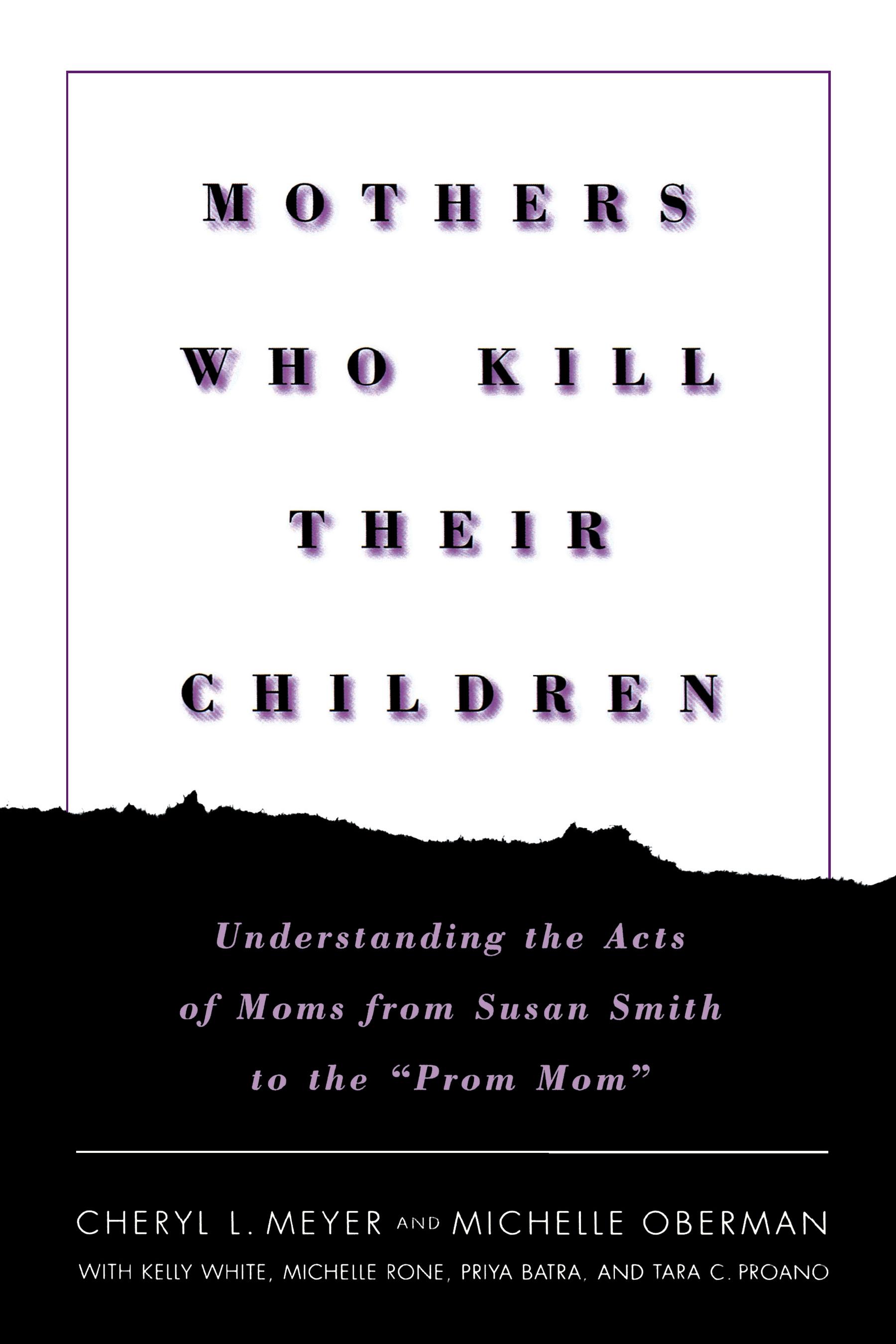
An inside look into patterns and potential prevention plans for one of the most hotly sensationalized crimes
A special kind of horror is reserved for mothers who kill their children. Cases such as those of Susan Smith, who drowned her two young sons by driving her car into a lake, and Melissa Drexler, who disposed of her newborn baby in a restroom at her prom, become media sensations. Unfortunately, in addition to these high-profile cases, hundreds of mothers kill their children in the United States each year. The question most often asked is, why? What would drive a mother to kill her own child?
Those who work with such cases, whether in clinical psychology, social services, law enforcement or academia, often lack basic understandings about the types of circumstances and patterns which might lead to these tragic deaths, and the social constructions of motherhood which may affect women's actions. These mothers oftentimes defy the myths and media exploitation of them as evil, insane, or lacking moral principles, and they are not a homogenous group. In obvious ways, intervention strategies should differ for a teenager who denies her pregnancy and then kills her newborn and a mother who kills her two toddlers out of mental illness or to further a relationship. A typology is needed to help us to understand the different cases that commonly occur and the patterns they follow in order to make possible more effective prevention plans.
Mothers Who Kill Their Children draws on extensive research to identify clear patterns among the cases of women who kill their children, shedding light on why some women commit these acts. The characteristics the authors establish will be helpful in creating more meaningful policies, more targeted intervention strategies, and more knowledgeable evaluations of these cases when they arise.
Pay easily by card, Klarna, Apple Pay or Google Pay. Not happy? You always have a 14-day money-back guarantee. Read more in our terms. If you have any questions, email us at hello@memmo.org.
Memmo makes studying easier – wherever you are in the world. We bring your course books and smart study tools together in one place: summaries, quizzes, podcasts and flashcards. Plus Ted, your study buddy who answers anything you wonder. Over 50,000 students already study here – built to help you learn faster and stress less.