
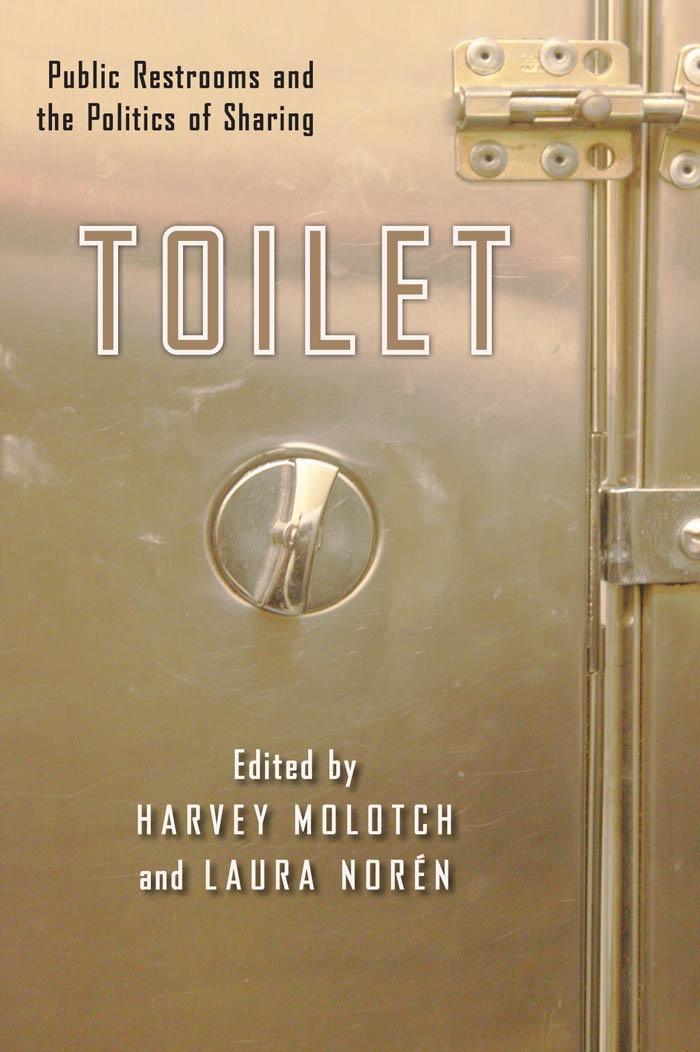
A sociological study of public restrooms
So much happens in the public toilet that we never talk about. Finding the right door, waiting in line, and using the facilities are often undertaken with trepidation. Don’t touch anything. Try not to smell. Avoid eye contact. And for men, don’t look down or let your eyes stray. Even washing one’s hands are tied to anxieties of disgust and humiliation. And yet other things also happen in these spaces: babies are changed, conversations are had, make-up is applied, and notes are scrawled for posterity.
Beyond these private issues, there are also real public concerns: problems of public access, ecological waste, and—in many parts of the world—sanitation crises. At public events, why are women constantly waiting in long lines but not men? Where do the homeless go when cities decide to close public sites? Should bathrooms become standardized to accommodate the disabled? Is it possible to create a unisex bathroom for transgendered people?
In Toilet, noted sociologist Harvey Molotch and Laura Norén bring together twelve essays by urbanists, historians and cultural analysts (among others) to shed light on the public restroom. These noted scholars offer an assessment of our historical and contemporary practices, showing us the intricate mechanisms through which even the physical design of restrooms—the configurations of stalls, the number of urinals, the placement of sinks, and the continuing segregation of women’s and men’s bathrooms—reflect and sustain our cultural attitudes towards gender, class, and disability. Based on a broad range of conceptual, political, and down-to-earth viewpoints, the original essays in this volume show how the bathroom—as a practical matter—reveals competing visions of pollution, danger and distinction.
Although what happens in the toilet usually stays in the toilet, this brilliant, revelatory, and often funny book aims to bring it all out into the open, proving that profound and meaningful history can be made even in the can.
Contributors: Ruth Barcan, Irus Braverman, Mary Ann Case, Olga Gershenson, Clara Greed, Zena Kamash,Terry Kogan, Harvey Molotch, Laura Norén, Barbara Penner, Brian Reynolds, and David Serlin.
Pay easily by card, Klarna, Apple Pay or Google Pay. Not happy? You always have a 14-day money-back guarantee. Read more in our terms. If you have any questions, email us at hello@memmo.org.
Memmo makes studying easier – wherever you are in the world. We bring your course books and smart study tools together in one place: summaries, quizzes, podcasts and flashcards. Plus Ted, your study buddy who answers anything you wonder. Over 50,000 students already study here – built to help you learn faster and stress less.