
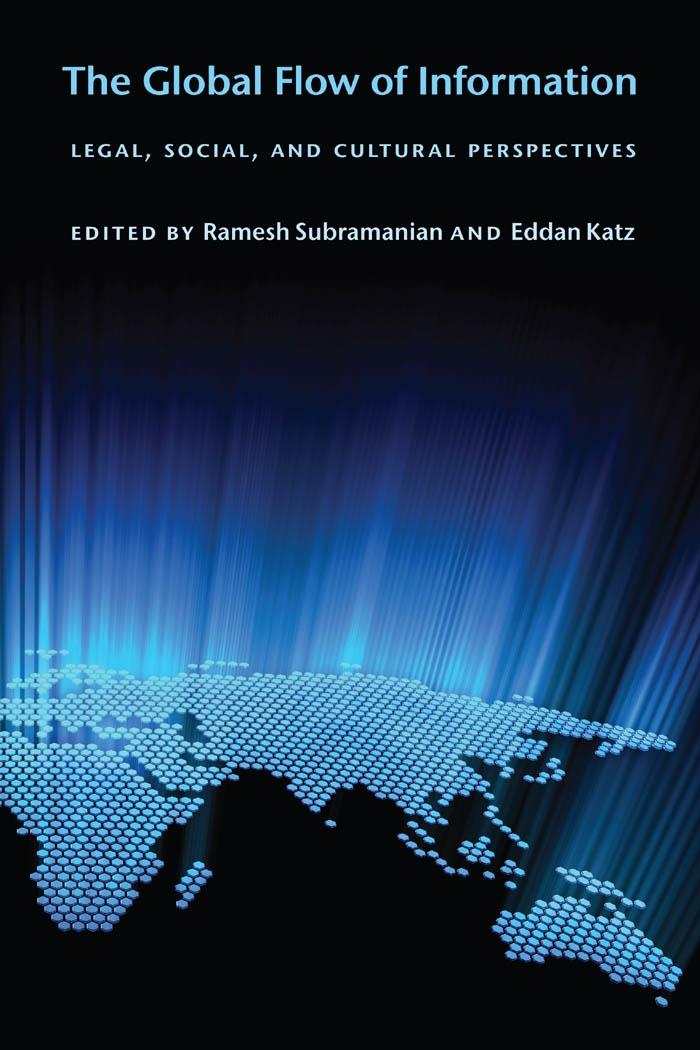
The Internet has been integral to the globalization of a range of goods and production, from intellectual property and scientific research to political discourse and cultural symbols. Yet the ease with which it allows information to flow at a global level presents enormous regulatory challenges. Understanding if, when, and how the law should regulate online, international flows of information requires a firm grasp of past, present, and future patterns of information flow, and their political, economic, social, and cultural consequences.
In The Global Flow of Information, specialists from law, economics, public policy, international studies, and other disciplines probe the issues that lie at the intersection of globalization, law, and technology, and pay particular attention to the wider contextual question of Internet regulation in a globalized world. While individual essays examine everything from the pharmaceutical industry to television to “information warfare” against suspected enemies of the state, all contributors address the fundamental question of whether or not the flow of information across national borders can be controlled, and what role the law should play in regulating global information flows.
Contributors: Frederick M. Abbott, C. Edwin Baker, Jack M. Balkin, Dan L. Burk, Miguel Angel Centeno, Dorothy E. Denning, James Der Derian, Daniel W. Drezner, Jeremy M. Kaplan, Eddan Katz, Stanley N. Katz, Lawrence Liang, Eli Noam, John G. Palfrey, Jr., Victoria Reyes, and Ramesh Subramanian
Pay easily by card, Klarna, Apple Pay or Google Pay. Not happy? You always have a 14-day money-back guarantee. Read more in our terms. If you have any questions, email us at hello@memmo.org.
Memmo makes studying easier – wherever you are in the world. We bring your course books and smart study tools together in one place: summaries, quizzes, podcasts and flashcards. Plus Ted, your study buddy who answers anything you wonder. Over 50,000 students already study here – built to help you learn faster and stress less.