
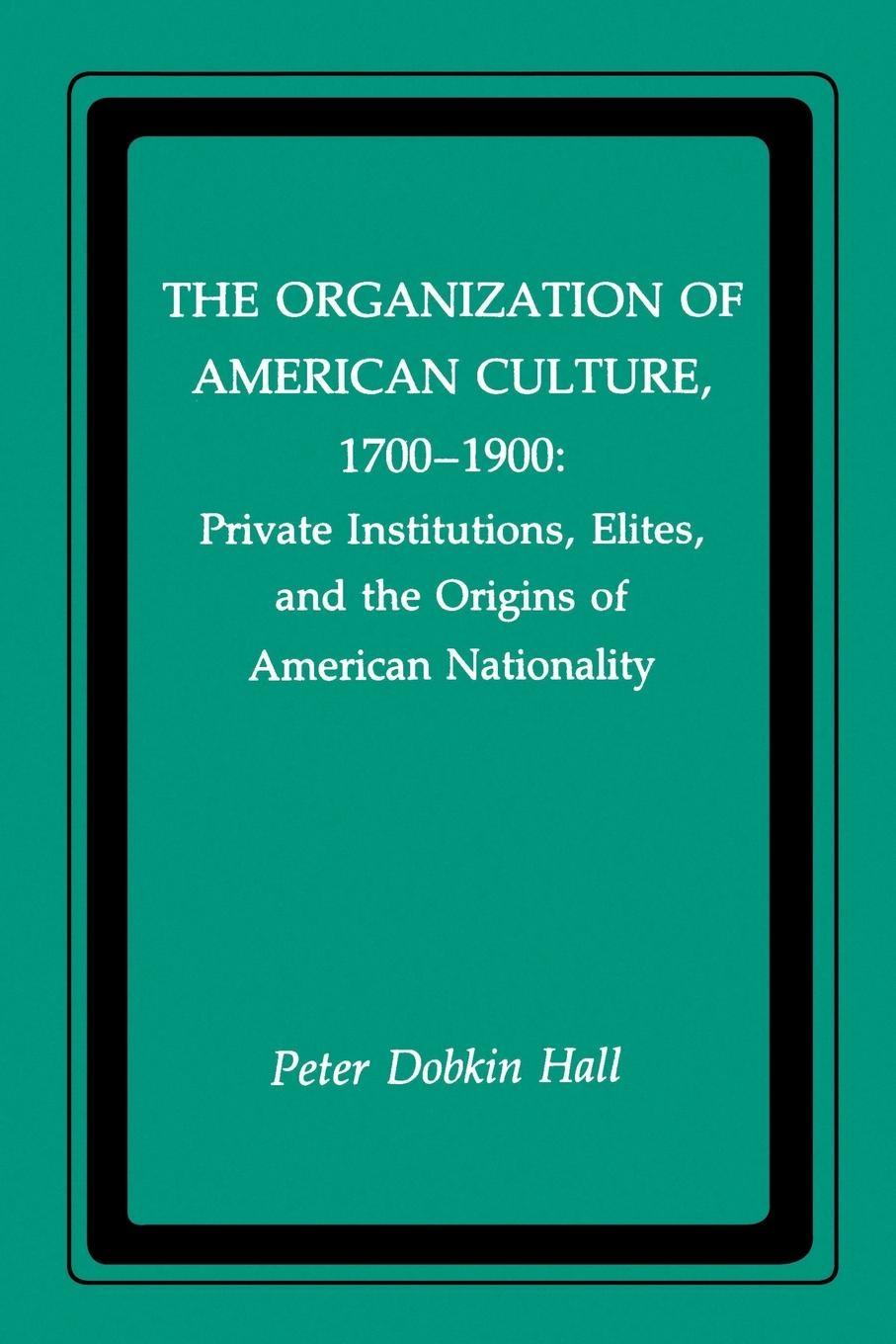
Nationality, argues Peter Hall, did not follow directly from the colonists' declatation of independence from England, nor from the political union of the states under the Constitution of 1789. It was, rather, the product of organizations which socialized individuals to a national outlook. These institutions were the private corportions which Americans used after 1790 to carry on their central activities of production.
The book is in three parts. In the first part the social and economic development of the American colonies is considered. In New England, population growth led to the breakdown of community - and the migration of people to both the cities and the frontier. New England's merchants and professional tried to maintain community leadership in the context of capitalism and democracy and developed a remarkable dependence on pricate corporations and the eleemosynary trust, devices that enabled them to exert influence disproportionate to their numbers. Part two looks at the problem of order and authority after 1790. Tracing the role of such New England-influenced corporate institutions as colleges, religious bodies, professional societeis, and businesses, Hall shows how their promoters sought to "civilize" the increasingly diverse and dispersed American people. With Jefferson's triumph in 1800. these institutions turned to new means of engineering consent, evangelical religion, moral fegorm, and education. The third part of this volume examines the fruition a=of these corporatist efforts. The author looks at the Civil War as a problem in large-scale organization, and the pre- and post-war emergence of a national administrative elite and national institutions of business and culture. Hall concludes with an evaluation of the organizational components of nationality and a consideration of the precedent that the past sets for the creation of internationality.
Pay easily by card, Klarna, Apple Pay or Google Pay. Not happy? You always have a 14-day money-back guarantee. Read more in our terms. If you have any questions, email us at hello@memmo.org.
Memmo makes studying easier – wherever you are in the world. We bring your course books and smart study tools together in one place: summaries, quizzes, podcasts and flashcards. Plus Ted, your study buddy who answers anything you wonder. Over 50,000 students already study here – built to help you learn faster and stress less.