
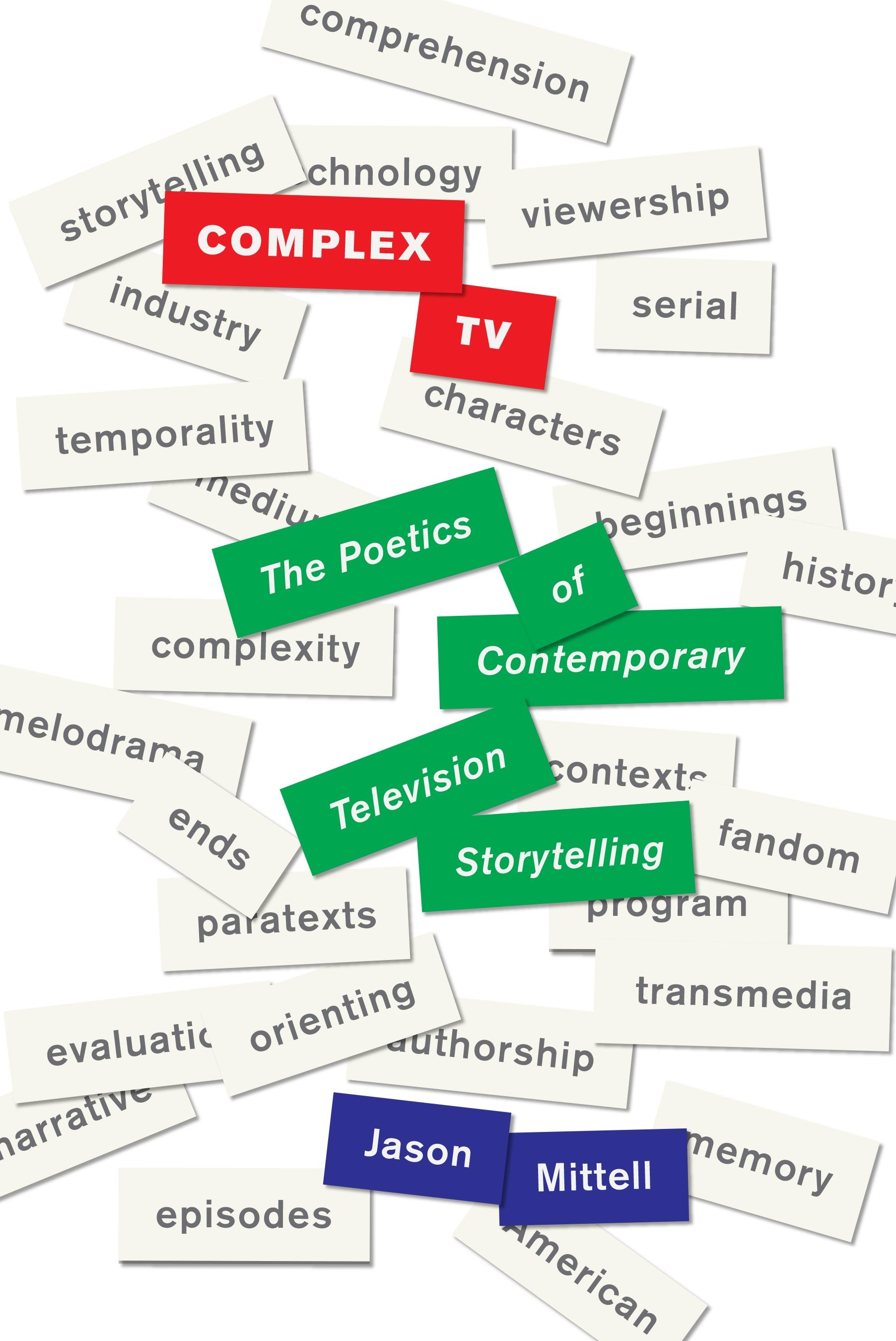
A comprehensive and sustained analysis of the development of storytelling for television
Over the past two decades, new technologies, changing viewer practices, and the proliferation of genres and channels has transformed American television. One of the most notable impacts of these shifts is the emergence of highly complex and elaborate forms of serial narrative, resulting in a robust period of formal experimentation and risky programming rarely seen in a medium that is typically viewed as formulaic and convention bound.
Complex TV offers a sustained analysis of the poetics of television narrative, focusing on how storytelling has changed in recent years and how viewers make sense of these innovations. Through close analyses of key programs, including The Wire, Lost, Breaking Bad, The Sopranos, Veronica Mars, Curb Your Enthusiasm, and Mad Men the book traces the emergence of this narrative mode, focusing on issues such as viewer comprehension, transmedia storytelling, serial authorship, character change, and cultural evaluation. Developing a television-specific set of narrative theories, Complex TV argues that television is the most vital and important storytelling medium of our time.
Pay easily by card, Klarna, Apple Pay or Google Pay. Not happy? You always have a 14-day money-back guarantee. Read more in our terms. If you have any questions, email us at hello@memmo.org.
Memmo makes studying easier – wherever you are in the world. We bring your course books and smart study tools together in one place: summaries, quizzes, podcasts and flashcards. Plus Ted, your study buddy who answers anything you wonder. Over 50,000 students already study here – built to help you learn faster and stress less.