
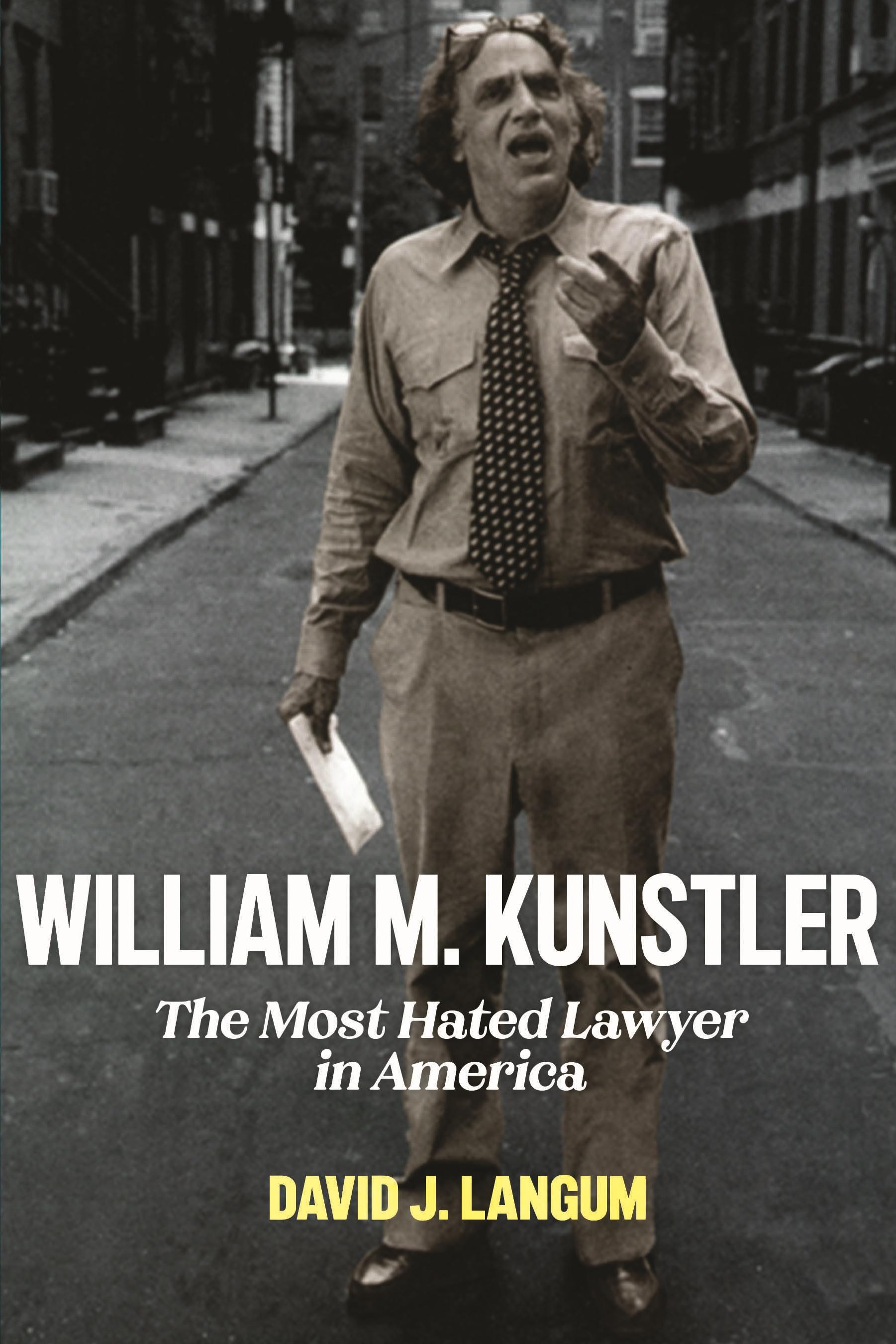
The true story of the defender of the Chicago 7
Alternately vilified as a publicity-seeking egoist and lauded as a rambunctious, fearless advocate, William Kunstler consistently embodied both of these qualities.
Kunstler's unrelenting, radical critique of American racism and the legal system took shape as a result of his efforts to enlist the federal judicial system to support the civil rights movement. In the late 60s and the 70s, Kunstler, refocusing his attention on the Black Power and anti-war movement, garnered considerable public attention as defender of the Chicago Seven, and went on to represent such controversial figures as Leonard Peltier, the American Indian Movement leader charged with killing an FBI agent, and Jack Ruby, the killer of Lee Harvey Oswald. Later, Kunstler briefly represented Colin Ferguson, the Long Island Railroad mass murderer, outraging fans and detractors alike with his invocation of the infamous "black rage" defense.
Defending those most loathed by mainstream, conventional America, William Kunstler delighted in taking on fiercely political cases, usually representing society's outcasts and pariahs free of charge and often achieving remarkable courtroom results in seemingly hopeless cases. Though Kunstler never gave up his revolutionary underpinnings, he gradually turned from defending clients whose political beliefs he personally supported to taking on apolitical clients, falling back on the broad rationale that his was a general struggle against an oppressive government.
What ideological and tactical motives explain Kunstler's obsessive craving for media attention, his rhetorical flourishes in the courtroom and his instinctive and relentless drive for action? How did Kunstler migrate from a comfortable middle-class background to a life as a staunchly rebellious figure in social and legal history? David Langum's portrait gives depth to the already notorious breadth of William Kunstler's life.
Pay easily by card, Klarna, Apple Pay or Google Pay. Not happy? You always have a 14-day money-back guarantee. Read more in our terms. If you have any questions, email us at hello@memmo.org.
Memmo makes studying easier – wherever you are in the world. We bring your course books and smart study tools together in one place: summaries, quizzes, podcasts and flashcards. Plus Ted, your study buddy who answers anything you wonder. Over 50,000 students already study here – built to help you learn faster and stress less.