
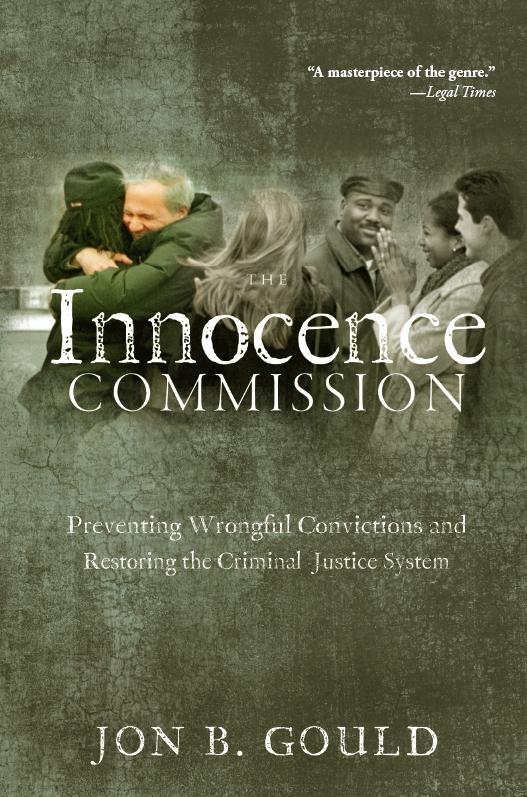
DNA testing and advances in forensic science have shaken the foundations of the U.S. criminal justice system. One of the most visible results is the exoneration of inmates who were wrongly convicted and incarcerated, many of them sentenced to death for crimes they did not commit. This has caused a quandary for many states: how can claims of innocence be properly investigated and how can innocent inmates be reliably distinguished from the guilty? In answer, some states have created “innocence commissions” to establish policies and provide legal assistance to the improperly imprisoned.
The Innocence Commission describes the creation and first years of the Innocence Commission for Virginia (ICVA), the second innocence commission in the nation and the first to conduct a systematic inquiry into all cases of wrongful conviction. Written by Jon B. Gould, the Chair of the ICVA, who is a professor of justice studies and an attorney, the author focuses on twelve wrongful conviction cases to show how and why wrongful convictions occur, what steps legal and state advocates took to investigate the convictions, how these prisoners were ultimately freed, and what lessons can be learned from their experiences.
Gould recounts how a small band of attorneys and other advocates — in Virginia and around the country — have fought wrongful convictions in court, advanced the subject of wrongful convictions in the media, and sought to remedy the issue of wrongful convictions in the political arena. He makes a strong case for the need for Innocence Commissions in every state, showing that not only do Innocence Commissions help to identify weaknesses in the criminal justice system and offer workable improvements, but also protect society by helping to ensure that actual perpetrators are expeditiously identified, arrested, and brought to trial. Everyone has an interest in preventing wrongful convictions, from police officers and prosecutors, who seek the latest and best investigative techniques, to taxpayers, who want an efficient criminal justice system, to suspects who are erroneously pursued and sometimes convicted.
Free of legal jargon and written for a general audience, The Innocence Commission is instructive, informative, and highly compelling reading.
Pay easily by card, Klarna, Apple Pay or Google Pay. Not happy? You always have a 14-day money-back guarantee. Read more in our terms. If you have any questions, email us at hello@memmo.org.
Memmo makes studying easier – wherever you are in the world. We bring your course books and smart study tools together in one place: summaries, quizzes, podcasts and flashcards. Plus Ted, your study buddy who answers anything you wonder. Over 50,000 students already study here – built to help you learn faster and stress less.