
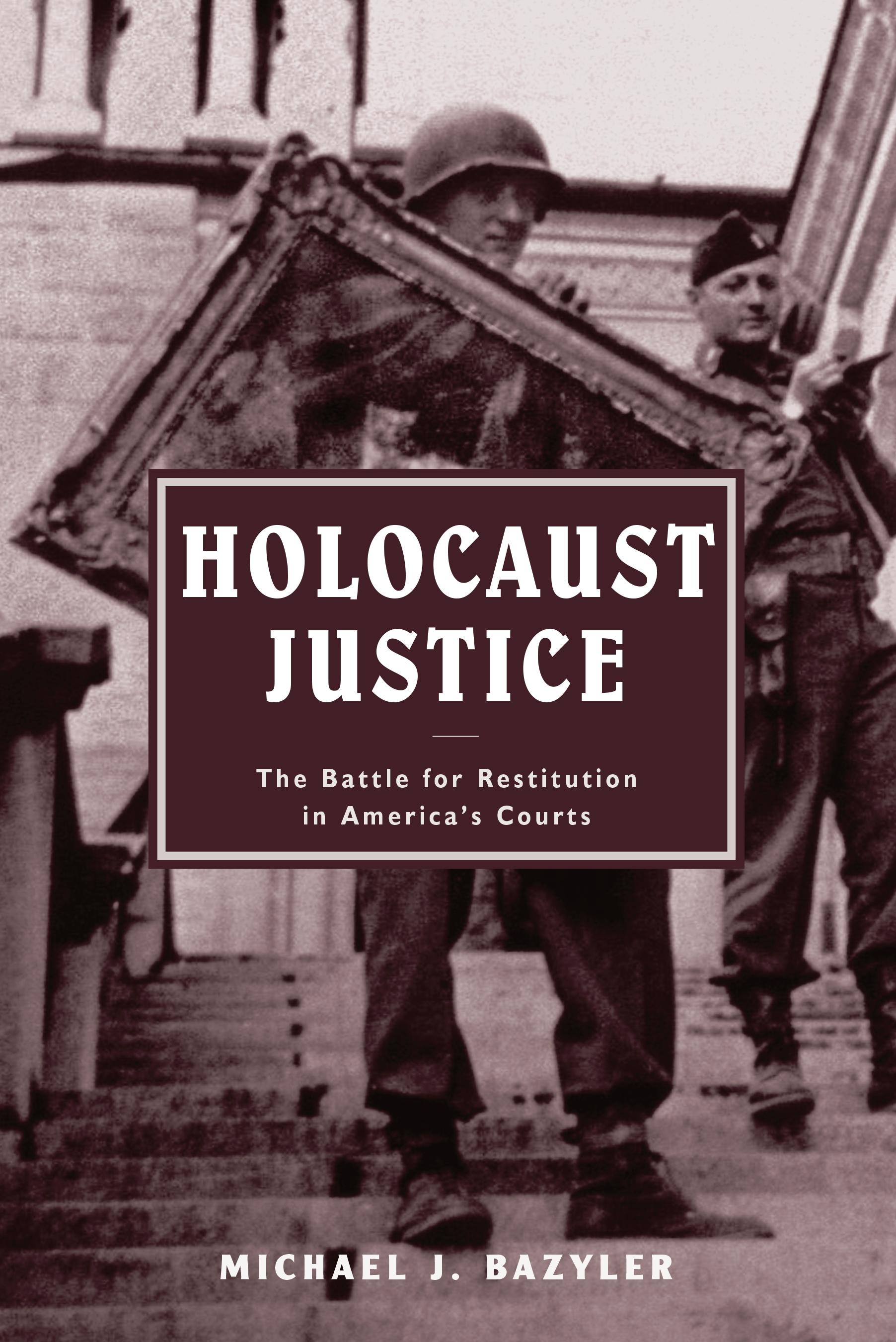
The first book to tell the complete story of the American attempt at restitution for victims of the Holocaust
The Holocaust was not only the greatest murder in history; it was also the greatest theft. Historians estimate that the Nazis stole roughly $230 billion to $320 billion in assets (figured in today’s dollars), from the Jews of Europe. Since the revelations concerning the wartime activities of the Swiss banks first broke in the late 1990s, an ever-widening circle of complicity and wrongdoing against Jews and other victims has emerged in the course of lawsuits waged by American lawyers. These suits involved German corporations, French and Austrian banks, European insurance companies, and double thefts of art—first by the Nazis, and then by museums and private collectors refusing to give them up. All of these injustices have come to light thanks to the American legal system.
Holocaust Justice is the first book to tell the complete story of the legal campaign, conducted mainly on American soil, to address these injustices. Michael Bazyler, a legal scholar specializing in human rights and international law, takes an in-depth look at the series of lawsuits that gave rise to a coherent campaign to right historical wrongs. Diplomacy, individual pleas for justice by Holocaust survivors and various Jewish organizations for the last fifty years, and even suits in foreign courts, had not worked. It was only with the intervention of the American courts that elderly Holocaust survivors and millions of other wartime victims throughout the world were awarded compensation, and equally important, acknowledgment of the crimes committed against them.
The unique features of the American system of justice—which allowed it to handle claims that originated over fifty years ago and in another part of the world—made it the only forum in the world where Holocaust claims could be heard. Without the lawsuits brought by American lawyers, Bazyler asserts, the claims of the elderly survivors and their heirs would continue to be ignored.
For the first time in history, European and even American corporations are now being forced to pay restitution for war crimes totaling billions of dollars to Holocaust survivors and other victims. Bazyler deftly tells the unfolding stories: the Swiss banks’ attempt to hide dormant bank accounts belonging to Holocaust survivors or heirs of those who perished in the war; German private companies that used slave laborers during World War II—including American subsidiaries in Germany; Italian, Swiss and German insurance companies that refused to pay on prewar policies; and the legal wrangle going on today in American courts over art looted by the Nazis in wartime Europe. He describes both the human and legal dramas involved in the struggle for restitution, bringing the often-forgotten voices of Holocaust survivors to the forefront. He also addresses the controversial legal and moral issues over Holocaust restitution and the ethical debates over the distribution of funds.
With an eye to the future, Bazyler discusses the enduring legacy of Holocaust restitution litigation, which is already being used as a model for obtaining justice for historical wrongs on both the domestic and international stage.
Pay easily by card, Klarna, Apple Pay or Google Pay. Not happy? You always have a 14-day money-back guarantee. Read more in our terms. If you have any questions, email us at hello@memmo.org.
Memmo makes studying easier – wherever you are in the world. We bring your course books and smart study tools together in one place: summaries, quizzes, podcasts and flashcards. Plus Ted, your study buddy who answers anything you wonder. Over 50,000 students already study here – built to help you learn faster and stress less.