
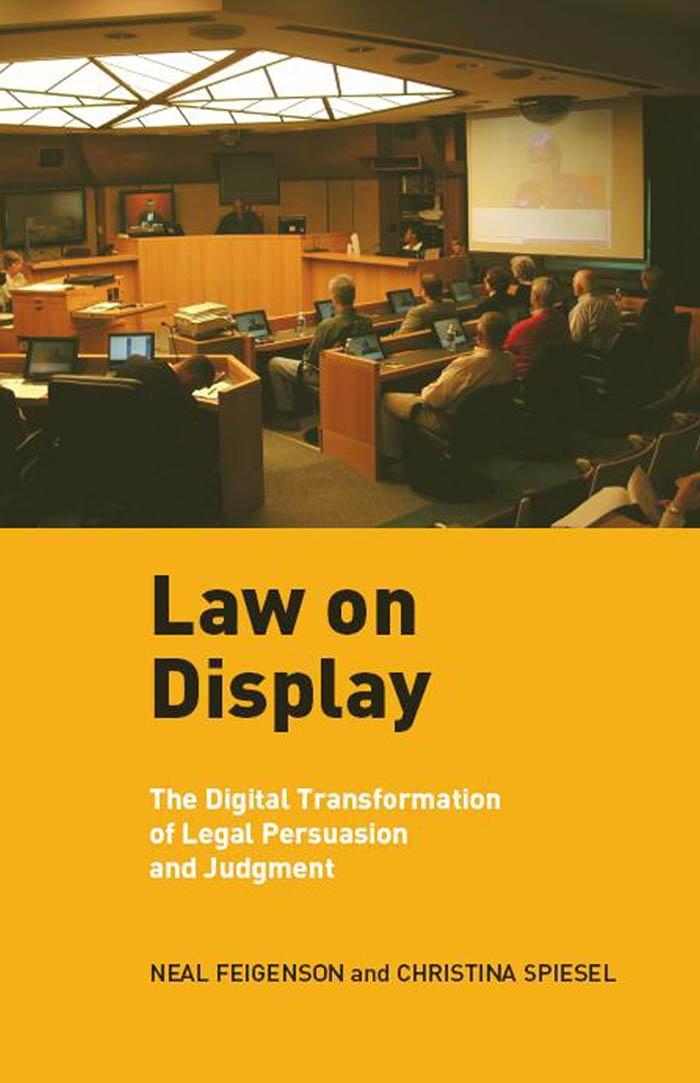
Visual and multimedia digital technologies are transforming the practice of law: how lawyers construct and argue their cases, present evidence to juries, and communicate with each other. They are also changing how law is disseminated throughout and used by the general public. What are these technologies, how are they used and perceived in the courtroom and in wider culture, and how do they affect legal decision making?
In this comprehensive survey and analysis of how new visual technologies are transforming both the practice and culture of American law, Neal Feigenson and Christina Spiesel explain how, when, and why legal practice moved from a largely words-only environment to one more dependent on and driven by images, and how rapidly developing technologies have further accelerated this change. They discuss older visual technologies, such as videotape evidence, and then current and future uses of visual and multimedia digital technologies, including trial presentation software and interactive multimedia. They also describe how law itself is going online, in the form of virtual courts, cyberjuries, and more, and explore the implications of law’s movement to computer screens. Throughout Law on Display, the authors illustrate their analysis with examples from a wide range of actual trials.
Pay easily by card, Klarna, Apple Pay or Google Pay. Not happy? You always have a 14-day money-back guarantee. Read more in our terms. If you have any questions, email us at hello@memmo.org.
Memmo makes studying easier – wherever you are in the world. We bring your course books and smart study tools together in one place: summaries, quizzes, podcasts and flashcards. Plus Ted, your study buddy who answers anything you wonder. Over 50,000 students already study here – built to help you learn faster and stress less.