
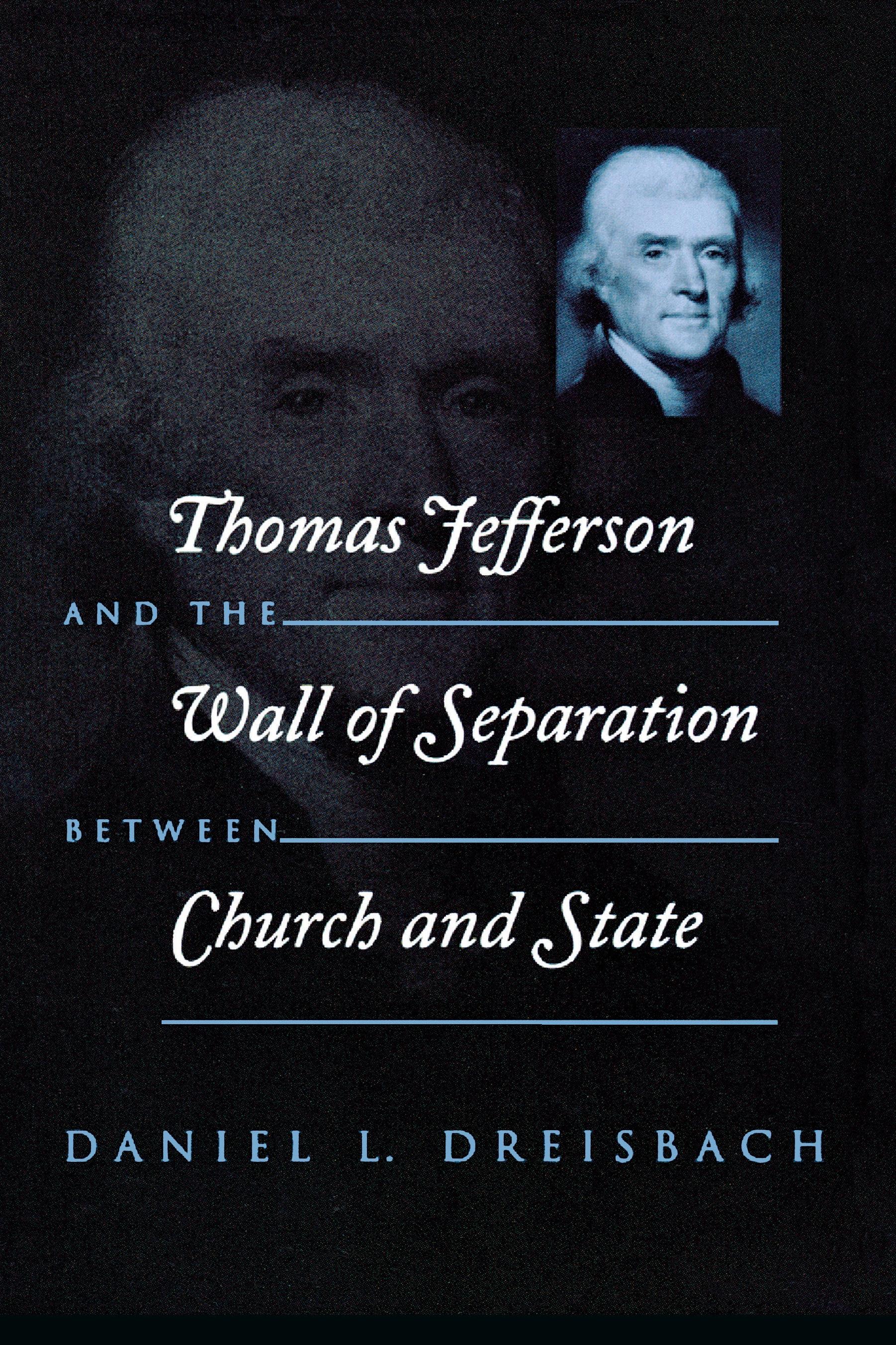
The origins, controversial uses, and competing interpretations of Jefferson's famous remark—"wall of separation between church and state"
No phrase in American letters has had a more profound influence on church-state law, policy, and discourse than Thomas Jefferson’s “wall of separation between church and state,” and few metaphors have provoked more passionate debate. Introduced in an 1802 letter to the Danbury, Connecticut Baptist Association, Jefferson’s “wall” is accepted by many Americans as a concise description of the U.S. Constitution’s church-state arrangement and conceived as a virtual rule of constitutional law.
Despite the enormous influence of the “wall” metaphor, almost no scholarship has investigated the text of the Danbury letter, the context in which it was written, or Jefferson’s understanding of his famous phrase. Thomas Jefferson and the Wall of Separation Between Church and State offers an in-depth examination of the origins, controversial uses, and competing interpretations of this powerful metaphor in law and public policy.
Pay easily by card, Klarna, Apple Pay or Google Pay. Not happy? You always have a 14-day money-back guarantee. Read more in our terms. If you have any questions, email us at hello@memmo.org.
Memmo makes studying easier – wherever you are in the world. We bring your course books and smart study tools together in one place: summaries, quizzes, podcasts and flashcards. Plus Ted, your study buddy who answers anything you wonder. Over 50,000 students already study here – built to help you learn faster and stress less.