
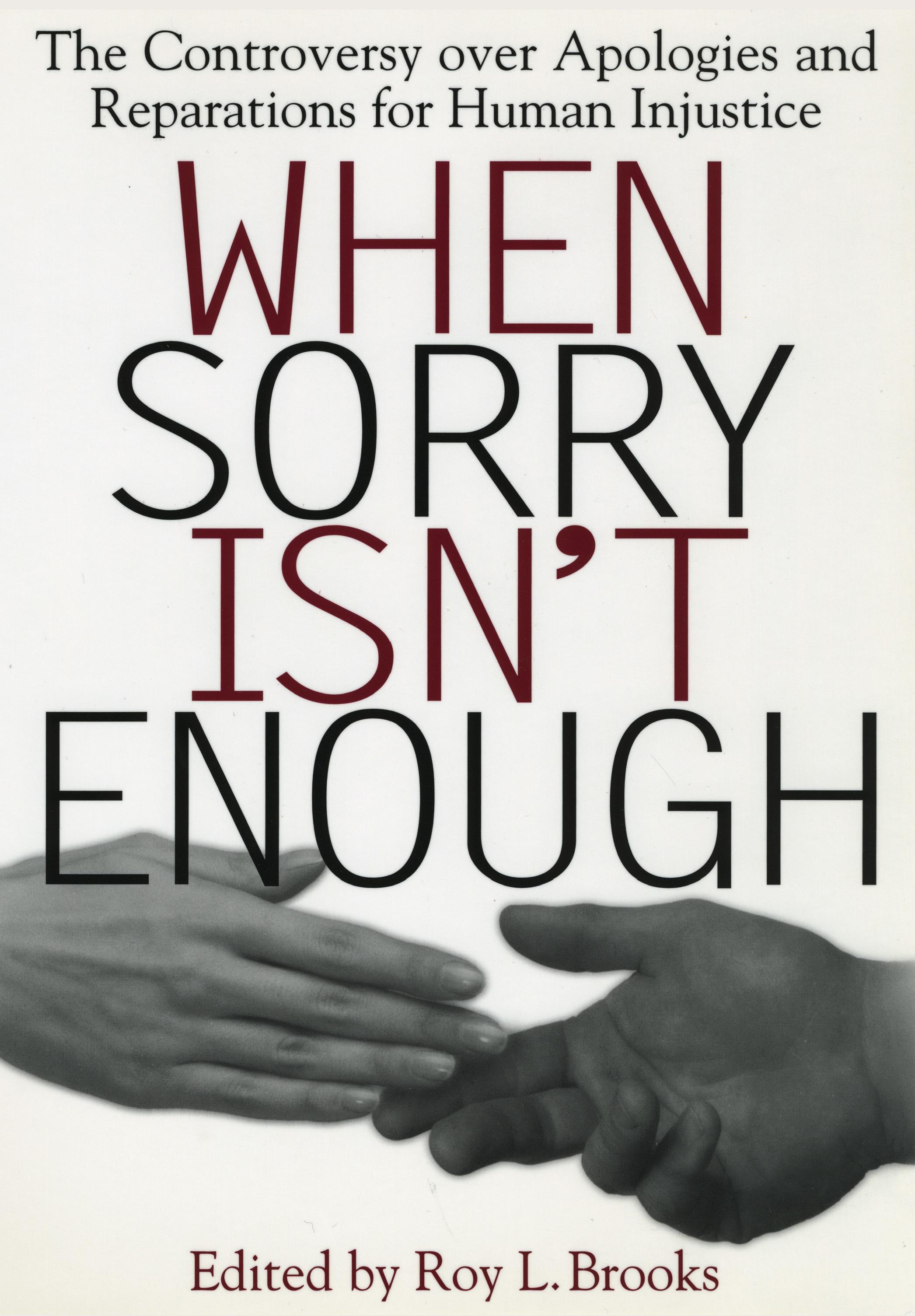
Leading scholars, activists, and political leaders on being victim's of the world's worst atrocities
"How much compensation ought to be paid to a woman who was raped 7,500 times? What would the members of the Commission want for their daughters if their daughters had been raped even once?"—Karen Parker, speaking before the U.N. Commission on Human Rights
Seemingly every week, a new question arises relative to the current worldwide ferment over human injustices. Why does the U.S. offer $20,000 atonement money to Japanese Americans relocated to concentration camps during World War II, while not even apologizing to African Americans for 250 years of human bondage and another century of institutionalized discrimination? How can the U.S. and Canada best grapple with the genocidal campaigns against Native Americans on which their countries were founded? How should Japan make amends to Korean "comfort women" sexually enslaved during World War II? Why does South Africa deem it necessary to grant amnesty to whites who tortured and murdered blacks under apartheid? Is Germany's highly praised redress program, which has paid billions of dollars to Jews worldwide, a success, and, as such, an example for others?More generally, is compensation for a historical wrong dangerous "blood money" that allows a nation to wash its hands forever of its responsibility to those it has injured?
A rich collection of essays from leading scholars, pundits, activists, and political leaders the world over, many written expressly for this volume, When Sorry Isn't Enough also includes the voices of the victims of some of the world's worst atrocities, thereby providing a panoramic perspective on an international controversy often marked more by heat than reason.
Pay easily by card, Klarna, Apple Pay or Google Pay. Not happy? You always have a 14-day money-back guarantee. Read more in our terms. If you have any questions, email us at hello@memmo.org.
Memmo makes studying easier – wherever you are in the world. We bring your course books and smart study tools together in one place: summaries, quizzes, podcasts and flashcards. Plus Ted, your study buddy who answers anything you wonder. Over 50,000 students already study here – built to help you learn faster and stress less.