
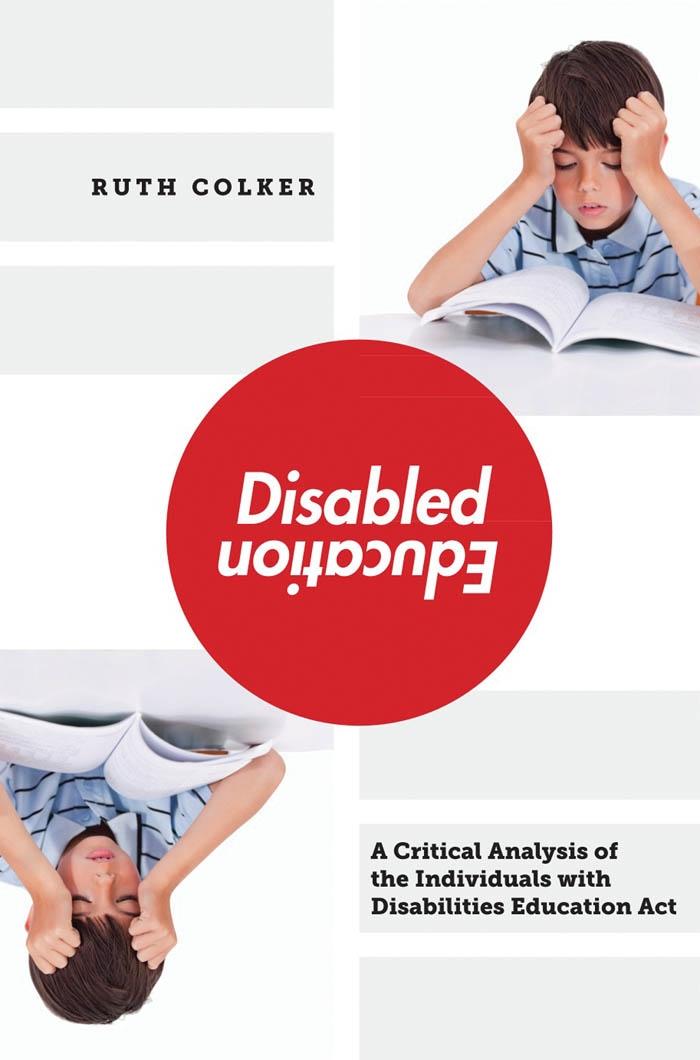
Enacted in
1975, the Education for All Handicapped Children Act – now called the
Individuals with Disabilities Education Act (IDEA) provides all children with
the right to a free and appropriate public education. On the face of it, the
IDEA is a shining example of law’s democratizing impulse. But is that really
the case? In Disabled Education, Ruth Colker digs deep beneath the
IDEA’s surface and reveals that the IDEA contains flaws that were evident at
the time of its enactment that limit its effectiveness for poor and minority
children.
Both an
expert in disability law and the mother of a child with a hearing impairment,
Colker learned first-hand of the Act’s limitations when she embarked on a legal
battle to persuade her son’s school to accommodate his impairment. Colker was
able to devote the considerable resources of a middle-class lawyer to her
struggle and ultimately won, but she knew that the IDEA would not have
benefitted her son without her time-consuming and costly legal intervention.
Her experience led her to investigate other cases, which confirmed her
suspicions that the IDEA best serves those with the resources to advocate
strongly for their children. The IDEA
also works only as well as the rest of the system does: struggling schools that
serve primarily poor students of color rarely have the funds to provide
appropriate special education and related services to their students with
disabilities. Through a close examination of the historical evolution of the
IDEA, the actual experiences of children who fought for their education in
court, and social science literature on the meaning of “learning disability,”
Colker reveals the IDEA’s shortcomings, but also suggests ways in which
resources might be allocated more evenly along class lines.
Pay easily by card, Klarna, Apple Pay or Google Pay. Not happy? You always have a 14-day money-back guarantee. Read more in our terms. If you have any questions, email us at hello@memmo.org.
Memmo makes studying easier – wherever you are in the world. We bring your course books and smart study tools together in one place: summaries, quizzes, podcasts and flashcards. Plus Ted, your study buddy who answers anything you wonder. Over 50,000 students already study here – built to help you learn faster and stress less.