
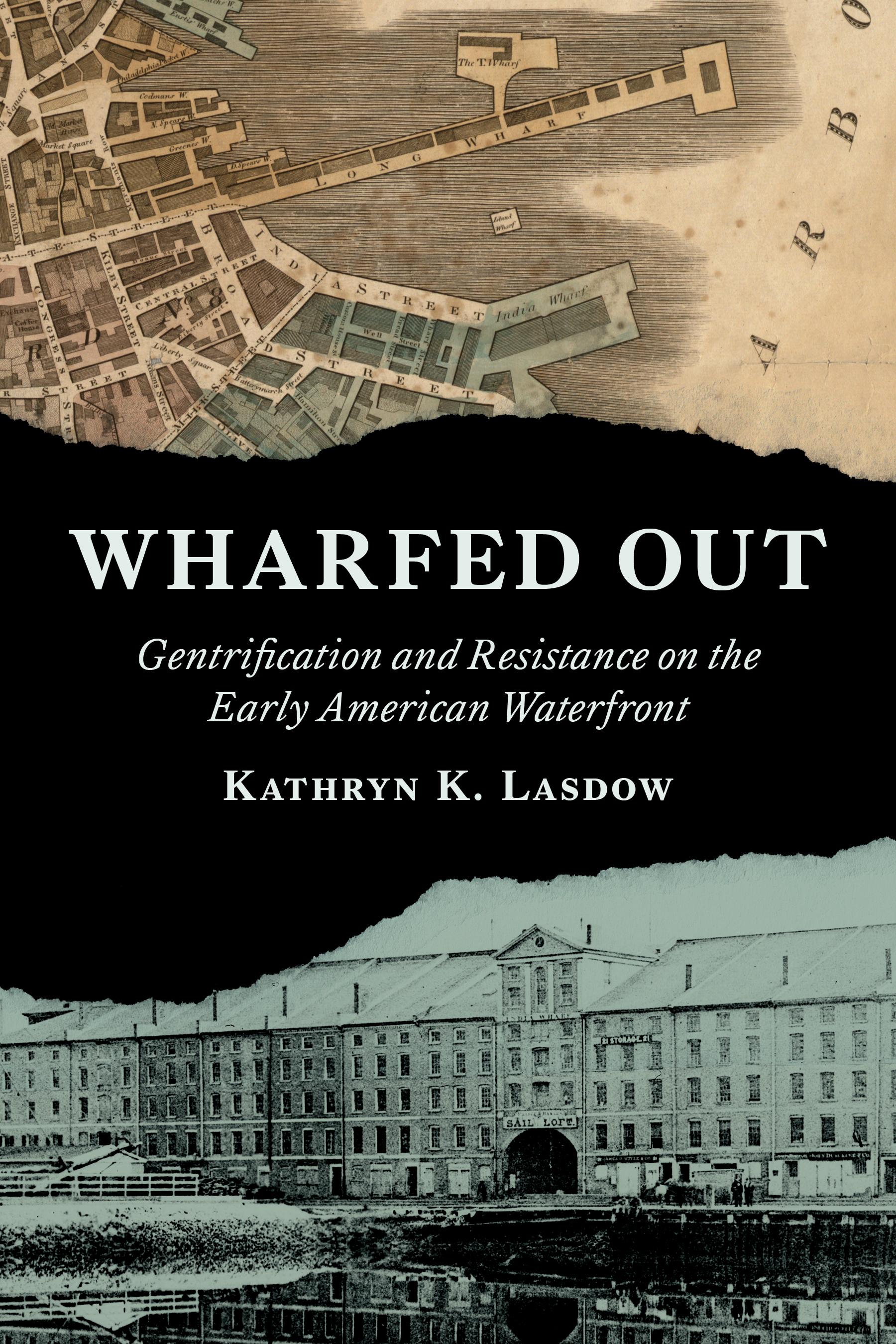
How urban waterfront development in the early republic displaced working-class communities, creating lasting patterns of inequality and resistance
In the early years of American nationhood, civic leaders undertook the construction of thousands of acres of man-made land along urban coastlines—a process known colloquially as “wharfing out,” in which landfilled blocks increased a city’s surface area by pushing outward into deep water. Workers cleared wetlands and dredged harbors in service of ever-expanding ports and waterfront workspace in cities such as Boston, New York, Philadelphia, and Charleston. But not everyone shared in the benefits of these so-called improvements. Poor and working-class people, many of whom had done the hard labor, became physically displaced and economically dispossessed. Many pushed back against this gentrification, organizing protests and launching reclamation efforts.
Drawing on an innovative combination of architectural, social historical, and material culture methods, Kathryn Lasdow is the first scholar to delineate both the gentrification and the contestation of American waterfront landscapes in the early republic. In so doing, she reveals how conflicts over design, development, and access — and over who gets to tell the story of these places today — represent not new phenomena but rather the latest iteration of a centuries-old struggle over who should control the future of urban space in America.
Pay easily by card, Klarna, Apple Pay or Google Pay. Not happy? You always have a 14-day money-back guarantee. Read more in our terms. If you have any questions, email us at hello@memmo.org.
Memmo makes studying easier – wherever you are in the world. We bring your course books and smart study tools together in one place: summaries, quizzes, podcasts and flashcards. Plus Ted, your study buddy who answers anything you wonder. Over 75,000 students already study here – built to help you learn faster and stress less.