
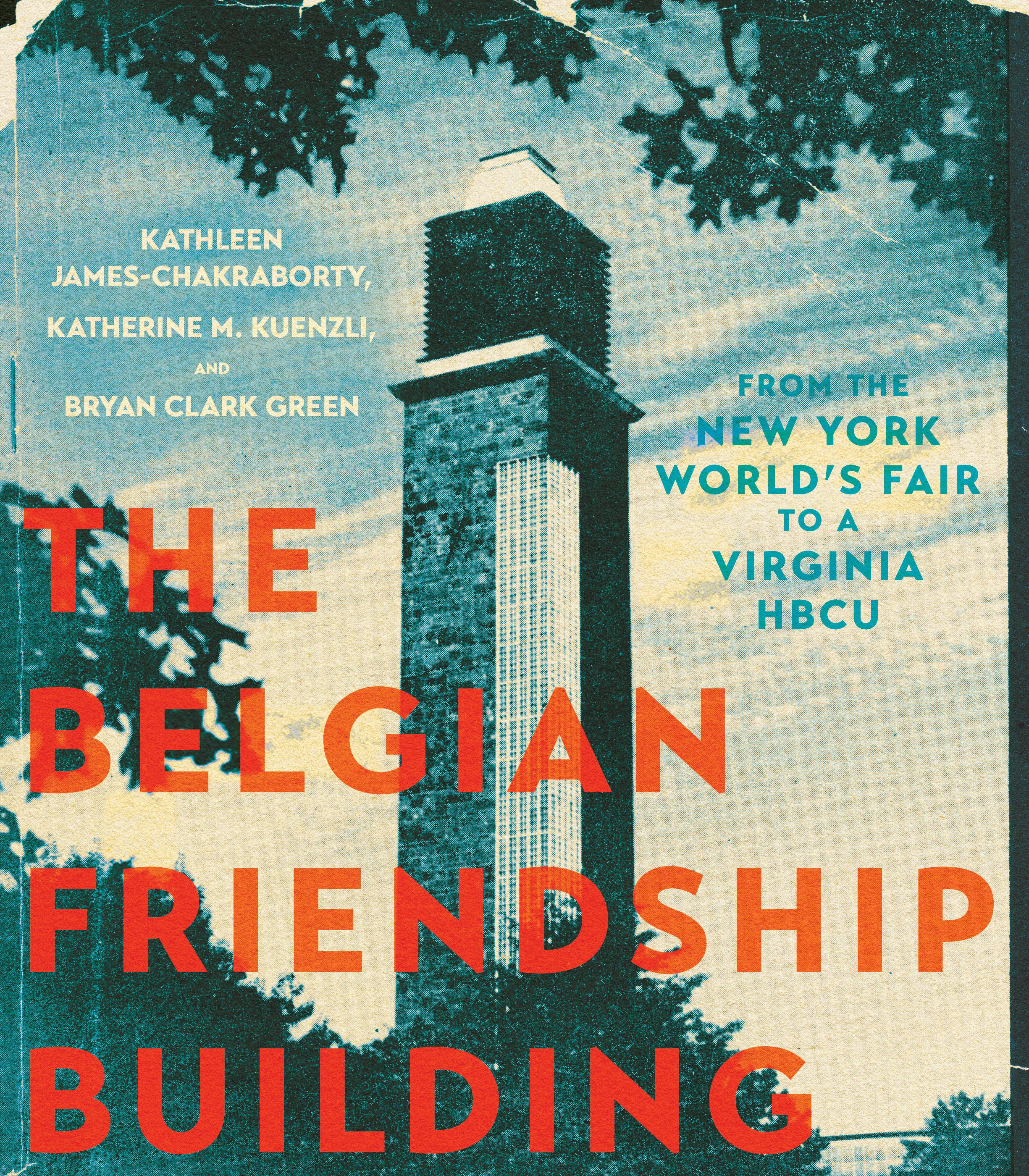
A singular architectural landmark bridging western Europe and the American South
How did the Belgian Friendship Building, originally constructed for the 1939 New York World’s Fair—and one of only a few surviving buildings from that celebrated exhibition—end up on the campus of an HBCU in Richmond, Virginia? In this richly illustrated book, Kathleen James-Chakraborty, Katherine Kuenzli, and Bryan Clark Green relate the fascinating story, spanning three continents, of a distinctly modern structure that has towered over Virginia Union University, in a city characterized by its traditional architecture, for more than eighty years. It is a structure whose original purposes—to present modern Belgian design and to extol its racist, colonial regime—stand in stark contrast to its dedication in 1941 to Robert L. Vann, longtime editor of one of America’s most illustrious historic Black newspapers. The Belgian Friendship Building is an enduring example of prewar modernism designed by a team of Belgian architects under the direction of Henry van de Velde that has until now been all but forgotten in histories of modern architecture. This indispensable, multifaceted account ties together the history of modern European architecture, colonial exploitation, and African American achievement in a brilliant and compelling case study.
How did the Belgian Friendship Building, originally constructed for the 1939 New York World’s Fair—and one of only a few surviving buildings from that celebrated exhibition—end up on the campus of an HBCU in Richmond, Virginia? In this richly illustrated book, Kathleen James-Chakraborty, Katherine Kuenzli, and Bryan Clark Green relate the fascinating story, spanning three continents, of a distinctly modern structure that has towered over Virginia Union University, in a city characterized by its traditional architecture, for more than eighty years. It is a structure whose original purposes—to present modern Belgian design and to extol its racist, colonial regime—stand in stark contrast to its dedication in 1941 to Robert L. Vann, longtime editor of one of America’s most illustrious historic Black newspapers. The Belgian Friendship Building is an enduring example of prewar modernism designed by a team of Belgian architects under the direction of Henry van de Velde that has until now been all but forgotten in histories of modern architecture. This indispensable, multifaceted account ties together the history of modern European architecture, colonial exploitation, and African American achievement in a brilliant and compelling case study.
Pay easily by card, Klarna, Apple Pay or Google Pay. Not happy? You always have a 14-day money-back guarantee. Read more in our terms. If you have any questions, email us at hello@memmo.org.
Memmo makes studying easier – wherever you are in the world. We bring your course books and smart study tools together in one place: summaries, quizzes, podcasts and flashcards. Plus Ted, your study buddy who answers anything you wonder. Over 50,000 students already study here – built to help you learn faster and stress less.
You might also like
Buy the book0