
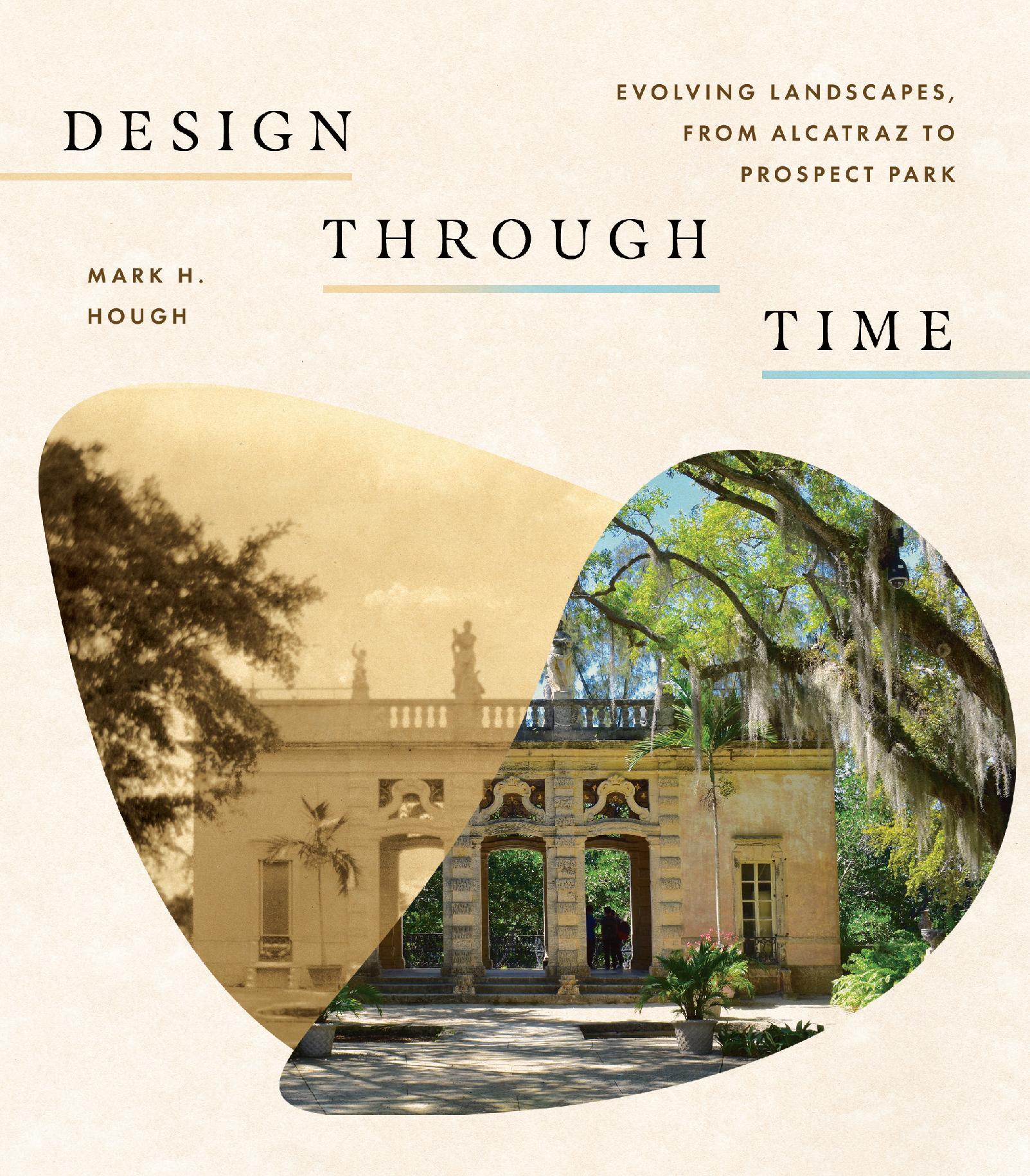
Understanding landscape design as a dynamic, not static, art form
Landscape architects do not situate their work in a vacuum. It exists in a state of constant change and is better understood as a product of continual evolution than as a work of pure design. In Design through Time, Mark Hough offers case studies of parks, gardens, campuses, communities, and cultural sites—from the Missouri Botanical Garden and Mount Auburn Cemetery to Tuskegee University and Dumbarton Oaks Park—to answer several crucial questions: Who is the proposed landscape conceived to please? How will it change, affected by both natural and societal events? How will stewards address the need for landscapes to remain relevant, attractive, and accessible?
To address these concerns, Hough analyzes the influence and impact of generations of administrators, advocates, horticulturalists, institutional leaders, elected officials, and others whose collective decisions compel landscapes to grow and change in ways that strive to respect their established legacies while adjusting to shifting cultural, ecological, and economic realities. The resulting work is a dynamic look at landscape design that reflects its status as an art form that is ever changing, never static.
Landscape architects do not situate their work in a vacuum. It exists in a state of constant change and is better understood as a product of continual evolution than as a work of pure design. In Design through Time, Mark Hough offers case studies of parks, gardens, campuses, communities, and cultural sites—from the Missouri Botanical Garden and Mount Auburn Cemetery to Tuskegee University and Dumbarton Oaks Park—to answer several crucial questions: Who is the proposed landscape conceived to please? How will it change, affected by both natural and societal events? How will stewards address the need for landscapes to remain relevant, attractive, and accessible?
To address these concerns, Hough analyzes the influence and impact of generations of administrators, advocates, horticulturalists, institutional leaders, elected officials, and others whose collective decisions compel landscapes to grow and change in ways that strive to respect their established legacies while adjusting to shifting cultural, ecological, and economic realities. The resulting work is a dynamic look at landscape design that reflects its status as an art form that is ever changing, never static.
Pay easily by card, Klarna, Apple Pay or Google Pay. Not happy? You always have a 14-day money-back guarantee. Read more in our terms. If you have any questions, email us at hello@memmo.org.
Memmo makes studying easier – wherever you are in the world. We bring your course books and smart study tools together in one place: summaries, quizzes, podcasts and flashcards. Plus Ted, your study buddy who answers anything you wonder. Over 50,000 students already study here – built to help you learn faster and stress less.
You might also like
Buy the book0