
Models of disaster preparedness
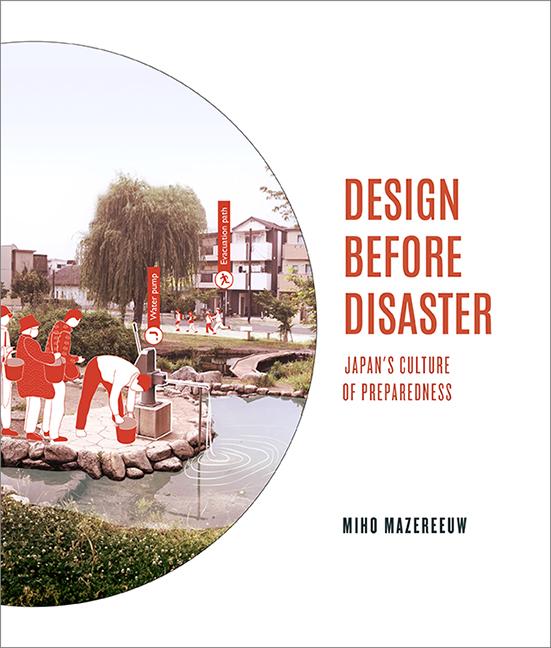
Across the globe, few sites have faced as many environmental disasters as the islands of the Japanese archipelago. They have endured typhoons, cyclones, floods, earthquakes, volcanic eruptions, and tsunamis. Residents of Japan have responded to their precarious circumstances by developing a unique culture of disaster preparedness, known as bōsai, one that has become embedded in everyday life. It has equipped the island nation to plan for future emergencies and to greatly reduce their impact. In this practical, engaging text, Miho Mazereeuw—who has carried out ethnographic fieldwork and space-based analysis for more than two decades—offers a detailed framework to design and prepare for anticipated disasters and describes effective interventions in urban landscape and architecture. An urgent and timely book, Design Before Disaster represents the cutting edge in disaster mitigation and adaptation to empower communities in the world's most vulnerable places.
Publication of this volume was assisted by a grant from Furthermore: a program of the J. M. Kaplan Fund.
Across the globe, few sites have faced as many environmental disasters as the islands of the Japanese archipelago. They have endured typhoons, cyclones, floods, earthquakes, volcanic eruptions, and tsunamis. Residents of Japan have responded to their precarious circumstances by developing a unique culture of disaster preparedness, known as bōsai, one that has become embedded in everyday life. It has equipped the island nation to plan for future emergencies and to greatly reduce their impact. In this practical, engaging text, Miho Mazereeuw—who has carried out ethnographic fieldwork and space-based analysis for more than two decades—offers a detailed framework to design and prepare for anticipated disasters and describes effective interventions in urban landscape and architecture. An urgent and timely book, Design Before Disaster represents the cutting edge in disaster mitigation and adaptation to empower communities in the world's most vulnerable places.
Publication of this volume was assisted by a grant from Furthermore: a program of the J. M. Kaplan Fund.
Pay easily by card, Klarna, Apple Pay or Google Pay. Not happy? You always have a 14-day money-back guarantee. Read more in our terms. If you have any questions, email us at hello@memmo.org.
Memmo makes studying easier – wherever you are in the world. We bring your course books and smart study tools together in one place: summaries, quizzes, podcasts and flashcards. Plus Ted, your study buddy who answers anything you wonder. Over 50,000 students already study here – built to help you learn faster and stress less.
You might also like
Buy the book0