
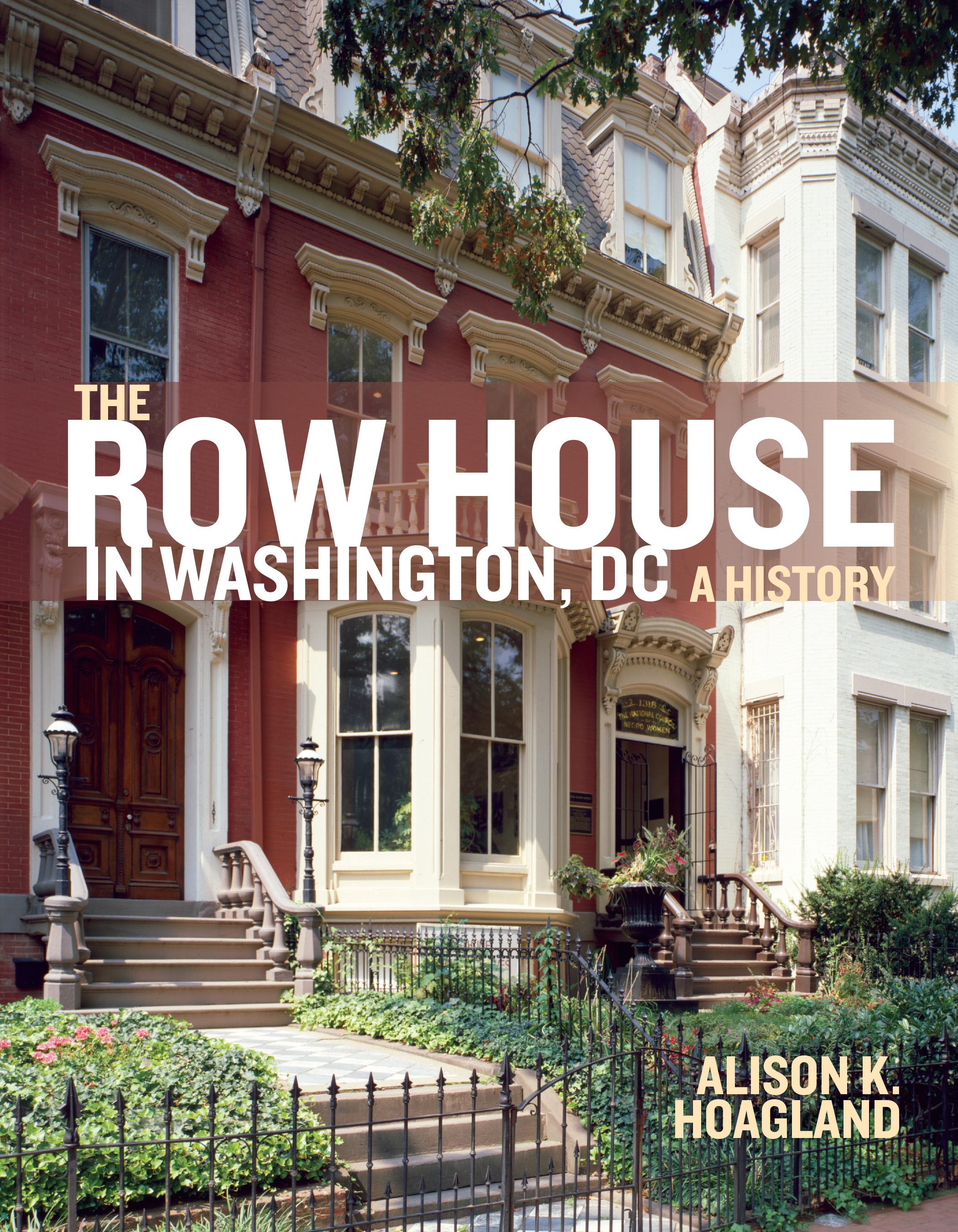
With The Row House in Washington, DC, the architectural historian and preservationist Alison Hoagland turns the lucid prose style and keen analytical skill that characterize all her scholarship to the subject of the Washington row house. Row houses have long been an important component of the housing stock of many major American cities, predominantly sheltering the middle classes comprising clerks, tradespeople, and artisans. In Washington, with its plethora of government workers, they are the dominant typology of the historical city. Hoagland identifies six principal row house types—two-room, L-shaped, three-room, English-basement, quadrant, and kitchen-forward—and documents their wide-ranging impact, as sources of income and statements of attainment as well as domiciles for nuclear families or boarders, homeowners or renters, long tenancy or short stays. Through restrictive covenants on some house sales, they also illustrate the pervasive racism that has haunted the city. This topical study demonstrates at once the distinctive character of the Washington row house and the many similarities it shares with row houses in other mid-Atlantic cities. In a broader sense, it also shows how urban dwellers responded to a challenging concatenation of spatial, regulatory, financial, and demographic limitations, providing a historical model for new, innovative designs.
Publication of this volume was assisted by a grant from Furthermore: a program of the J. M. Kaplan Fund.
Pay easily by card, Klarna, Apple Pay or Google Pay. Not happy? You always have a 14-day money-back guarantee. Read more in our terms. If you have any questions, email us at hello@memmo.org.
Memmo makes studying easier – wherever you are in the world. We bring your course books and smart study tools together in one place: summaries, quizzes, podcasts and flashcards. Plus Ted, your study buddy who answers anything you wonder. Over 50,000 students already study here – built to help you learn faster and stress less.