
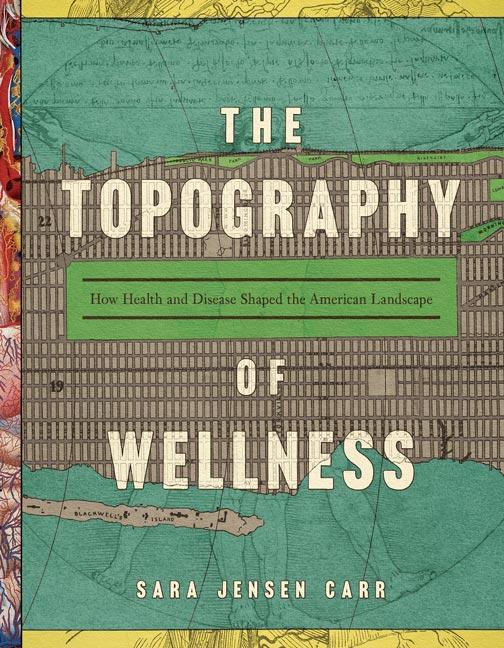
The COVID-19 pandemic has reignited discussions of how architects, landscape designers, and urban planners can shape the environment in response to disease. This challenge is both a timely topic and one with an illuminating history. In The Topography of Wellness, Sara Jensen Carr offers a chronological narrative of how six epidemics transformed the American urban landscape, reflecting changing views of the power of design, pathology of disease, and the epidemiology of the environment. From the infectious diseases of cholera and tuberculosis, to so-called social diseases of idleness and crime, to the more complicated origins of today’s chronic diseases, each illness and its associated combat strategies has left its mark on our surroundings. While each solution succeeded in eliminating the disease on some level, sweeping environmental changes often came with significant social and physical consequences. Even more unexpectedly, some adaptations inadvertently incubated future epidemics. From the Industrial Revolution to present day, this book illuminates the constant evolution of our relationship to wellness and the environment by documenting the shifting grounds of illness and the urban landscape.
Preparation of this volume has been supported by Furthermore: a program of the J. M. Kaplan Fund
Pay easily by card, Klarna, Apple Pay or Google Pay. Not happy? You always have a 14-day money-back guarantee. Read more in our terms. If you have any questions, email us at hello@memmo.org.
Memmo makes studying easier – wherever you are in the world. We bring your course books and smart study tools together in one place: summaries, quizzes, podcasts and flashcards. Plus Ted, your study buddy who answers anything you wonder. Over 75,000 students already study here – built to help you learn faster and stress less.