
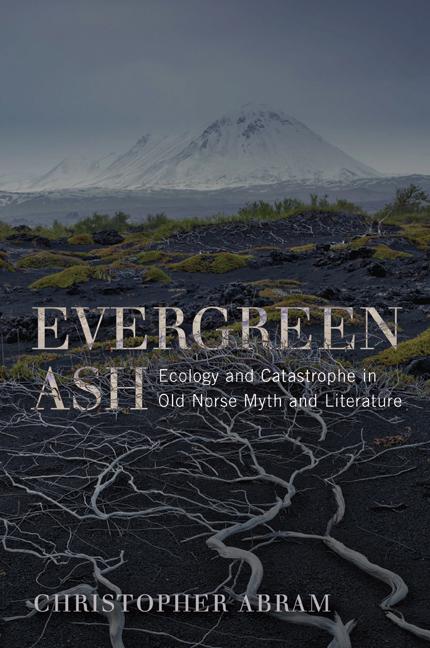
Norse mythology is obsessed with the idea of an onrushing and unstoppable apocalypse: Ragnarok, when the whole of creation will perish in fire, smoke, and darkness and the earth will no longer support the life it once nurtured. Most of the Old Norse texts that preserve the myths of Ragnarok originated in Iceland, a nation whose volcanic activity places it perpetually on the brink of a world-changing environmental catastrophe. As the first full-length ecocritical study of Old Norse myth and literature, Evergreen Ash argues that Ragnarok is primarily a story of ecological collapse that reflects the anxieties of early Icelanders who were trying to make a home in a profoundly strange, marginal, and at times hostile environment.
Christopher Abram here contends that Ragnarok offers an uncanny foreshadowing of our current global ecological crisis—the era of the Anthropocene. Ragnarok portends what may happen when a civilization believes that nature can be mastered and treated only as a resource to be exploited for human ends. The enduring power of the Ragnarok myth, and its relevance to life in the era of climate change, lies in its terrifying evocation of a world in which nothing is what it was before, a world that is no longer home to us—and, thus, a world with no future. Climate change may well be our Ragnarok.
Pay easily by card, Klarna, Apple Pay or Google Pay. Not happy? You always have a 14-day money-back guarantee. Read more in our terms. If you have any questions, email us at hello@memmo.org.
Memmo makes studying easier – wherever you are in the world. We bring your course books and smart study tools together in one place: summaries, quizzes, podcasts and flashcards. Plus Ted, your study buddy who answers anything you wonder. Over 50,000 students already study here – built to help you learn faster and stress less.