
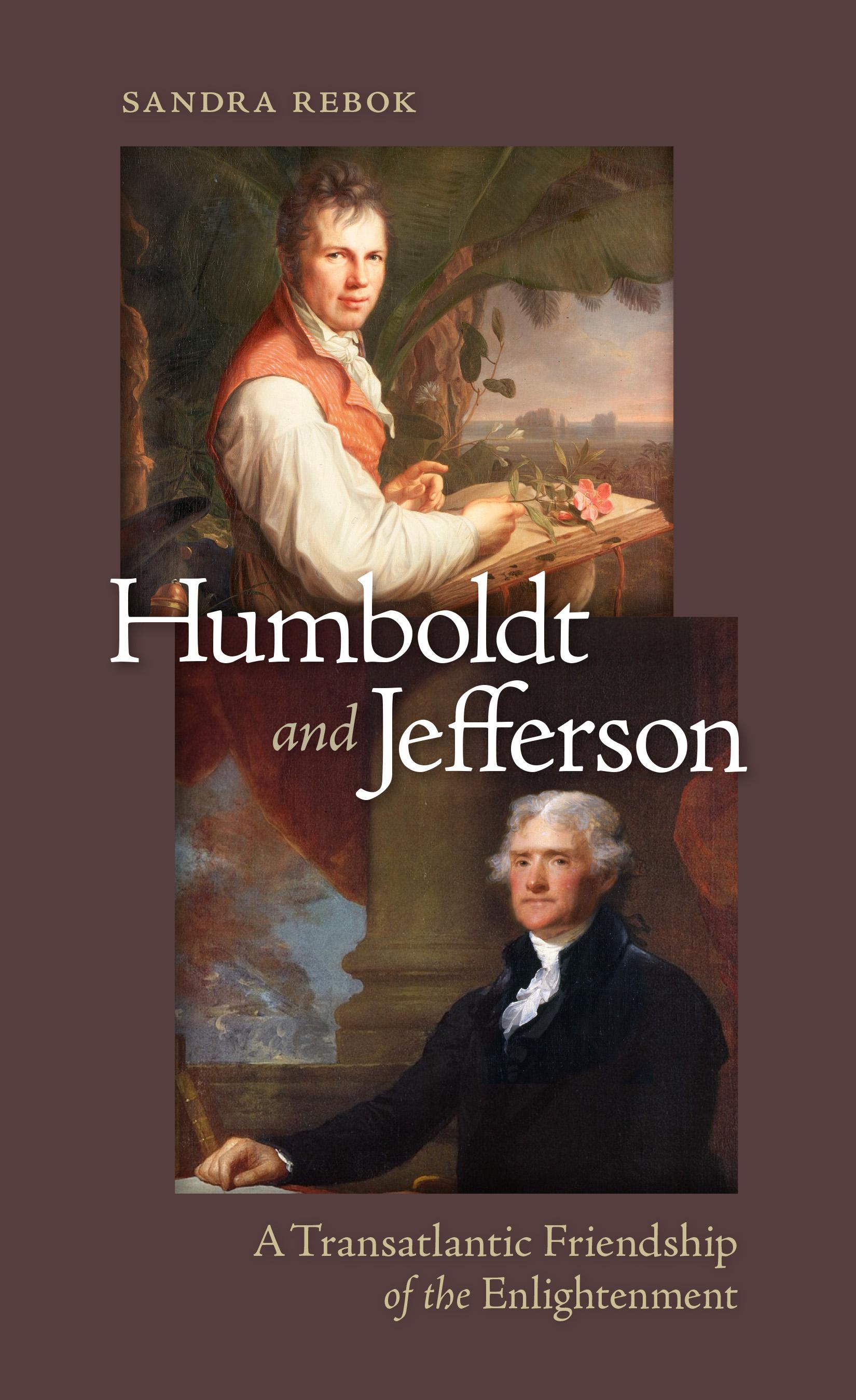
Humboldt and Jefferson explores the relationship between two fascinating personalities: the Prussian explorer, scientist, and geographer Alexander von Humboldt (1769–1859) and the American statesman, architect, and naturalist Thomas Jefferson (1743–1826). In the wake of his famous expedition through the Spanish colonies in the spring of 1804, Humboldt visited the United States, where he met several times with then-president Jefferson. A warm and fruitful friendship resulted, and the two men corresponded a good deal over the years, speculating together on topics of mutual interest, including natural history, geography, and the formation of an international scientific network. Living in revolutionary societies, both were deeply concerned with the human condition, and each vested hope in the new American nation as a possible answer to many of the deficiencies characterizing European societies at the time.
The intellectual exchange between the two over the next twenty-one years touched on the pivotal events of those times, such as the independence movement in Latin America and the applicability of the democratic model to that region, the relationship between America and Europe, and the latest developments in scientific research and various technological projects. Humboldt and Jefferson explores the world in which these two Enlightenment figures lived and the ways their lives on opposite sides of the Atlantic defined their respective convictions.
Pay easily by card, Klarna, Apple Pay or Google Pay. Not happy? You always have a 14-day money-back guarantee. Read more in our terms. If you have any questions, email us at hello@memmo.org.
Memmo makes studying easier – wherever you are in the world. We bring your course books and smart study tools together in one place: summaries, quizzes, podcasts and flashcards. Plus Ted, your study buddy who answers anything you wonder. Over 50,000 students already study here – built to help you learn faster and stress less.