
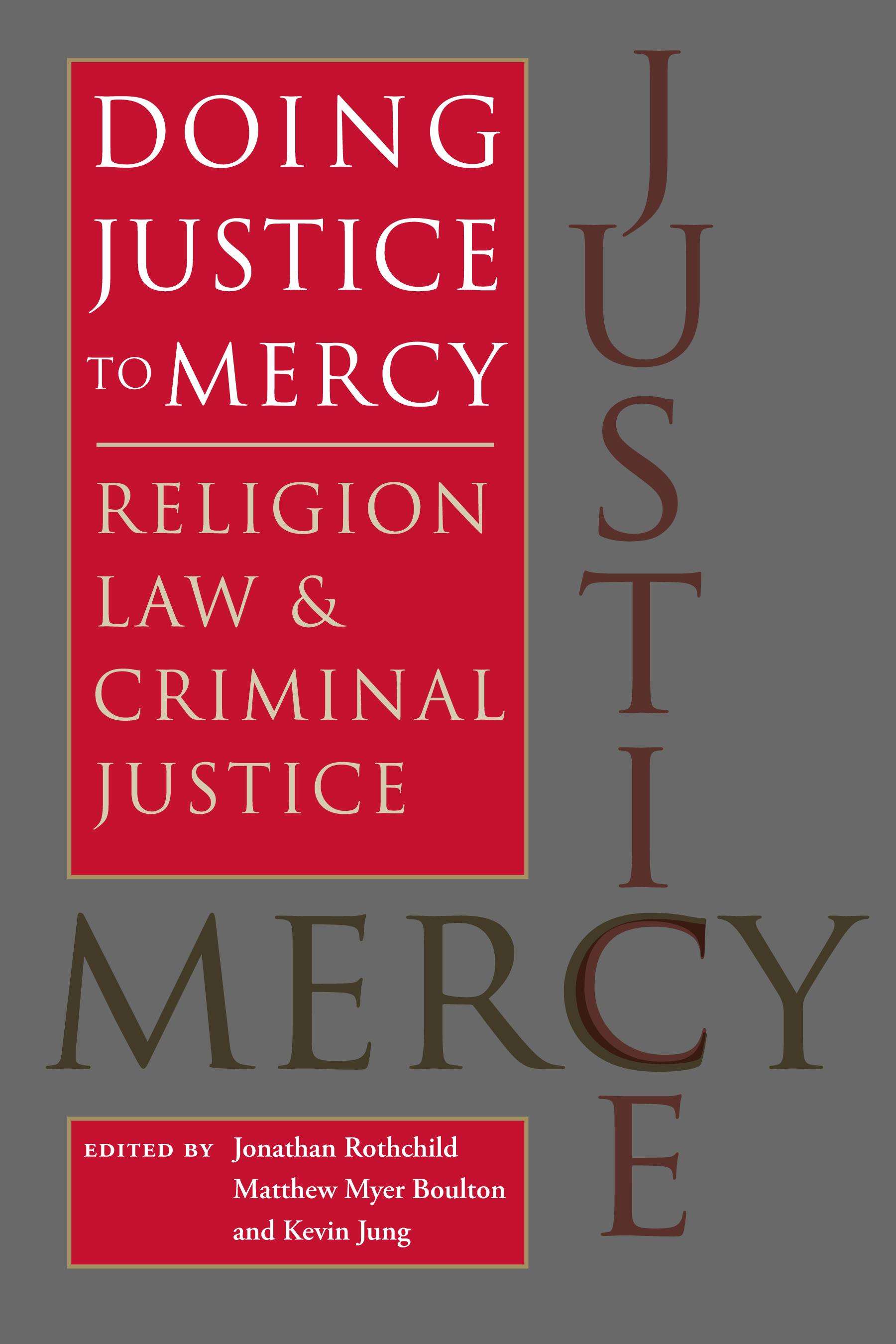
It is often assumed that the law and religion address different spheres of human life. Religion and ethics articulate complex systems of moral reasoning that concern norms, deliberation of ends, cultivation of disposition, and transformation of moral agency. Law, in contrast, seeks to govern human conduct through procedural justice, rights, and public good. Doing Justice to Mercy challenges this assumption by presenting the reader with an urgent conversation between the law and religion that yields a constructive approach, both theoretically and practically, to the complex role of mercy in our legal process.
Authored by legal practitioners, activists, and theorists in addition to theologians and ethicists, the essays collected here are informed by timeless principles, and yet they could not be timelier. The trend in sentencing moves toward an increased severity, and the number of incarcerated people in the United States is at an all-time high. In the half-decade since 9/11, moreover, homeland security has established itself as a permanent fixture in our lives. In this atmosphere, the current volume seeks initially to clarify how justice and mercy intertwine in relation to a number of issues, such as rehabilitation, the death penalty, domestic violence, and war crimes. Exploring the legal, philosophical, and theological grounds for mercy in our courts, the discussion then moves to the practical ways in which mercy may be implemented.
Contributors:Marc Mauer, The Sentencing Project * Lois Gehr Livezey, McCormick Theological Seminary * Ernie Lewis, Public Advocate, Commonwealth of Kentucky * Jonathan Rothchild, Loyola Marymount University * Albert W. Alschuler, Northwestern University School of Law * David Scheffer, Northwestern University School of Law * David Little, Harvard Divinity School * Matthew Myer Boulton, Andover Newton Theological School * Mark Lewis Taylor, Princeton Theological Seminary * Sarah Coakley, Cambridge University * William Schweiker, University of Chicago Divinity School * Kevin Jung, College of William and Mary * Peter J. Paris, Princeton Theological Seminary * W. Clark Gilpin, University of Chicago Divinity School * William C. Placher, Wabash College
Pay easily by card, Klarna, Apple Pay or Google Pay. Not happy? You always have a 14-day money-back guarantee. Read more in our terms. If you have any questions, email us at hello@memmo.org.
Memmo makes studying easier – wherever you are in the world. We bring your course books and smart study tools together in one place: summaries, quizzes, podcasts and flashcards. Plus Ted, your study buddy who answers anything you wonder. Over 50,000 students already study here – built to help you learn faster and stress less.