
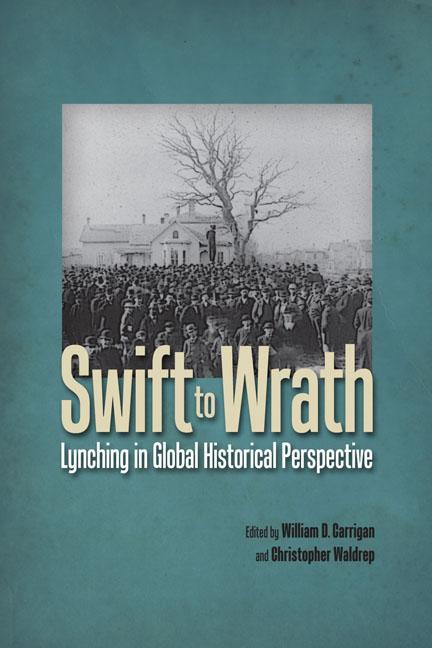
Scholarship on lynching has typically been confined to the extralegal execution of African Americans in the American South. The nine essays collected here look at lynching in the context of world history, encouraging a complete rethinking of the history of collective violence. Employing a diverse range of case studies, the volume’s contributors work to refute the notion that the various acts of group homicide called "lynching" in American history are unique or exceptional.
Some essays consider the practice of lynching in a global context, confounding the popular perception that Americans were alone in their behavior and suggesting a wide range of approaches to studying extralegal collective violence. Others reveal the degree to which the practice of lynching has influenced foreigners’ perceptions of the United States and asking questions such as, Why have people adopted the term lynching—or avoided it? How has the meaning of the word been transformed over time in society? What contextual factors explain such transformations? Ultimately, the essays illuminate, opening windows on ordinary people’s thinking on such critical issues as the role of law in their society and their attitudes toward their own government.
Pay easily by card, Klarna, Apple Pay or Google Pay. Not happy? You always have a 14-day money-back guarantee. Read more in our terms. If you have any questions, email us at hello@memmo.org.
Memmo makes studying easier – wherever you are in the world. We bring your course books and smart study tools together in one place: summaries, quizzes, podcasts and flashcards. Plus Ted, your study buddy who answers anything you wonder. Over 50,000 students already study here – built to help you learn faster and stress less.