
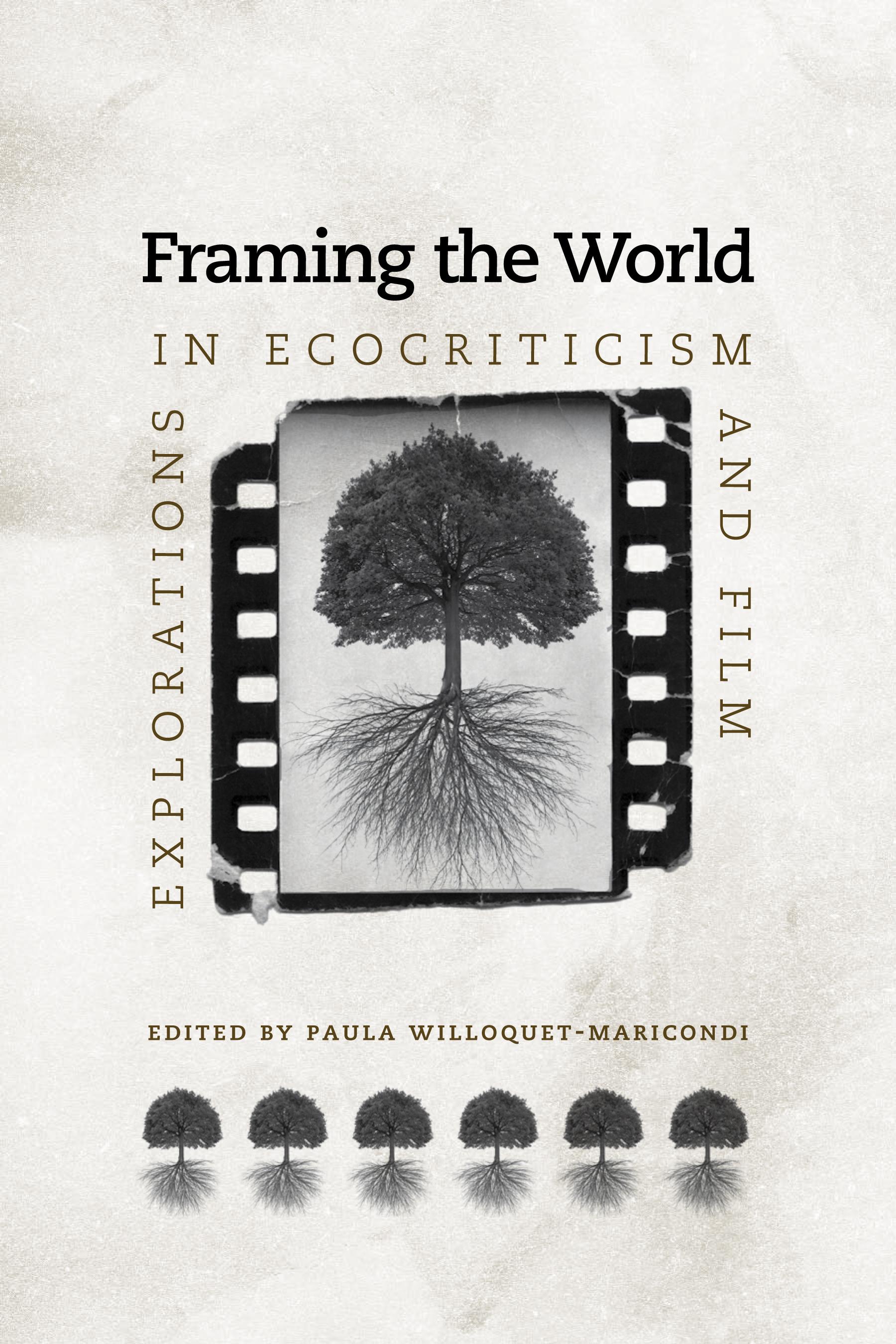
The essays in this collection make a contribution to the greening of film studies and expand the scope of ecocriticism as a discipline traditionally rooted in literary studies. In addition to highlighting particular films as productive tools for raising awareness and educating us about environmental issues, Framing the World: Explorations in Ecocriticism and Film encourages its readers to become more ecologically minded viewers, sensitive to the ways in which films reflect, shape, reinforce, and challenge our perceptions of nature, of human/nature relations, and of environmental issues.
The contributors to this volume offer in-depth analyses of a broad range of films, including fictional and documentary, Hollywood and independent, domestic and foreign, experimental and indigenous. Drawing from disciplines including film theory, ecocriticism, philosophy, rhetoric, environmental justice, and American and Indigenous studies, Framing the World offers new and original approaches to the ecocritical study of cinema. The twelve essays are gathered in four parts, focusing on ecocinema as activist cinema; the representation of environmental justice issues in Hollywood, independent, and foreign films; the representation of animals, ecosystems, and natural and human-made landscapes in live action and animation; and ecological themes in the films of two eco-auteurs, Kiyoshi Kurosawa and Peter Greenaway. Willoquet-Maricondi’s introduction provides an overview of the field of ecocriticism and offers both philosophical and theoretical foundations for the ecocritical study of films.
Contributors
Beth Berila, St. Cloud State University * Lynne Dickson Bruckner, Chatham College * Elizabeth Henry, University of Denver * Joseph K. Heumann, Eastern Illinois University * Harri Kilpi, University of East Anglia * Jennifer Machiorlatti, Western Michigan University * Mark Minster, Rose-Hulman Institute of Technology * Robin L. Murray, Eastern Illinois University * Tim Palmer, University of North Carolina, Wilmington * Cory Shaman, Arkansas Tech University * Rachel Stein, Siena College * Paula Willoquet-Maricondi, Marist College
Pay easily by card, Klarna, Apple Pay or Google Pay. Not happy? You always have a 14-day money-back guarantee. Read more in our terms. If you have any questions, email us at hello@memmo.org.
Memmo makes studying easier – wherever you are in the world. We bring your course books and smart study tools together in one place: summaries, quizzes, podcasts and flashcards. Plus Ted, your study buddy who answers anything you wonder. Over 50,000 students already study here – built to help you learn faster and stress less.