
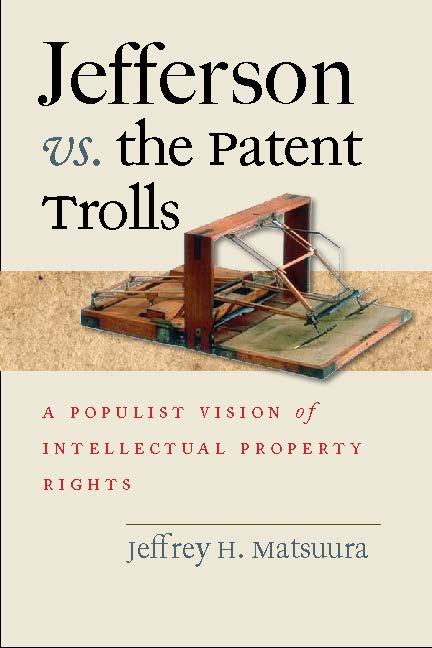
Of all the founding fathers, Thomas Jefferson had the most substantial direct experience with the issues surrounding intellectual property rights and their impact on creativity, invention, and innovation. In our own digital age, in which IP has again become the object of intense debate, his voice remains one of the most vital in American history on this crucial subject.
Jefferson lived in a time of immense change, when inventions and other creative works impacted the world profoundly. In this atmosphere it became clear that the developers of creative works and the users of those works often have competing interests. Jefferson appreciated as well as anyone that the originators of ideas needed legal protection. He also knew that innovation was crucial for a nation’s economic prosperity as well as its political health, and that rights should not become barriers.
Jefferson was in a unique position to understand the issues of intellectual property rights. His pronouncements on these issues were those not of a scholar but, rather, of a practitioner. As a scientist, author, and inventor, he was a prolific creator. He was also a tireless consumer of others’ works. As America’s first patent commissioner, he decided which ideas merited protection and effectively created the patent review process. Jeffrey Matsuura profiles Jefferson’s diverse and substantial experience with these issues and discusses the lessons Jefferson’s efforts offer us today, as we grapple with many of the same challenges of balancing IP rights against an effort to foster creativity and innovation. Without inserting Jefferson anachronistically into the current debate, Matsuura does not shy away from positing where in the spectrum of opinion Jefferson’s ideas lie. For lawyers, legal and technology historians, and entrepreneurs, Matsuura offers a fresh, historically informed perspective on a current issue of major importance.
Pay easily by card, Klarna, Apple Pay or Google Pay. Not happy? You always have a 14-day money-back guarantee. Read more in our terms. If you have any questions, email us at hello@memmo.org.
Memmo makes studying easier – wherever you are in the world. We bring your course books and smart study tools together in one place: summaries, quizzes, podcasts and flashcards. Plus Ted, your study buddy who answers anything you wonder. Over 50,000 students already study here – built to help you learn faster and stress less.