
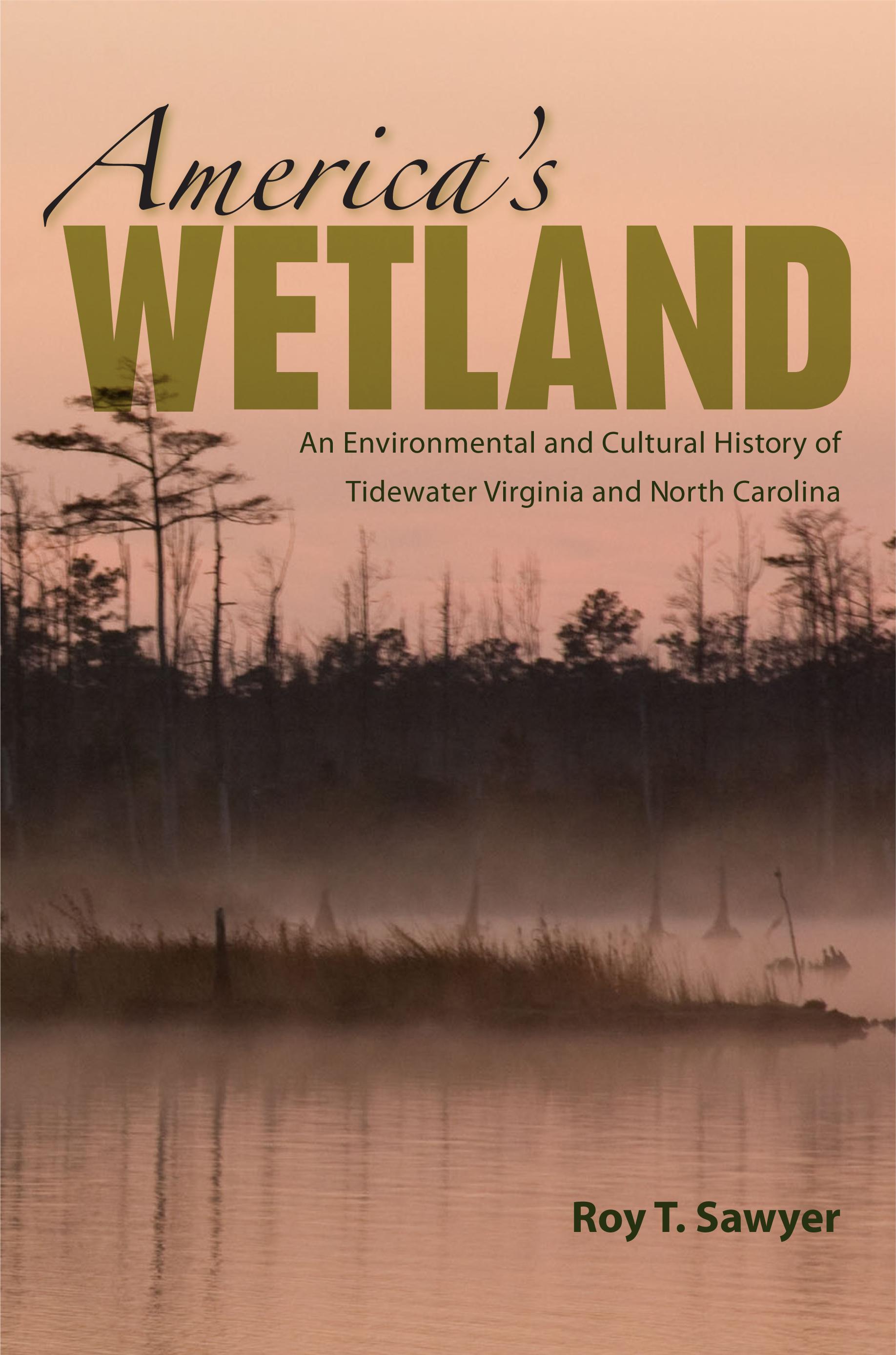
The geologically ancient Tidewater region of southeastern Virginia and northeastern North Carolina rests precariously atop millions of years of erosion from the nearby Appalachian Mountains. An immense wetland at near sea level, it is host to every conceivable body of fresh water, ranging from brooding swamps and large hidden lakes to sluggish blackwater rivers and brackish sounds (one of which was so large an early explorer thought he had found the Pacific Ocean). In this engaging book, biologist and Tidewater native Roy T. Sawyer delivers an ecohistory of this unique waterland whose wind-driven tides cover a rich human and natural past.
Jutting prominently into the Atlantic, this wetland is the final stop for the warmth of the Gulf Stream before it is deflected from the American mainland. At the top of a narrow, warm coastal strip, it provides an ideal home for a vast array of animal and plant life, including prodigious numbers of reptiles (such as the world’s northernmost population of alligators) and overwintering waterfowl. It is also home to the oldest known living trees east of the Rocky Mountains. The climate and geography made the area a natural choice for very early human habitation--as far back as the last ice age, when the region was a rich oasis just south of a veritable tundra.
In examining the impact of humans upon this environment, and vice-versa, Sawyer reveals how our alarming shortsightedness has produced a fragile and endangered present. Although human manipulation started here as early as ten thousand years ago (coinciding with extinction of mammoths and other megafauna), the environment has been altered most radically over only the last one hundred years, particularly in regard to land drainage, deforestation, overfishing, and pollution.
The author provides an authoritative overview of the human impact on these wetlands and suggests ways in which we might still salvage them. In so doing, he explores the effects of hurricanes, droughts, forest fires, and ice ages of the past--and anticipates, in this age of global warming, natural events that may be still to come.
Pay easily by card, Klarna, Apple Pay or Google Pay. Not happy? You always have a 14-day money-back guarantee. Read more in our terms. If you have any questions, email us at hello@memmo.org.
Memmo makes studying easier – wherever you are in the world. We bring your course books and smart study tools together in one place: summaries, quizzes, podcasts and flashcards. Plus Ted, your study buddy who answers anything you wonder. Over 50,000 students already study here – built to help you learn faster and stress less.