
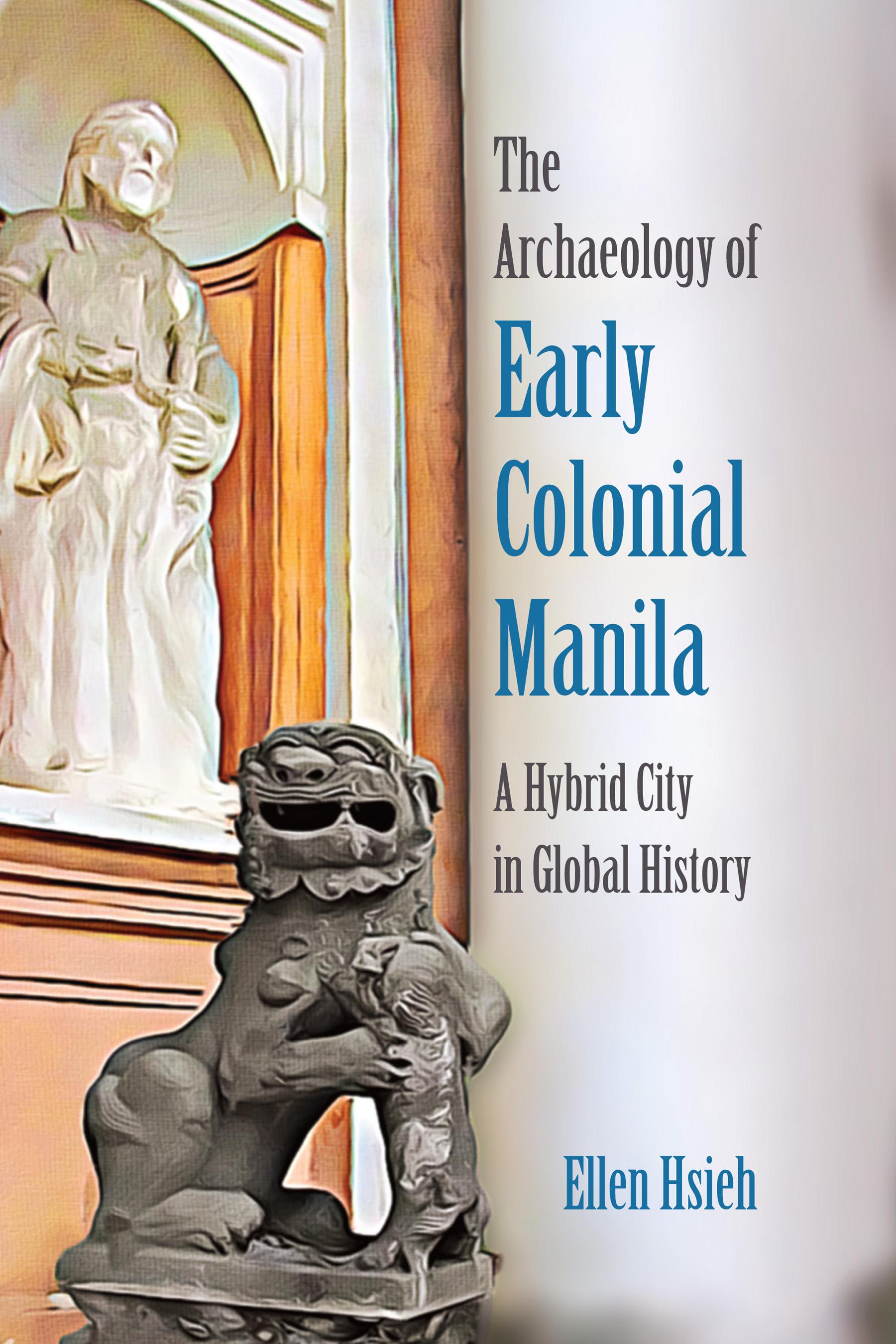
A view into the diverse culture of the Philippines in the sixteenth and seventeenth centuries
Although Manila, capital city of the Philippines, played a critical role in economic and cultural exchanges between the East and the West during the sixteenth and seventeenth centuries, little is known about what life was like for its residents during this time. In this book, Ellen Hsieh uses archaeological, historical, and ethnographic resources to document the ways Manila was transformed by the arrival of Spanish colonists in 1571 and how the city in turn shaped the modern world.
Manila was uniquely positioned as a crossroads in the networks of Southeast Asia, East Asia, and Iberia, resulting in a hybridized culture where colonial Spanish, Indigenous Tagalog, and overseas Chinese groups exchanged goods and ideas. In The Archaeology of Early Colonial Manila, Hsieh analyzes material goods such as ceramics from Intramuros (the Spanish walled city) and Parian (the Chinese quarter) and illustrations from the Boxer Codex—a Spanish manuscript featuring images of people in the Philippines and surrounding areas—to illuminate the diversity of Manila society and to unravel the intricate power dynamics among these ethnic groups.
Bridging the gap in research between pre-Spanish and late colonial periods and amplifying the voices of non-elite, diasporic, and colonized communities often overlooked in historical documents, Hsieh provides an important focus on Manila’s contributions to world history during a period of intense globalization.
Pay easily by card, Klarna, Apple Pay or Google Pay. Not happy? You always have a 14-day money-back guarantee. Read more in our terms. If you have any questions, email us at hello@memmo.org.
Memmo makes studying easier – wherever you are in the world. We bring your course books and smart study tools together in one place: summaries, quizzes, podcasts and flashcards. Plus Ted, your study buddy who answers anything you wonder. Over 75,000 students already study here – built to help you learn faster and stress less.