
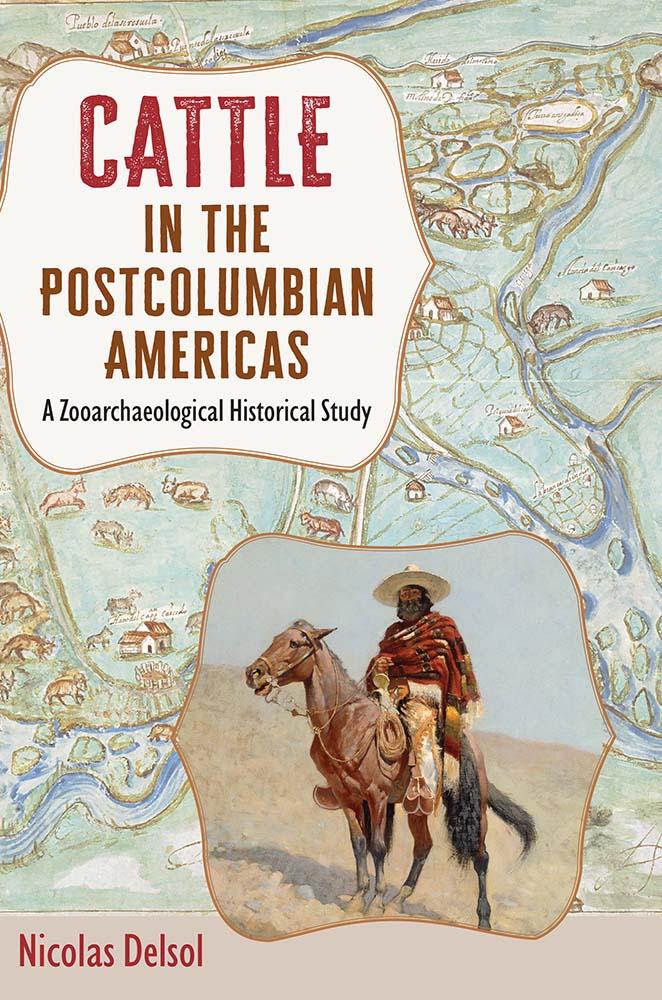
How the arrival of cattle transformed life and society in the Americas
In this book, Nicolas Delsol compares zooarchaeological and material evidence from sites across Mesoamerica and the Caribbean to show how the introduction of cattle, beginning with imports by Spanish colonizers in the 1500s, shaped colonial American society.
Before European colonization, cows were vital in European and African societies but were unknown to the Native communities of the Western Hemisphere. This book traces their impact in the Americas by using a broad range of methods, such as ancient DNA analyses on faunal collections from major postcolumbian sites. Delsol describes the place of cattle in the colonial culture and landscape, beginning with the transportation of cattle across the Atlantic and moving to herding practices in new habitats, butchery techniques, and the production, trading, and use of cow byproducts.
Cattle in the Postcolumbian Americas is the first large-scale regional archaeological study of the introduction of a European domesticated species to the Americas. Using both zooarchaeological and historical data, Delsol argues that the arrival of cattle was a major consequence of European colonization with effects that have often been overlooked.
Pay easily by card, Klarna, Apple Pay or Google Pay. Not happy? You always have a 14-day money-back guarantee. Read more in our terms. If you have any questions, email us at hello@memmo.org.
Memmo makes studying easier – wherever you are in the world. We bring your course books and smart study tools together in one place: summaries, quizzes, podcasts and flashcards. Plus Ted, your study buddy who answers anything you wonder. Over 75,000 students already study here – built to help you learn faster and stress less.