
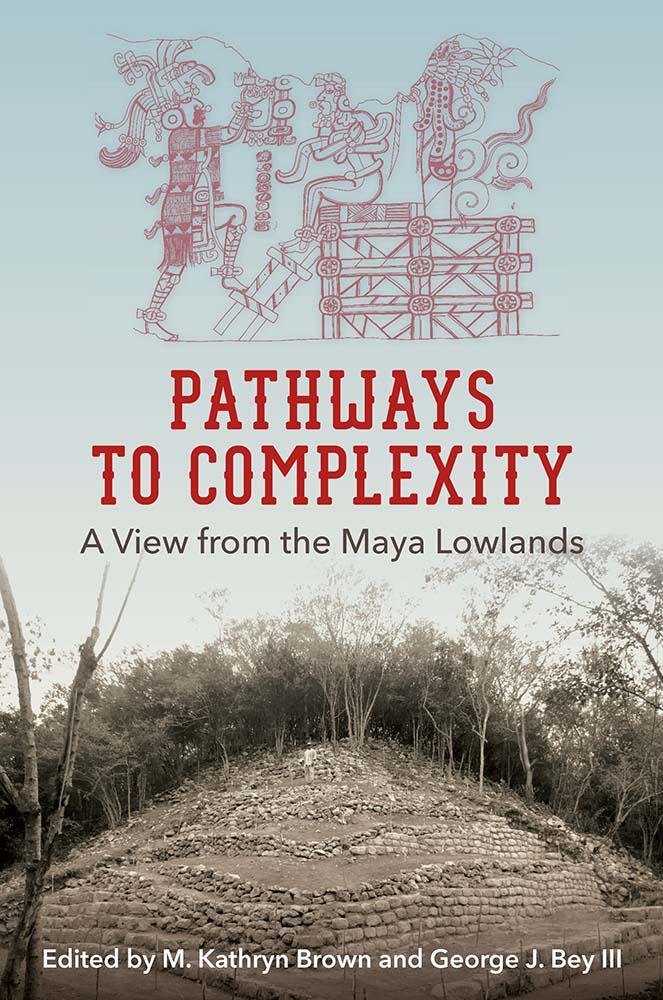
Pathways to Complexity synthesizes a wealth of new archaeological data to illuminate the origins of Maya civilization and the rise of Classic Maya culture. In this volume, prominent Maya scholars argue that the development of social, religious, and economic complexity began during the Middle Preclassic period (1000–300 B.C.), hundreds of years earlier than previously thought.
Contributors reveal that villages were present in parts of the lowlands by 1000 B.C., challenging the prevailing models estimating when civilization took root in the area. Combining recent discoveries from the northern lowlands—an area often neglected in other volumes—and the southern lowlands, the collection then traces the emergence of sociopolitical inequality and complexity in all parts of the Yucatan peninsula over the course of the Middle Preclassic period. They show that communities evolved in different ways due to influences such as geographical location, ceramic exchange, shell ornament production, agricultural strategy, religious ritual, ideology, and social rankings. These varied pathways to complexity developed over half a millennium and culminated in the institution of kingship by the Late Preclassic period.
Presenting exciting work on a dynamic and poorly understood time period, Pathways to Complexity demonstrates the importance of a broad, comparative approach to understanding Preclassic Maya civilization and will serve as a foundation for future research and interpretation.
Pay easily by card, Klarna, Apple Pay or Google Pay. Not happy? You always have a 14-day money-back guarantee. Read more in our terms. If you have any questions, email us at hello@memmo.org.
Memmo makes studying easier – wherever you are in the world. We bring your course books and smart study tools together in one place: summaries, quizzes, podcasts and flashcards. Plus Ted, your study buddy who answers anything you wonder. Over 75,000 students already study here – built to help you learn faster and stress less.