
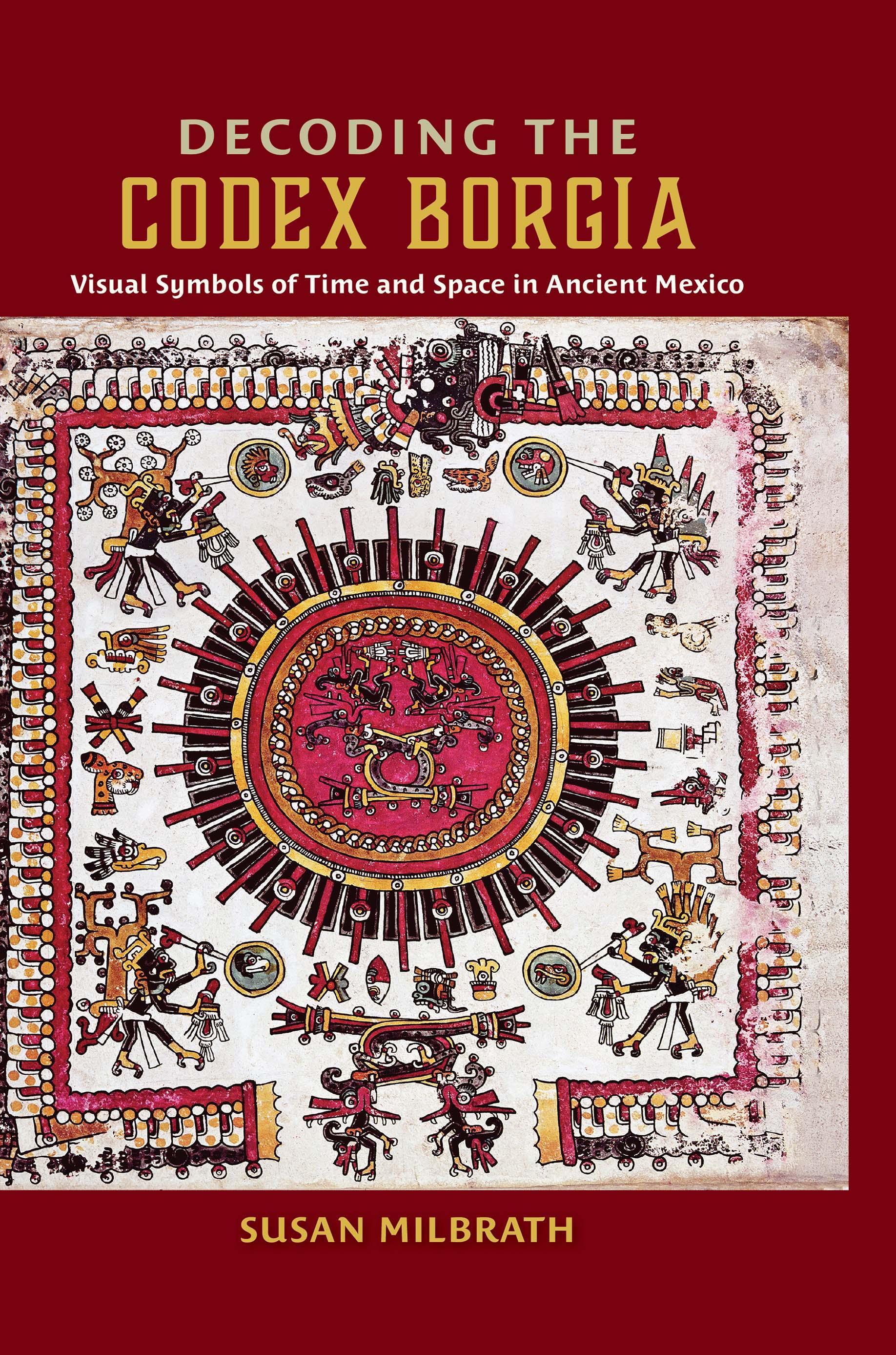
Exploring the meanings in the intricate symbolism of a rare Precolumbian manuscript
This book explores the rich symbolism of the Codex Borgia, a masterpiece of Precolumbian art dating to the fifteenth century, one of the few surviving books from before the Spanish conquest of Mexico. Susan Milbrath uses information from the fields of art history, anthropology, ethnohistory, natural history, and cultural astronomy to show how the manuscript’s intricate and colorful imagery conveys complex ideas related to Mesoamerican myths and religion.
Milbrath sets the work in historical context, establishing its provenance in the Puebla-Tlaxcala Valley of Central Mexico and pinpointing the date it was painted based on rain almanacs found in its pages. She offers a new interpretation of a unique narrative section that has long intrigued scholars, arguing that the ceremonial variations depicted in it are related to the solar cycle. Overall, this book opens new doors in the study of the Codex Borgia by identifying seasonal imagery in the narrative and associated astronomical events, especially those that involve the three brightest objects in the sky: the sun, the moon, and Venus. Decoding the Codex Borgia is an illuminating journey into the culture and cosmology of the Aztecs and their neighboring communities.
Pay easily by card, Klarna, Apple Pay or Google Pay. Not happy? You always have a 14-day money-back guarantee. Read more in our terms. If you have any questions, email us at hello@memmo.org.
Memmo makes studying easier – wherever you are in the world. We bring your course books and smart study tools together in one place: summaries, quizzes, podcasts and flashcards. Plus Ted, your study buddy who answers anything you wonder. Over 75,000 students already study here – built to help you learn faster and stress less.