
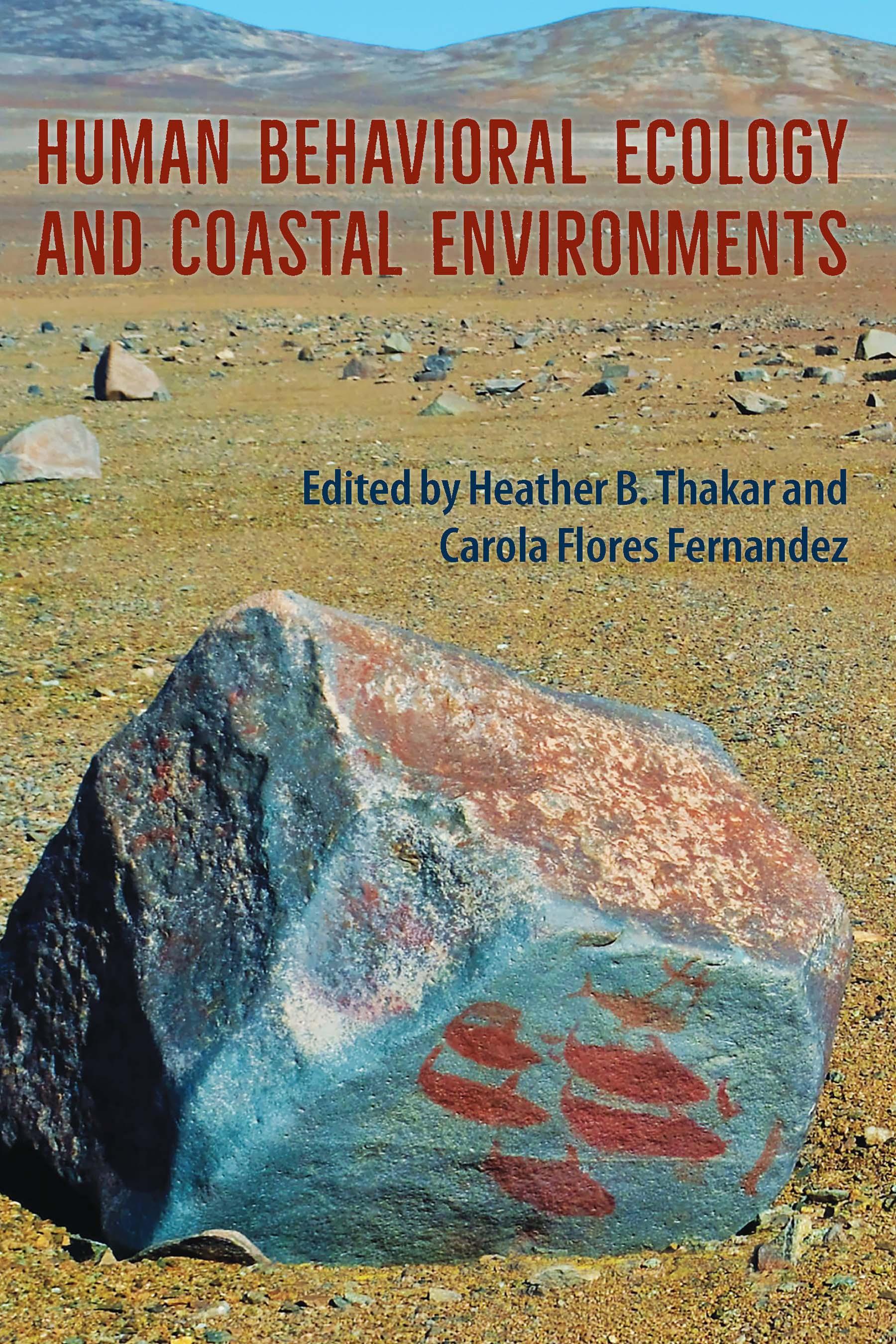
Examples of a research approach that sheds light on coastal societies in the past
In this volume, contributors apply human behavioral ecology theoretical models to coastal environments around the globe and to the use of coastal resources by past human societies. Evidence demonstrates that coastlines and islands are dynamic environments that were important in early human migrations, and this volume shows how researchers can gain insights about human behavior in these settings through its critical regional reviews and detailed local case studies.
The volume begins by introducing the importance of theory in the reconstruction of human behavior and provides examples of traditional foraging models. Contributors then offer perspectives from North, Central, and South America, the Caribbean, Europe, Africa, Australia, and Polynesia. They discuss unique challenges faced by coastal societies, including extreme seasonality, patchy resource distribution, natural hazards, balancing coastal and terrestrial resource needs, aquatic technological innovation, and multiscale environmental change.
Human Behavioral Ecology and Coastal Environments demonstrates that exploring decision-making and cultural behaviors is key to understanding how humans have lived in and related to these environments. Through its application of human behavioral ecology models, this volume sheds light on the evolving adaptations of societies in a variety of coastal contexts through time and across space.
Pay easily by card, Klarna, Apple Pay or Google Pay. Not happy? You always have a 14-day money-back guarantee. Read more in our terms. If you have any questions, email us at hello@memmo.org.
Memmo makes studying easier – wherever you are in the world. We bring your course books and smart study tools together in one place: summaries, quizzes, podcasts and flashcards. Plus Ted, your study buddy who answers anything you wonder. Over 75,000 students already study here – built to help you learn faster and stress less.