
Society for Ethnobotany Daniel F. Austin Award
How archaeology can shed light on past foodways and social worlds
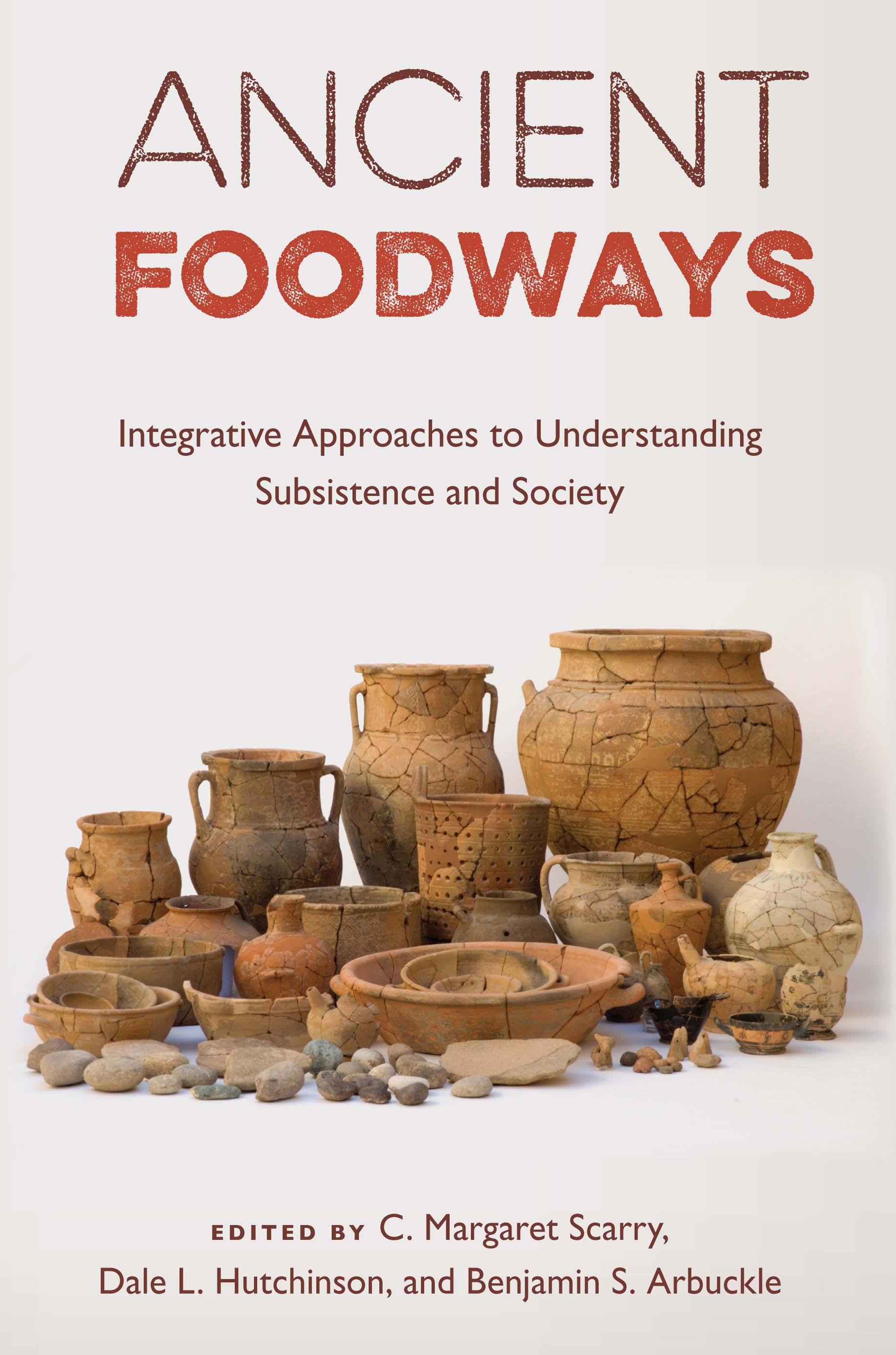
Through various case studies, Ancient Foodways illustrates how archaeologists can use bioarchaeology, zooarchaeology, archaeobotany, architecture, and other evidence to understand how food acquisition, preparation, and consumption intersect with economics, politics, and ritual. Spanning four continents and several millennia of human history, this volume is a comprehensive and contemporary survey of how archaeological data can be used to interpret past foodways and reconstruct past social worlds.
This volume is organized around four major themes: feasting and politics; sacrifice, ritual, and ancestors; diet, landscape, and health; and integrative methods. Contributors weave together multiple threads of evidence relating to plants, animals, craft production, and human health and reconnect the material remnants with behaviors, practices, and meanings. The case studies show the varied and creative ways that multiple sources of evidence can be used to shed light on past foodways.
Ancient Foodways demonstrates how environmental and cultural factors shaped past subsistence strategies and cooking practices and reveals the role food played in shaping cultural identity and exchange networks, while also examining how food production methods can lead to environmental destruction and the detrimental role of dietary constraints on human health.
Pay easily by card, Klarna, Apple Pay or Google Pay. Not happy? You always have a 14-day money-back guarantee. Read more in our terms. If you have any questions, email us at hello@memmo.org.
Memmo makes studying easier – wherever you are in the world. We bring your course books and smart study tools together in one place: summaries, quizzes, podcasts and flashcards. Plus Ted, your study buddy who answers anything you wonder. Over 75,000 students already study here – built to help you learn faster and stress less.