
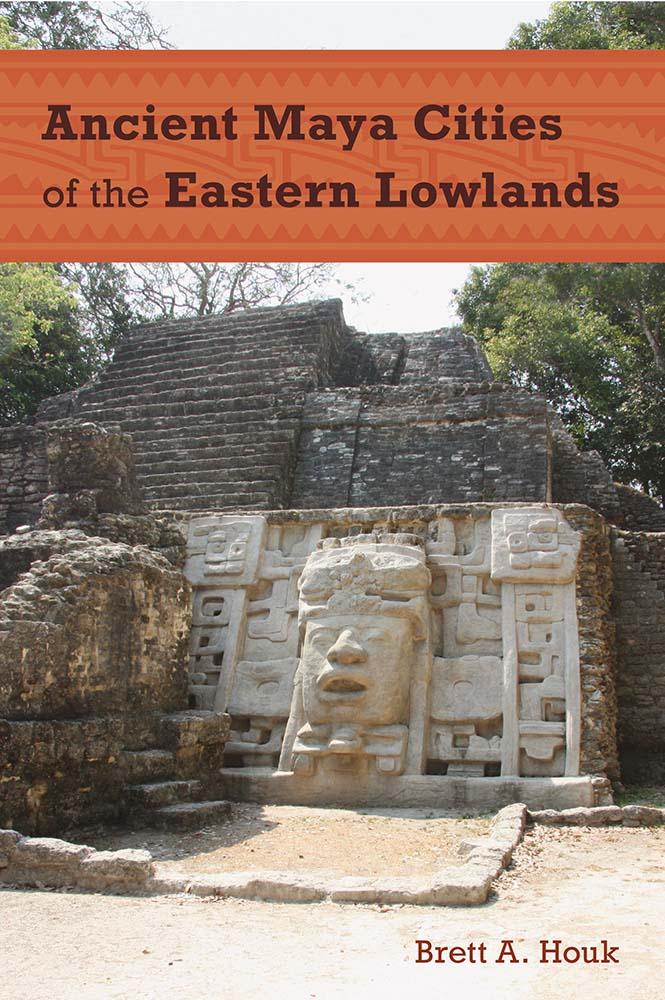
For more than a century researchers have studied Maya ruins, and sites like Tikal, Palenque, Copán, and Chichén Itzá have shaped our understanding of the Maya. Yet cities of the eastern lowlands of Belize, an area that was home to a rich urban tradition that persisted and evolved for almost 2,000 years, are treated as peripheral to these great Classic period sites. The hot and humid climate and dense forests are inhospitable and make preservation of the ruins difficult, but this oft-ignored area reveals much about Maya urbanism and culture.
Using data collected from different sites throughout the lowlands, including the Vaca Plateau and the Belize River Valley, Brett Houk presents the first synthesis of these unique ruins and discusses methods for mapping and excavating them. Considering the sites through the analytical lenses of the built environment and ancient urban planning, Houk vividly reconstructs their political history, considers how they fit into the larger political landscape of the Classic Maya, and examines what they tell us about Maya city building.
Pay easily by card, Klarna, Apple Pay or Google Pay. Not happy? You always have a 14-day money-back guarantee. Read more in our terms. If you have any questions, email us at hello@memmo.org.
Memmo makes studying easier – wherever you are in the world. We bring your course books and smart study tools together in one place: summaries, quizzes, podcasts and flashcards. Plus Ted, your study buddy who answers anything you wonder. Over 75,000 students already study here – built to help you learn faster and stress less.