
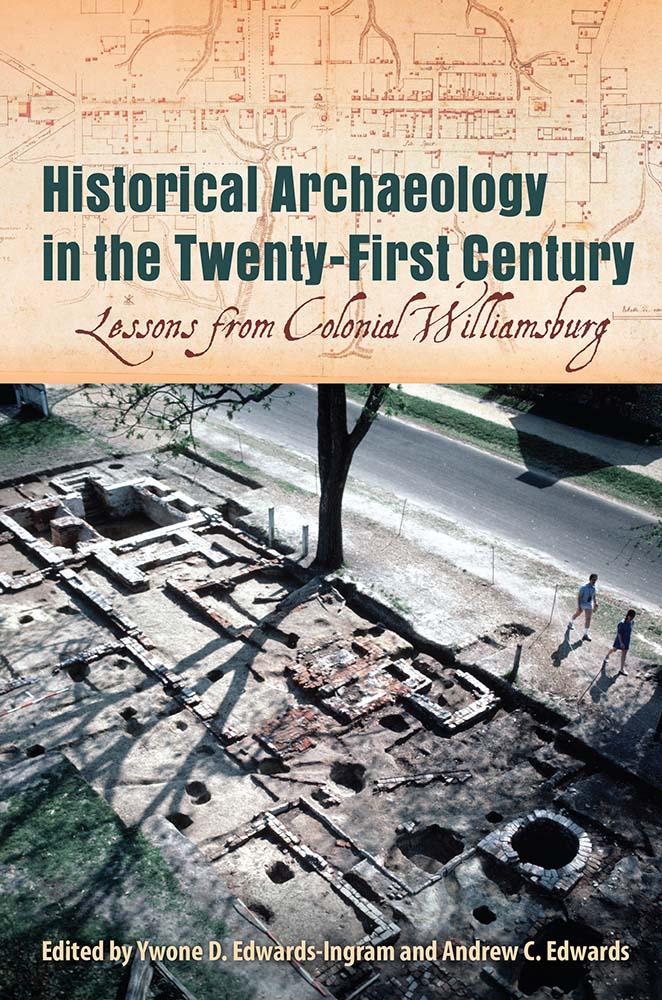
This volume is the first to offer an in-depth look at historical archaeology, public history, and reconstruction in Williamsburg through a comprehensive range of sites, topics, and analyses. Uniquely combining a historical landscape and a large town-museum complex, Colonial Williamsburg has deeply influenced the discipline for 100 years through one of the nation’s longest continuously running archaeological conservation programs.
Historical Archaeology in the Twenty-First Century illuminates the town’s history as an early capital of the Virginia Colony and home to the College of William & Mary. In the 1700s, Williamsburg was a center of political, cultural, and commercial life where people of African, European, and Native American descent interacted regularly. The case studies in this volume cover topics including animal husbandry, the oyster industry, architectural reconstruction, window leads, and an apothecary’s display skeleton. Contributors draw attention to the interactions between enslaved and free communities as well as African American burial practices.
Using exemplary approaches and methodologies, this volume addresses key concerns in the field such as amplifying voices of the African diaspora, the development of ethically sound inclusive archaeologies, the value of environmental analyses, and the advantages of virtual models. The research highlighted here provides state-of-the-art examples of how historical archaeology can be used to inform, engage, and educate.
Pay easily by card, Klarna, Apple Pay or Google Pay. Not happy? You always have a 14-day money-back guarantee. Read more in our terms. If you have any questions, email us at hello@memmo.org.
Memmo makes studying easier – wherever you are in the world. We bring your course books and smart study tools together in one place: summaries, quizzes, podcasts and flashcards. Plus Ted, your study buddy who answers anything you wonder. Over 75,000 students already study here – built to help you learn faster and stress less.